 01635 581 811
Running a craft fair business means juggling creativity with logistics. You’re producing handmade goods, preparing for seasonal markets, and somehow finding space to store everything between events. Most craft vendors don’t have the luxury of a dedicated studio or warehouse – they’re working from spare bedrooms, garages, or kitchen tables that need to transform back into living spaces by dinner time.
The challenge isn’t just about having enough stock. It’s about keeping your handmade inventory organised, protected, and accessible throughout the year whilst maintaining your sanity and your home. When you’ve spent hours creating jewellery, candles, pottery, or textiles, the last thing you want is to discover crushed boxes, tangled necklaces, or water-damaged prints the night before a major fair. Effective craft fair storage becomes essential to protecting your investment and running a successful business.
Why seasonal storage matters for craft vendors
Craft fair businesses operate on a rhythm that most people don’t see. You’re producing heavily in winter for spring fairs, stockpiling summer inventory during quieter months, and preparing autumn collections whilst still fulfilling orders from your last event. This cyclical pattern creates a storage problem that grows throughout the year.
Think of it like a wardrobe for different seasons – you don’t keep your winter coats front and centre in July. Your craft inventory works the same way. Off-season stock, packaging materials, display equipment, and finished goods all need their own space at different times. Without a proper system, you’ll waste hours searching for supplies or recreating items you know you made but can’t locate.
A jewellery maker I know once spent three days searching for a batch of silver earrings she’d created for Christmas markets. She eventually found them in a box labelled “Spring Fair Backup” – tucked behind her daughter’s old school projects in the loft. She’d already remade half the collection by then, losing both time and materials.
Creating an inventory system that actually works
The foundation of organised craft fair storage starts with knowing exactly what you have. Making a full inventory might seem tedious, but it’s the single best way to prevent overproduction, reduce waste, and ensure you’re never caught short at an event. Don’t skip this step.
Start by categorising your inventory into clear groups:
- Finished products ready for sale – sorted by product type and price point
- Work-in-progress items – partially completed pieces that need finishing touches
- Raw materials and supplies – beads, fabrics, paints, clay, or whatever materials define your craft
- Packaging and display equipment – boxes, bags, labels, table covers, signage, and stands
- Seasonal or event-specific stock – Christmas decorations, Valentine’s items, or custom orders for specific fairs
Each category needs its own dedicated space. Mixing finished candles with raw wax and wicks creates chaos when you’re trying to pack for a market at 6am on a Saturday morning.
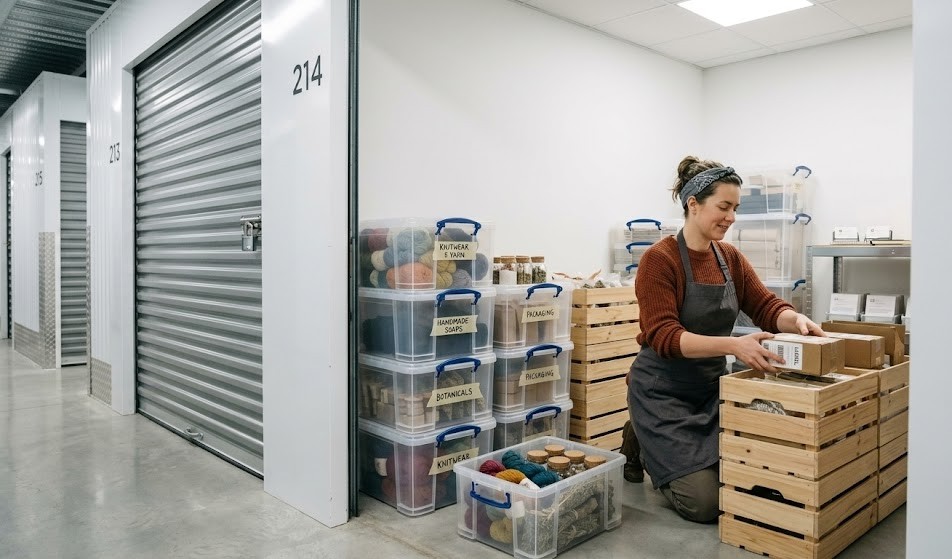
Use clear plastic boxes rather than cardboard where possible. You’ll thank yourself when you can see your entire spring collection without opening fifteen identical brown boxes. Label everything with both the contents and the date you packed it – knowing you made those soaps in March 2024 helps you rotate stock and maintain freshness.
Protecting your handmade products
Your craft items aren’t just inventory – they’re pieces you’ve created with skill and care. Proper protection isn’t optional, it’s essential to maintaining quality and preventing financial loss.
Different crafts need different storage approaches:
Textiles and clothing require breathable storage to prevent mildew. Never seal handmade scarves, bags, or garments in airtight containers for long periods. Acid-free tissue paper between layers stops colour transfer and creasing. Cedar blocks or lavender sachets deter moths without leaving chemical odours that customers notice.
Jewellery and small accessories tangle, tarnish, or break when stored carelessly. Individual pouches or compartmentalised boxes keep pieces separate. Anti-tarnish strips protect silver items, whilst padded dividers prevent delicate chains from knotting into impossible tangles.
Ceramics, glass, and fragile items need bubble wrap and sturdy boxes with clear “FRAGILE” labels. Stack lighter items on top, heavier pieces at the bottom. Never assume you’ll remember which box contains your most delicate work – mark it clearly.
Candles and soaps can melt, warp, or absorb odours if stored incorrectly. Keep them in cool, dark conditions away from direct sunlight. Wrap soaps individually to preserve scent and prevent them from sticking together or drying out.
Paper goods and prints suffer from humidity and temperature fluctuations. Store flat rather than rolled when possible, with acid-free backing boards to prevent bending. Silica gel packets in storage boxes combat moisture damage.
Managing peak production periods
Every craft vendor knows the pre-Christmas panic. You’re producing at maximum capacity, your dining table has disappeared under works-in-progress, and you’re storing finished stock anywhere you can find space. The spare bedroom looks like a warehouse, and your partner’s making pointed comments about reclaiming the living room.
This is where strategic artisan inventory management makes the difference between manageable busy periods and complete chaos. Consider using personal storage during your peak production months to create breathing room at home. A small unit gives you dedicated space for finished inventory, leaving your workspace clear for actual creation.
Here’s a practical approach that works:
Keep your active workspace – your current projects and immediate supplies – at home where you can access them easily. Move completed stock and backup materials to storage as you finish batches. This rotation system means you’re not tripping over boxes of Christmas wreaths in July whilst trying to create summer fair inventory.
Pack items for storage in the order you’ll need them. If you’re storing stock for a November craft fair in May, pack it with clear labels showing the event date, contents, and any specific setup requirements. Your future self will appreciate the organisation when you’re loading the car at dawn.
The reality of home-based craft storage
Most craft vendors start by storing everything at home. It’s convenient, it’s free, and it works – until it doesn’t. The turning point usually comes when you realise you’re paying rent or a mortgage on space that’s become a stockroom rather than a home.
Calculate what you’re actually using. If your spare bedroom holds £2,000 worth of craft inventory and display equipment for ten months of the year, you’re effectively paying a significant portion of your housing costs to store stock. Compare that to the cost of a small storage unit, and the numbers often surprise people.
Home storage also creates practical problems beyond just space. Temperature and humidity fluctuations in garages and lofts can damage handmade goods. Damp affects textiles and paper products. Heat warps candles and soaps. Dust settles on everything, meaning you’ll need to clean items before display.
Security matters too. If you’re holding thousands of pounds worth of finished inventory at home, your household insurance might not cover it adequately. Check your policy – many standard home insurance policies exclude or limit cover for business stock.
Setting up efficient storage systems
The goal isn’t just to store your craft inventory – it’s to create a system that makes running your business easier. Efficiency comes from thoughtful organisation, not just having more space.
Start with your most frequently accessed items. Materials you use daily or weekly need to be immediately accessible. Backup supplies, seasonal stock, and archived display equipment can go into deeper storage. Think of it like organising a kitchen – everyday plates at hand height, fancy serving dishes on the top shelf.
Create zones within your storage area:
- Active production zone – current materials and works-in-progress
- Finished goods zone – completed items ready for sale, organised by product type
- Packaging and supplies zone – boxes, tissue paper, bags, labels, and packaging materials
- Display equipment zone – table covers, stands, signage, and setup essentials
- Archive zone – off-season stock and backup inventory
Mobile shelving units or stackable crates make reorganisation easier as your inventory changes throughout the year. Avoid permanent fixtures that limit flexibility – your storage needs in February look different from your requirements in October.
Planning for different event types
Not all craft fairs are equal, and your artisan inventory management system needs to reflect that reality. A small local market requires different stock levels and display equipment compared to a major three-day Christmas fair or a prestigious juried show.
Separate your inventory by event tier:
- Regular local markets – your bread-and-butter events with consistent stock requirements
- Seasonal major fairs – Christmas, Easter, or summer events needing larger inventory
- Premium or juried shows – events requiring your best work and professional display
- Custom or wholesale orders – bulk items or bespoke pieces for specific customers
This separation prevents you from accidentally selling your best pieces at a small local market when you need them for a premium event next month. It also helps you track which products sell well at different venues, informing future production decisions.
The cost-benefit analysis of external storage
Let’s address the practical question every craft vendor asks: is paying for storage worth it?
Consider what you’re currently sacrificing. If you’re storing craft inventory in your home, you’re losing living space, potentially damaging goods through inadequate storage conditions, and creating stress by mixing your living and working environments. Many vendors find their creativity suffers when they can’t mentally separate home life from business operations.
A small storage unit – perhaps 25 to 50 square feet – provides dedicated space for finished inventory and equipment. You can organise properly, access stock when needed, and reclaim your home. For vendors doing six to twelve craft fairs yearly, the investment typically pays for itself through better inventory management and reduced product damage.
Business storage options designed for small enterprises often include features particularly useful for craft vendors: ground-floor access for loading heavy boxes, flexible rental terms that accommodate seasonal business patterns, and security measures that protect valuable handmade inventory.
Inventory rotation and quality control
Handmade products don’t last forever. Natural soaps lose scent, candles discolour, and even well-made textiles can develop storage odours if kept too long. Regular inventory rotation prevents you from discovering unusable stock right before a major fair.
Implement a simple “first made, first sold” system. Mark each batch with production dates, and store older stock where you’ll access it first. This rotation ensures you’re selling products at their peak quality, not items that have been sitting in storage for eighteen months.
Schedule quarterly inventory checks – yes, actually put them in your calendar. These reviews help you:
- Identify slow-moving products that need discounting or discontinuation
- Spot quality issues before they affect customer-facing stock
- Recognise gaps in your inventory that need addressing
- Adjust production plans based on actual sales data rather than assumptions
During these checks, be ruthless about damaged or degraded items. That candle with slight discolouration or the soap that’s lost its scent won’t sell, and keeping it just clutters your inventory. Mark it down for personal use or donate it, but don’t let substandard items take up valuable storage space.
Preparing for market day
The night before a craft fair shouldn’t be chaotic. With proper artisan inventory management, you can load your vehicle calmly, confident you have everything needed for a successful day.
Create a master packing list for different event types. Include not just inventory but also the easily forgotten items: scissors, tape, spare bags, business cards, card reader and charger, float money, and that tablecloth you always forget until you’re setting up.
Pack a “market day emergency kit” and keep it permanently in your storage area. Include basics like tape, string, safety pins, a small sewing kit, spare price labels, pens, and basic tools. This kit lives with your display equipment, so it’s always ready when you need it.
For vendors using container storage or larger units, consider setting up a dedicated packing station within your storage space. A small table or work surface lets you organise and pack for events on-site, rather than transporting everything home first.
Scaling your craft business
As your business grows, your storage needs evolve. What worked when you were doing four local markets annually doesn’t suffice when you’re managing twelve major fairs, wholesale accounts, and a growing online shop.
Recognise the signs that you’ve outgrown your current system:
- You’re spending more time searching for inventory than creating new products
- You’re regularly discovering damaged goods due to inadequate storage
- Your home life is significantly compromised by business storage needs
- You’re turning down opportunities because you can’t manage the inventory requirements
Scaling up doesn’t necessarily mean dramatically increasing costs. It means creating systems that support growth rather than hinder it. Sometimes that’s reorganising existing space more efficiently. Often it’s acknowledging that professional craft fair storage is a business investment, not an unnecessary expense.
Think of it this way: if better storage organisation gave you back ten hours monthly currently spent searching for supplies, packing for markets, or reorganising chaos, what could you do with that time? Create new products? Take on additional fairs? Actually take a day off?
Seasonal transitions and planning
The craft fair calendar creates natural transition points throughout the year. Use these to reset your storage system and prepare for the next season.
Post-Christmas (January-February): Clear out holiday-specific inventory. Assess what sold well and what didn’t. Deep clean and reorganise your storage space. Plan spring production.
Spring (March-May): Ramp up production for summer fairs. Rotate winter items into deeper storage. Refresh your display equipment and evaluate what needs replacing.
Summer (June-August): Prepare autumn inventory whilst managing active summer markets. This is often the busiest production period for Christmas craft vendors.
Autumn (September-November): Peak craft fair season for most vendors. Your storage system needs to work flawlessly now, with easy access to inventory and quick restocking between events.
Making storage work for your specific craft
Every craft has unique storage challenges. Potters need space for fragile pieces and potentially heavy items. Jewellery makers require secure, organised systems for small, valuable components. Textile artists need protection from moths and moisture. Candle makers must avoid heat and direct sunlight.
Don’t try to force your craft into a generic storage system. Design your organisation around your specific products and workflow. A jewellery maker might need dozens of small, compartmentalised boxes, whilst a potter requires sturdy shelving and careful padding. A soap maker needs cool, dark conditions, whilst a print maker prioritises flat storage and humidity control.
If you need packaging supplies to properly protect your handmade goods, you’ll find everything from bubble wrap to sturdy boxes that keep your creations safe between events. Proper materials make all the difference when you’re storing items you’ve invested hours creating.
If you’re unsure about the best approach for your specific craft, contact us to discuss options. Understanding your products and business rhythm helps create storage solutions that genuinely work rather than just providing empty space.
Conclusion
Organising craft fair inventory throughout the year isn’t about finding more space – it’s about creating systems that support your creative business without overwhelming your life. The difference between a craft vendor who’s constantly stressed about storage and one who manages inventory efficiently often comes down to planning, organisation, and recognising when external storage becomes a smart business investment rather than an unnecessary cost.
Your handmade products represent hours of skill, creativity, and care. They deserve storage that protects that investment and makes your business operations smoother. Whether you’re managing inventory from home, using external storage, or combining both approaches, the key is creating a system that grows with your business and actually makes your life easier.
Start by implementing one improvement this week. Maybe it’s creating a proper inventory list, or reorganising one category of products, or finally labelling those mysterious boxes in the garage. Small changes compound over time, transforming chaos into a manageable, efficient system that lets you focus on what you do best – creating beautiful handmade goods that customers love.