
 01635 581 811
A cluttered rental property rarely photographs well. When potential tenants scroll through listings online, they’re making snap judgements based on what they see in those first few images. An overstuffed living room or a bedroom crammed with furniture sends the wrong message – it makes the space look smaller, darker, and less appealing than it actually is.
This is where landlord staging storage becomes your secret weapon. By temporarily removing excess furniture and personal items, you can transform a cramped-looking property into a spacious, inviting home that photographs beautifully and attracts more viewings. The best part? You don’t need a professional stager’s budget to achieve impressive results.
Why first impressions matter more than ever
The rental market has shifted dramatically in recent years. Most prospective tenants now begin their search online, scrolling through dozens of listings before deciding which properties deserve an in-person viewing. Research consistently shows that listings with high-quality photos receive significantly more enquiries than those with cluttered, poorly lit images.
Think of it like selling a car. You wouldn’t photograph a vehicle with the boot full of shopping bags and the back seat covered in dog blankets. The same principle applies to rental properties – you’re selling a lifestyle, a vision of how someone could live in that space.
But here’s the challenge: if you’re managing multiple properties or still have items in a property between tenants, you might be working with a space that’s far from camera-ready. Professional staging services can cost hundreds or even thousands of pounds. That’s where a more practical approach comes in.
The storage-first staging strategy
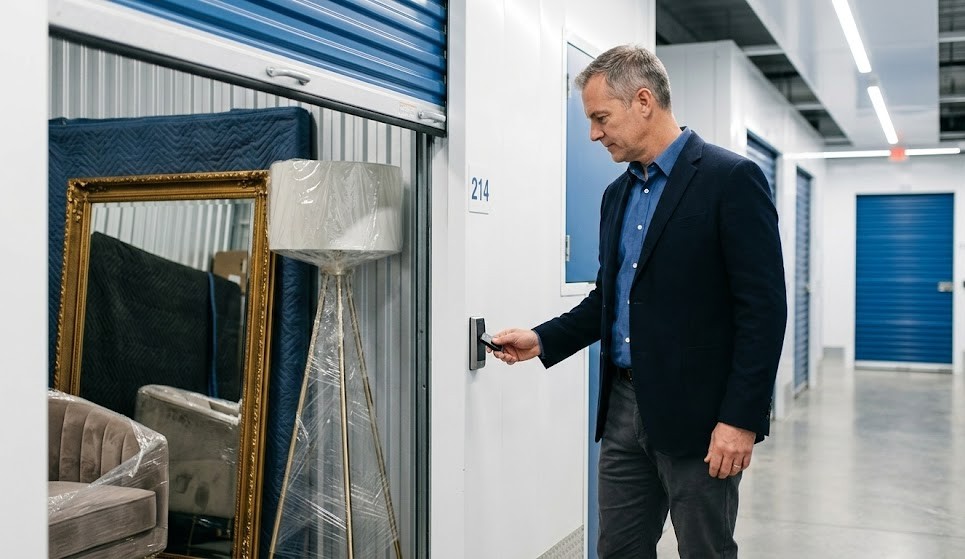
Removing items temporarily doesn’t mean throwing them away or spending a fortune on professional movers. A short-term rental marketing storage solution gives you the flexibility to clear a property for viewings and photography, then return the items once you’ve secured a tenant.
Consider this scenario: a landlord in Newbury had a two-bedroom flat that had been on the market for six weeks with minimal interest. The property was furnished with heavy, dark furniture that made the rooms feel cramped. By moving half the furniture into a storage unit for just one month, she was able to re-photograph the property with better lighting and more space. Within two weeks, she had three serious enquiries and signed a tenancy agreement at her asking price.
What to remove for maximum impact:
- Bulky sofas or armchairs that block natural light
- Excess dining chairs (keep just four for a standard dining table)
- Large wardrobes in bedrooms (if built-in storage exists)
- Coffee tables and side tables that crowd walking space
- Bookcases filled with personal items
- Kitchen appliances that clutter worktops
Calculating your storage needs
You don’t need a massive unit to make a significant difference. Most landlords find that a 25-50 square foot unit is sufficient for clearing out a one or two-bedroom property enough to stage it effectively. That’s roughly the size of a garden shed – enough space for a sofa, several chairs, side tables, and boxed items.
Think of it like packing for a holiday. You don’t need to take your entire wardrobe, just enough to get by comfortably. Similarly, you don’t need to empty the property completely – you’re simply creating breathing room so potential tenants can visualise their own belongings in the space.
For larger properties or those with significant furniture, a 75-100 square foot unit provides ample room for multiple rooms’ worth of furniture. The investment typically pays for itself through faster lettings and the ability to achieve your target rent without negotiating down.
The three-phase decluttering process
Staging a property for maximum impact isn’t about randomly removing items. There’s a methodical approach that ensures you keep what matters whilst clearing what doesn’t.
Phase One: Remove Personal Items
Start with anything that makes the property feel ‘lived in’ by someone else. This includes family photos, personal collections, toiletries in bathrooms, and kitchen items like spice racks or recipe books. These items tell a story, but it’s not the story potential tenants want to hear – they want to imagine their own story unfolding in that space.
Phase Two: Edit Furniture
Walk through each room and identify pieces that serve no clear purpose or make the space feel crowded. A bedroom doesn’t need a chair, a dressing table, and a desk – one or two pieces are sufficient. A living room doesn’t need a three-seater sofa, two armchairs, and a footstool. Choose the pieces that best showcase the room’s size and natural light.
Phase Three: Clear Surfaces
Kitchen worktops, bathroom counters, and bedside tables should be almost completely clear. This creates the impression of ample storage and makes the property feel cleaner and more modern. Store away small appliances, toiletries, and decorative items that clutter these surfaces.
Photographing your property like a professional
Once you’ve cleared the space, it’s time to capture it properly. Even with a smartphone camera, you can achieve impressive results if you follow a few basic principles.
Natural light is your best friend. Schedule your photography session for mid-morning or early afternoon when sunlight fills the rooms without creating harsh shadows. Open all curtains and blinds, and turn on every light in the property. The goal is to make each room look as bright and spacious as possible.
Shoot from the corners of rooms, not the middle. This perspective captures more of the space and makes rooms appear larger. Keep your camera at chest height rather than holding it up high or down low.
Remove yourself from reflections in mirrors and windows. It sounds obvious, but many amateur property photos include the photographer’s reflection, which looks unprofessional and distracting.
The cost-benefit analysis
Let’s talk numbers. A 50 square foot storage unit typically costs between £40-60 per month. If staging your property with temporary storage helps you let it just two weeks faster, you’ve saved two weeks of mortgage payments, insurance, and council tax – easily £300-500 for most properties.
More importantly, a well-presented property often lets at the asking price without negotiation. If decluttering and staging allows you to achieve £50 more per month in rent, that’s £600 additional income per year. The storage cost becomes insignificant compared to the return.
Many landlords also find that professionally presented properties attract higher-quality tenants. People who appreciate a well-maintained, thoughtfully presented home are often more likely to treat the property with respect and stay longer, reducing your turnover costs.
What to do with removed items
Not everything you remove needs to go into storage. This is an excellent opportunity to assess what’s actually worth keeping. That worn sofa that’s been moved between properties for five years? Perhaps it’s time to donate it rather than pay to store it.
Keep and store: Quality furniture and items you’ll use in future properties
Donate or sell: Functional items you no longer need
Dispose: Damaged or worn items that aren’t worth keeping
For items you’re keeping, proper packing makes a significant difference. Wrap furniture in protective covers, disassemble larger pieces if possible, and stack items carefully to maximise your storage space. The packaging supplies you invest in now protect your furniture investment for years to come.
Maintaining the staged look during viewings
Once you’ve staged and photographed your property, you’ll want to maintain that look throughout the viewing period. This can be tricky if the property is still partially furnished or if you’re conducting multiple viewings.
Before each viewing, do a quick 15-minute reset: plump cushions, check that surfaces are clear, open curtains, and turn on lights. It’s like the difference between a hotel room before and after housekeeping – the fundamentals are the same, but the presentation makes all the difference.
If you’re conducting back-to-back viewings, consider keeping a small kit in your car with cleaning wipes, air freshener, and spare light bulbs. These small touches maintain the professional impression you’ve worked to create.
Storage for different property types
The staging approach differs depending on your property type. A studio flat requires a different strategy than a four-bedroom house.
For studio and one-bedroom flats, focus on creating distinct zones. Remove bulky furniture that blurs the line between sleeping, living, and dining areas. A single sofa and a small dining table are usually sufficient – everything else can be stored temporarily.
Two and three-bedroom properties benefit from clearly defined room purposes. Don’t try to show that the third bedroom could be an office, gym, and guest room simultaneously. Choose one purpose, stage it accordingly, and store the rest. This helps potential tenants visualise exactly how they’d use the space.
Larger properties often suffer from the opposite problem – they look empty rather than cluttered. In these cases, you might actually need to add a few pieces rather than remove them. However, you’ll still want to store excess furniture that makes rooms feel busy or cluttered.
The timing question
How long should you plan to keep items in storage? Most landlords find that one to three months covers the entire process from photography through to securing a tenant and completing the move-in process.
If you’re letting through an agency, ask them for realistic timelines based on current market conditions. In a competitive rental market, you might secure a tenant within days of listing. In slower periods, you might need several weeks of viewings before finding the right match.
Many storage facilities offer flexible terms without long-term commitments, which is perfect for this temporary landlord staging storage approach. You’re not locked into paying for storage you no longer need once your property is let.
Beyond staging: long-term storage solutions
Some landlords discover that storage offers benefits beyond temporary staging. If you manage multiple properties, a storage unit can serve as a central hub for spare furniture, appliances, and maintenance supplies.
When a tenant moves out and leaves behind furniture, or when you’re upgrading appliances across multiple properties, having business storage space means you’re not scrambling to find room in your garage or making multiple trips to the tip. You can store quality items until they’re needed in another property.
This is particularly valuable for landlords who prefer to offer furnished lettings. Instead of buying new furniture for each property, you can rotate items between properties as needed, storing pieces during void periods and swapping them out when tenants’ needs change.
The competitive advantage
Here’s what many landlords miss: staging isn’t just about making a property look nice. It’s about standing out in a crowded market where potential tenants are comparing dozens of similar properties.
When someone’s scrolling through rental listings at 10 PM after a long day at work, they’re making split-second decisions about which properties warrant a closer look. A well-staged, professionally photographed property stops that scroll. It makes them think, “This landlord cares about presentation – they probably care about maintenance too.”
That perception carries through to viewings and tenancy agreements. Tenants who feel they’re renting from a professional, detail-oriented landlord are often more respectful of the property and more likely to report maintenance issues promptly rather than letting small problems become big ones.
Making it happen
The gap between understanding this strategy and actually implementing it usually comes down to logistics. You’re busy managing properties, dealing with contractors, and handling tenant enquiries. Adding “stage property for photos” to your to-do list feels like one more task in an already packed schedule.
Start small. If you have a property coming up for re-letting, commit to trying this rental marketing storage approach just once. Book a storage unit for one month, spend a Saturday moving out excess furniture, and take fresh photos. Track the results – how many enquiries do you receive compared to previous lettings? How quickly does it let? What rent do you achieve?
Most landlords who try this approach once never go back to photographing cluttered properties. The results speak for themselves. Contact us to discuss your specific staging needs – it takes just a few minutes and could transform how quickly your properties let.
Conclusion
Property staging doesn’t require a massive budget or professional expertise – it requires a willingness to see your property through a potential tenant’s eyes and the practical step of temporarily removing items that detract from that vision. Landlord staging storage provides the breathing room to present your property at its absolute best without permanently disposing of furniture and items you’ll need in the future.
The landlords who consistently achieve faster lettings and higher rents aren’t necessarily those with the newest properties or the lowest prices. They’re the ones who understand that presentation matters, that first impressions drive decisions, and that a small investment in staging and storage pays dividends through reduced void periods and stronger rental income. In a competitive market, that edge makes all the difference.