
 01635 581 811
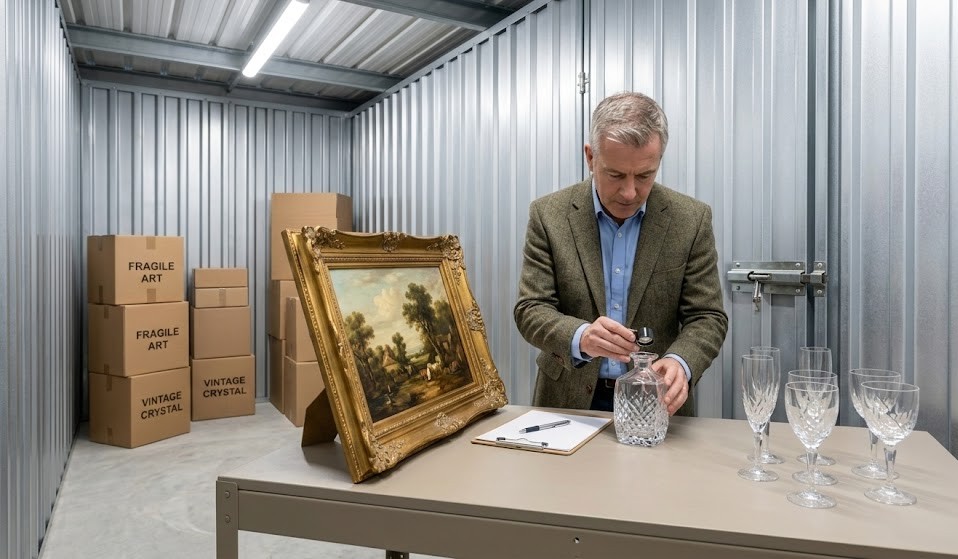
When someone passes away, their belongings don’t just carry sentimental value – they represent taxable assets that HMRC expects to be accurately reported. Every piece of furniture, every painting, every collection of books or china needs proper assessment for inheritance tax purposes. But here’s the challenge: valuing an estate takes time, often weeks or months, and those items can’t simply sit unprotected in an empty house whilst probate grinds forward.
Secure estate valuation storage becomes the bridge between bereavement and bureaucracy. It’s where estate contents remain safe, accessible, and properly preserved whilst executors arrange professional valuations and navigate HMRC requirements. Without it, families face impossible choices: rush the valuation process, leave valuable items in vulnerable properties, or risk deterioration that affects both monetary and emotional value.
Why estate valuations can’t be rushed
HMRC requires a detailed inventory of everything the deceased owned on the date of death. That’s not a quick walk-through with a notepad. Professional valuers need time to research comparable sales, authenticate items, and provide defensible figures that satisfy tax authorities.
Think of it like having your home surveyed before a sale, except you’re cataloguing potentially hundreds of items across multiple categories. Antique furniture requires specialist knowledge. Jewellery needs expert appraisal. Art collections demand authentication. Books, vinyl records, even vintage clothing – each category has its own valuation methodology.
This process rarely happens overnight. Valuers need to schedule appointments, often bringing specialist colleagues for different categories. They’ll photograph items, take measurements, check for maker’s marks or signatures. It’s thorough work that protects executors from HMRC challenges later.
The vulnerability window
Empty properties attract unwanted attention. Once word spreads that someone has died, houses become targets. We’ve seen it countless times: families who delayed moving items into personal storage only to discover break-ins, water damage from burst pipes, or deterioration from lack of heating.
Insurance companies know this too. Many household policies reduce coverage or exclude claims entirely once a property becomes unoccupied for more than 30 days. That’s often less time than it takes to arrange probate, never mind complete professional valuations.
Consider the case of a family dealing with their late mother’s three-bedroom cottage in Newbury. The house contained a lifetime’s accumulation: Georgian furniture, a collection of Royal Doulton figurines, oil paintings, and boxes of Victorian jewellery. The executors needed six weeks to coordinate valuers across different specialisms. Leaving everything in the empty cottage wasn’t an option – the insurance lapsed after 30 days, and the property sat on a quiet lane with no neighbours nearby. Moving everything into secure estate valuation storage gave them breathing room to do the job properly.
What HMRC actually requires
The taxman wants accuracy, not speed. HMRC expects executors to provide a realistic valuation of estate contents – what items would fetch if sold on the open market at the date of death. Guesswork doesn’t cut it. Neither does sentimentality.
For estates above the inheritance tax threshold (currently £325,000, or up to £500,000 with the residence nil-rate band), every item matters. Under-value contents and you risk penalties. Over-value them and you’ll pay unnecessary tax. Professional valuations protect against both scenarios.
HMRC also wants to see your working. Executors must demonstrate how they arrived at figures, which means keeping records of comparable sales, auction results, or professional appraisals. That documentation needs safeguarding just as much as the items themselves.
How secure storage supports the valuation process
Proper storage facilities offer something an empty house can’t: controlled conditions, round-the-clock security, and flexible access when valuers need it. Estate valuation protection isn’t just about keeping items safe – it’s about creating the right environment for accurate assessment.
Climate-controlled units prevent the temperature and humidity fluctuations that damage antiques, paintings, and textiles. Wood furniture doesn’t warp. Canvas doesn’t crack. Fabrics don’t develop mould. Items remain in the same condition they were in on the date of death, which matters enormously for valuation accuracy.
Security systems including CCTV, individual unit alarms, and controlled access mean items stay exactly where you put them. Valuers can visit knowing nothing’s been disturbed between appointments. That continuity matters when you’re building a comprehensive inventory.
Accessible units let executors bring valuers in without juggling house keys, coordinating with estate agents, or worrying about property security afterwards. Book an appointment, meet the valuer at the facility, give them the time they need. It’s straightforward.
Organising estate contents for valuation
Random piles of belongings don’t help valuers work efficiently. Taking time to organise items before storage – or during the initial move-in – saves money on valuation fees and ensures nothing gets overlooked.
Group items by category: furniture together, china and glassware packed separately, artwork in one area, books in another. Label boxes clearly with contents and which room they came from. It sounds basic, but this simple organisation prevents the “we found another box of silver in the garage” scenario that forces valuers to return for second visits.
Create a rough inventory as you pack. You don’t need valuations yet – just descriptions and quantities. “12 boxes of books from study,” “Georgian dining table and six chairs,” “box of costume jewellery from bedroom dresser.” This working list becomes the framework for professional valuations later.
Photograph everything before it goes into storage. These images serve multiple purposes: insurance records, reference for valuers who want to see items in their original context, and documentation for HMRC if questions arise.
Protecting high-value items
Some estate contents need extra consideration. Jewellery, small antiques, valuable collectables – items that combine high worth with portability require additional security measures.
Consider using smaller, more secure units for these items, separate from bulk furniture storage. Some families split estate contents across two units: one container storage space for furniture and household goods, and a smaller, climate-controlled unit for valuables. It’s like keeping your savings in a safe rather than under the mattress.
Document high-value items meticulously. Detailed photographs from multiple angles, measurements, maker’s marks, any existing documentation about provenance or previous valuations. This information helps professional valuers work more efficiently and supports HMRC submissions.
Don’t forget about insurance during storage. Whilst facilities provide security, executors should ensure adequate coverage for estate contents. Standard storage insurance often has limits that don’t cover valuable estates. Specialist probate insurance fills this gap and provides comprehensive estate valuation protection.
The timeline challenge
Probate doesn’t follow a neat schedule. Valuations might take weeks. HMRC can request additional information. Disputes between beneficiaries can drag on for months. Throughout this uncertain period, estate contents need somewhere secure to sit.
Flexible storage arrangements solve this problem. Month-to-month agreements mean you’re not locked into long contracts whilst probate proceeds at its own pace. Need an extra month because the valuer’s schedule slipped? Not a problem. Want to start releasing items to beneficiaries once valuations complete? Adjust your storage space accordingly.
This flexibility matters financially too. Empty houses haemorrhage money – council tax, utilities, insurance, maintenance. Moving contents into secure estate valuation storage often allows executors to market the property sooner, converting a depreciating asset into cash that can start offsetting inheritance tax bills.
Working with professional valuers
Experienced valuers appreciate organised, accessible estate contents. They can work more efficiently, which means lower fees for the estate. They can also be more thorough, which means more accurate HMRC submissions.
When you contact us about estate storage, we can coordinate access for valuers without executors needing to be present for every appointment. Provide authorisation, and professionals can visit during business hours to complete their assessments. It’s one less thing for grieving families to manage.
Valuers also appreciate proper packing. Items stored in appropriate boxes, wrapped in protective materials, arranged so they can see what they’re assessing – it all contributes to accurate valuations. Our packaging supplies include specialist materials for fragile items, artwork, and antiques. Proper packing isn’t just about protection; it’s about presentation for professional assessment.
The emotional dimension
Behind every estate valuation sits a family dealing with loss. The practical demands of probate and tax assessment come at precisely the wrong time emotionally. Secure estate valuation storage provides a pause button – a way to protect belongings whilst giving families space to grieve without the pressure of immediate decisions.
It’s like giving yourself permission to deal with one thing at a time. Sort the legal requirements first. Get accurate valuations. Satisfy HMRC. Then, when you’re ready, start the more emotional work of distributing belongings and deciding what to keep.
We’ve watched families transform from overwhelmed to organised once estate contents are safely stored. The mental load lifts. Instead of worrying about vulnerable items in an empty house, they can focus on the actual work of probate and valuation.
Common mistakes to avoid
Rushing valuations to avoid storage costs is false economy. HMRC challenges cost far more than a few months of secure storage. So does discovering that underinsured items were stolen or damaged whilst sitting in an empty property.
Mixing estate contents with your own belongings creates confusion. Keep everything separate, properly documented, and easily accessible for valuers. It protects everyone involved and makes the probate process cleaner.
Failing to maintain climate control damages items and affects valuations. A warped antique table or mould-damaged painting isn’t worth what it was on the date of death. HMRC won’t accept “it deteriorated in storage” as justification for reduced valuations. Proper estate valuation protection through climate-controlled storage prevents these issues.
Inadequate documentation causes problems later. HMRC might question valuations months after submission. Beneficiaries might dispute distributions. Proper records of what was stored, when, and in what condition protect executors from challenges.
When storage becomes long-term
Sometimes probate stretches beyond anyone’s expectations. Disputed wills, complex estates, HMRC investigations – any number of factors can extend timelines. Secure estate valuation storage adapts to these realities.
Items can remain in storage for months or even years if necessary, protected and accessible throughout. This matters particularly when estates include items that beneficiaries can’t immediately accommodate – perhaps adult children living abroad or in temporary accommodation themselves.
Business storage principles apply here: long-term protection, flexible access, and security that doesn’t waver regardless of duration. Estate contents deserve the same professional approach as commercial inventory.
Making the transition
Once valuations complete and HMRC accepts the estate submission, storage facilities provide the staging ground for distribution. Beneficiaries can collect items on schedules that suit them. Auction houses can retrieve lots for sale. Charity shops can collect donations.
This phased approach prevents the chaos of trying to distribute an entire estate in one overwhelming day. It’s controlled, documented, and manageable – exactly what executors need when juggling multiple responsibilities.
Protecting what matters
Estate valuation and HMRC assessment represent legal obligations, but behind the paperwork sit items that mattered to someone who’s gone. Protecting those belongings during the probate process honours that memory whilst satisfying tax authorities.
Estate valuation protection through secure storage isn’t an optional extra in this process – it’s essential infrastructure that makes accurate valuation possible. It bridges the gap between death and distribution, providing the time and protection that thorough estate administration requires. For executors navigating unfamiliar territory, it’s one decision that removes worry rather than adding to it.