 01635 581 811
Life throws unexpected challenges at the most inconvenient moments. Power cuts during winter storms. Burst pipes flooding your home. Supply chain disruptions leaving shops empty. These aren’t dramatic scenarios from disaster films – they’re genuine situations that UK households face regularly. Building a go-bag and maintaining comprehensive emergency supplies isn’t paranoia. It’s sensible preparation that transforms potential crises into manageable inconveniences.
The difference between families who weather emergencies calmly and those who panic-scramble for basics often comes down to one factor: preparation. A well-stocked emergency kit provides the buffer you need whilst waiting for normal services to resume. Proper emergency kit storage ensures your supplies remain accessible, protected, and genuinely useful when you actually need them rather than discovering expired food and corroded batteries during a crisis.
This isn’t about preparing for apocalyptic scenarios. It’s about having water when pipes freeze, having light when power fails, and having warmth when heating stops working. Simple, practical preparation for realistic situations.
Why Preparation Makes Genuine Difference
Emergency kits aren’t just random collections of supplies. They’re carefully considered resources that address specific needs during disruptions. The goal isn’t surviving indefinitely – it’s maintaining safety and reasonable comfort for 72 hours whilst emergency services respond and normal services resume.
Consider what happens during typical UK emergencies. Severe storms knock out power for days. Frozen pipes leave households without water. Heavy snow blocks roads, preventing supply deliveries. These situations don’t require extreme survival skills – they require basic supplies and calm thinking.
Preparation changes everything. When your neighbours are panicking about where to find bottled water whilst shops are closed, you’re calmly drawing on stored supplies. When darkness falls and there’s no electricity, you’ve got reliable lighting rather than fumbling with phone torches that drain batteries. When it’s freezing and heating fails, you’ve got thermal blankets and warm clothing ready.
Think of emergency preparation like car insurance. You hope you’ll never need it, but you’d be foolish to drive without it. The investment is minimal compared to the consequences of being unprepared.
Understanding Your Specific Risks
Generic emergency preparation helps, but tailored preparation proves more effective. UK households face different challenges than those in earthquake zones or hurricane regions. Focus your preparation on realistic local risks rather than unlikely scenarios.
Winter power cuts represent the most common serious disruption. Storms, ice damage, and infrastructure failures can leave homes without electricity for days. Without power, you lose heating, lighting, cooking capability, and communication charging.
Flooding affects thousands of UK properties annually. Localised flooding from heavy rainfall, river flooding, or burst pipes creates immediate displacement needs and property damage that takes weeks to resolve.
Water supply disruption from frozen pipes, infrastructure damage, or contamination warnings leaves households without safe drinking water or sanitation capabilities. This happens more frequently than most people realise.
Supply chain disruptions from severe weather, fuel shortages, or other factors can empty shop shelves quickly, making basic supplies temporarily unavailable even when your home remains habitable.
Tailor your emergency supplies to address these realistic scenarios rather than general disasters that may never affect you.
Essential Components for Your Core Go-Bag
Building a go-bag means creating a portable kit containing everything essential for 72 hours. This isn’t a comprehensive survival setup – it’s concentrated essentials that you can grab quickly if you need to leave home immediately or access supplies during disruptions.
Non-Negotiable Survival Items
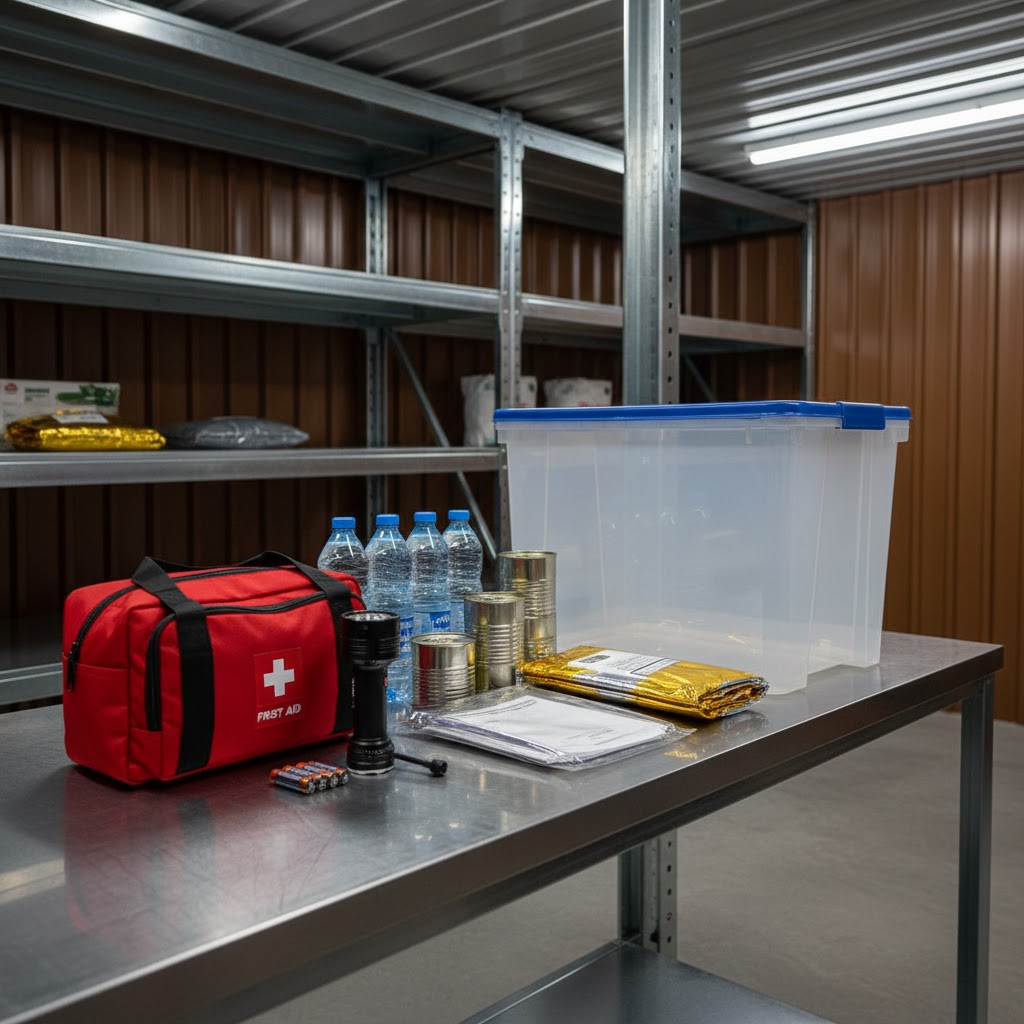
Water represents your absolute priority. Adults need roughly one gallon (4.5 litres) daily for drinking and basic sanitation. A family of four requires 12 gallons for three days – that’s substantial weight and volume. Store water in sealed containers that won’t leak or degrade. Replace stored water every six months to ensure freshness.
Non-perishable food provides energy without requiring cooking or refrigeration. Focus on items that don’t need preparation – canned goods with ring pulls, energy bars, dried fruit, nuts, and sealed crackers. Avoid foods requiring significant water for preparation when water itself is limited. Include a manual can opener – electric ones won’t work without power.
First aid supplies address minor injuries and health maintenance. Your kit needs adhesive bandages, sterile gauze, antiseptic wipes, pain relievers, antihistamines, and any prescription medications family members require. Include a basic first aid manual if you’re not confident about emergency treatment procedures.
Lighting and communication equipment keeps you informed and safe during power cuts. LED torches are more efficient than traditional bulbs and last considerably longer. Include spare batteries or hand-crank models that don’t require batteries at all. A battery-operated or hand-crank radio provides emergency broadcasts when internet and mobile networks fail.
Warmth and clothing prevent hypothermia during winter emergencies. Thermal blankets fold compact but provide substantial insulation. Include spare warm clothing, waterproof outer layers, and sturdy footwear suitable for potentially difficult conditions. Don’t assume your normal wardrobe will be accessible if you need to evacuate quickly.
Essential documents require waterproof protection. Store copies (not originals) of identification, insurance policies, medical records, bank details, and emergency contact numbers in sealed waterproof bags. Digital copies on USB drives provide additional backup if paper documents get damaged.
Cash in small denominations becomes essential when card machines and ATMs stop working during power cuts. Keep £100-£200 in £5, £10, and £20 notes in your emergency kit. Electronic payment systems fail surprisingly often during emergencies.
Items People Often Forget
Prescription medications in adequate quantities for at least a week. Speak with your GP about obtaining emergency supplies specifically for disaster preparation rather than relying on your regular prescription schedule.
Babies and young children require nappies, formula, bottles, and familiar comfort items that help them cope during stressful situations. Don’t forget these essentials if you have young family members.
Pets need supplies too – food, water, medications, leads, and carriers. Emergency services often won’t evacuate pets without proper carriers, and temporary accommodation rarely provides pet supplies.
Sanitation supplies including toilet paper, hand sanitiser, wet wipes, and plastic bags for waste disposal become surprisingly important when normal facilities aren’t available.
Personal hygiene items maintain health and morale during extended disruptions. Include toothbrushes, soap, and feminine hygiene products as appropriate.
Storing Your Emergency Kit Effectively
The most comprehensive emergency kit proves useless if you can’t find it during a crisis or if supplies have degraded from poor storage. Location and protection determine whether your preparation actually helps when needed.
Accessibility Requirements
Store your primary go-bag somewhere everyone in the household knows and can access easily. Hall cupboards, utility rooms, or dedicated storage areas near exits work well. Don’t bury emergency kits in attics, garages, or basement areas that might become inaccessible during the emergencies they’re meant to address.
Think about realistic emergency scenarios. If your basement floods, can you still reach your emergency kit? If you need to evacuate quickly at 2am, can everyone find supplies in the dark? These practical considerations determine whether your preparation actually works under pressure.
Protection from Environmental Damage
Moisture ruins emergency supplies remarkably quickly. Food degrades, medications lose effectiveness, documents become illegible, and batteries corrode. Store everything in waterproof containers – proper sealed storage boxes rather than cardboard that absorbs moisture.
Temperature extremes damage supplies similarly. Freezing temperatures can burst water containers and damage medications. Excessive heat degrades food, weakens batteries, and warps plastic containers. Indoor storage in temperature-stable areas protects supplies far better than sheds, garages, or outdoor storage.
Pests will absolutely destroy unsecured food supplies. Mice, insects, and other pests can infiltrate surprisingly small gaps. Proper sealed containers prevent pest access whilst also protecting against moisture and contamination.
You can source quality protective containers – waterproof storage boxes, airtight food containers, and durable packing materials – from the packaging shop to ensure comprehensive protection for all emergency supplies.
Maintaining Emergency Kits Properly
Creating an emergency kit isn’t a one-time task – it requires regular maintenance to ensure everything remains functional when needed. Supplies degrade, circumstances change, and kits require updating to stay genuinely useful.
Regular Inspection Schedule
Check expiration dates every six months. Food, water, and medications all have limited shelf lives. Create a regular schedule – perhaps linked to clock changes in spring and autumn – for reviewing and replacing expired items. Don’t wait until emergencies reveal that everything expired two years ago.
Test equipment annually. Torches that worked perfectly when stored might have corroded batteries or failed bulbs. Radios might have broken antenna or malfunctioning tuners. Test everything annually to verify functionality rather than discovering problems during actual emergencies.
Update for changing circumstances. Babies grow and need different sizes. Medical conditions change and require different medications. Family size fluctuates. Review your kit whenever household circumstances change significantly.
Practice accessing and using supplies. Run occasional drills where family members locate the kit and identify contents. This practice ensures everyone knows where supplies are and how to use them properly.
Take David’s learning experience. He’d carefully assembled an emergency kit five years ago and felt confident about his preparation. When a winter storm knocked out power for three days, he discovered his stored water had developed algae, his batteries had corroded and leaked, and his food had expired eighteen months earlier. He’d created the kit but never maintained it. His supplies proved useless when he actually needed them. Regular maintenance prevents these failures.
When Home Storage Isn’t Sufficient
Comprehensive emergency preparation for larger households, those with specific medical needs, or small businesses often exceeds available home storage capacity. This is where professional emergency kit storage becomes practical infrastructure rather than excessive preparation.
Extended Family and Household Needs
Families with multiple generations, households with medical conditions requiring extensive supplies, or those preparing for extended disruptions might need significantly more than basic go-bags accommodate. Bulk water storage, extended food supplies, backup medical equipment, and seasonal clothing for multiple people require substantial space that homes often can’t spare.
Personal storage solutions provide clean, secure space for overflow emergency supplies without cluttering living areas. You maintain accessible reserves that supplement immediate go-bags whilst keeping homes liveable.
Business Continuity Planning
Small businesses need emergency preparation that extends beyond household kits. Backup equipment, archived records, recovery stock, and business continuity supplies ensure operations can resume quickly after disruptions rather than facing extended closures that damage customer relationships and revenue.
Business storage solutions offer cost-effective space for business emergency equipment and recovery supplies. These facilities provide the security and accessibility that commercial continuity planning requires without expensive long-term commercial leases.
Large-Scale Preparation Requirements
Generators, extensive water storage, bulk non-perishable food supplies, and substantial equipment require considerable space that standard storage units might not accommodate efficiently. Container storage options provide drive-up access for heavy or palletised goods whilst offering the security and weather protection that emergency supplies demand.
Selecting Appropriate Storage Facilities
If using professional storage for emergency supplies, choose facilities that meet specific security and accessibility standards rather than just finding the cheapest available space.
Essential Facility Features
24/7 CCTV monitoring ensures comprehensive security for valuable emergency equipment and supplies. Your backup resources deserve protection equivalent to their importance.
Climate control protects sensitive items – medications, electronics, archived documents – from temperature and humidity extremes that degrade effectiveness. The small additional cost prevents expensive supply degradation.
Flexible access means you can retrieve emergency supplies whenever needed rather than being restricted to business hours. Emergencies don’t follow convenient schedules.
Perimeter security with electronic gate access and proper fencing prevents unauthorised entry whilst maintaining easy access for legitimate users.
Newbury Self Store implements these security and access standards as baseline requirements, understanding that emergency supplies require reliable protection and accessibility.
Creating Sustainable Preparation
Emergency preparation isn’t about panic-buying or hoarding. It’s about maintaining sensible supplies that address realistic scenarios whilst ensuring everything remains functional through proper maintenance and storage.
Start with basic go-bags containing 72-hour supplies for immediate needs. Expand gradually to include extended supplies as budget and space permit. Maintain everything through regular inspection and updating. This systematic approach creates genuine preparedness rather than false security from neglected supplies.
The peace of mind from knowing you’re prepared for realistic emergencies proves worth far more than the modest investment in time and resources. When disruptions occur – and they will eventually – you’ll respond calmly whilst others panic.
Ready to establish comprehensive emergency preparation with secure storage for extended supplies? Contact the team for straightforward advice about storage options, climate control, and flexible contracts that support thorough emergency preparation without cluttering your home.