
 01635 581 811
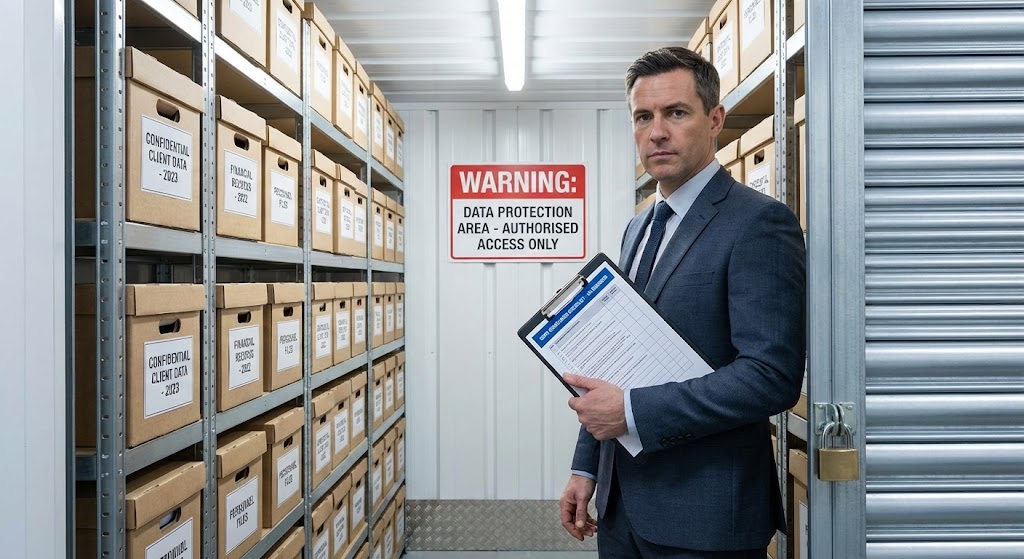
Understanding the General Data Protection Regulation isn’t a nice-to-have for modern businesses – it’s absolutely essential. This EU legislation safeguards personal data and continues to bind UK companies processing that information. Non-compliance doesn’t just risk hefty fines; it erodes the trust your customers place in you. GDPR compliant storage of physical records must be treated as seriously as protecting your digital systems.
Physical documents pose identical data protection risks to their electronic counterparts. That’s why selecting appropriate business storage units in Newbury forms a critical pillar of your broader data protection compliance framework.
Understanding Your Legal Obligations
What GDPR Actually Demands from Businesses
GDPR establishes a comprehensive framework requiring all organisations to handle personal information with transparency and care. This isn’t simply about dodging penalties that can stretch into millions – it’s about proving to your clients that you value their privacy. When people know their details are secure and respected, loyalty follows naturally.
The regulation covers every format where data exists. Emails and databases fall under its scope, but so do paper invoices and archived personnel files. The protection standards applied to your digital infrastructure must extend to your physical archive rooms.
Core Terminology You Need to Know
Grasping your responsibilities becomes easier once you understand the language that defines different roles and activities.
Personal Data: Information identifying an individual, whether directly or through combination with other data.
Data Controller: The entity deciding how and why personal data gets processed.
Data Processor: An organisation processing data on the controller’s behalf, including secure storage facilities.
Data Subject: The person whose information you’re processing – customers, staff members, or suppliers.
Processing: Any action involving personal data, from collection through to storage, usage, or deletion.
The Hidden Dangers of Physical Archives
Why Paper Files Create Unique Vulnerabilities
Too many businesses treat their storage units like abandoned attics, stuffing boxes away and forgetting them. This casual attitude invites genuine danger. Physical documents can’t hide behind encryption or firewalls; they need concrete, visible security measures. When paper files holding invoices, contracts, or employee records get compromised, the breach carries identical weight to any digital attack.
Think of a growing online retailer moving five years’ worth of customer orders – complete with names, addresses, and purchasing patterns – into a basic lock-up. Without controlled entry or surveillance, those documents become a ticking time bomb. One breach, and the company’s violated its legal duties. Ignoring physical storage risks isn’t just careless; it’s expensive.
Learning from Others’ Mistakes
Picture a fictional law firm, “Henderson & Clarke Legal,” that stored client files containing confidential financial and medical information in a bargain-basement facility with minimal oversight. A break-in exposed their records, triggering a full-blown GDPR investigation. They scrambled to upgrade to GDPR compliant storage with comprehensive security protocols, but the damage to their reputation took years to repair.
The lesson? Penny-pinching on archive security never justifies the financial penalties and lost trust that follow a breach. Your storage security level must always match the sensitivity of what you’re protecting.
Selecting the Right Storage Facility
What Makes Storage Truly Compliant
Choosing your facility represents the most crucial decision in maintaining data protection compliance. Not every self-storage provider delivers the security threshold required for sensitive business documents. You need a facility functioning as a secure extension of your office space, not just a glorified garage.
Look for established providers prioritising constant monitoring and regulated access. Think of it like choosing a bank for your money – you wouldn’t pick one without vaults, cameras, and security guards. Your data deserves the same scrutiny. Businesses seeking robust and flexible solutions throughout the region will find that Newbury Self Store offers the complete package for protecting sensitive materials.
Critical Security Features to Verify
When evaluating potential business storage options, ask pointed questions about protective measures. Your selection must reflect current industry standards for safeguarding personal information.
Round-the-Clock Surveillance: Do cameras monitor every corner of the premises, covering access points, corridors, and external perimeters continuously?
Individual Alarms: Does each unit have its own dedicated alarm triggering immediate security response if breached?
Controlled Entry Systems: How does the facility manage access? Look for personalised key fobs or PIN codes logging every single entry and exit.
Perimeter Protection: Is the entire site secured with proper fencing, adequate lighting, and reinforced gate systems?
Security Staff Training: Are personnel educated in data protection protocols and equipped to handle security incidents professionally and discreetly?
Reviewing Your Storage Contract
Legal documentation carries equal importance to physical safeguards. Scrutinise the storage agreement thoroughly to understand the facility’s responsibilities for your assets. For commercial use, you need transparent terms explicitly addressing data protection compliance requirements.
The contract must outline liability clearly, detail access control procedures, and specify breach notification protocols. Don’t sign anything without understanding these elements completely.
Building Robust Internal Procedures
The Accountability Principle
Securing a proper facility solves only half your challenge; the remainder involves implementing solid internal processes. GDPR’s Accountability principle demands you demonstrate active risk mitigation, not just claim compliance.
Maintaining Comprehensive Records
Creating a detailed inventory of all stored materials containing personal data isn’t optional – it’s mandatory. This system lets you quickly locate specific files when handling data subject requests, whether for access or erasure. It also simplifies tracking when documents hit their retention deadline and need destroying.
Your inventory should function like a library catalogue. When someone requests information, you shouldn’t be rummaging through dozens of boxes hoping to find the right file.
Establishing Retention and Destruction Policies
Every piece of personal data follows a lifecycle; once a document serves no legal or operational purpose, secure destruction becomes necessary. Establish clear policies dictating retention periods for different document categories.
Secure shredding represents the only acceptable disposal method for paper documents. Use certified shredding services providing destruction certificates. Old hard drives require physical destruction, not simple formatting. Businesses needing large-capacity solutions for extensive archives often discover container storage offers ideal flexibility.
Preparing Materials Properly
How you package sensitive files dramatically affects their security and preservation. Documents need storing in sturdy, high-quality boxes with clear labels – but never list personal data externally. You’ll find robust packaging supplies essential for protecting archives from moisture and contamination, keeping them audit-ready for years.
When Things Go Wrong
Mandatory Breach Reporting
What happens if your business faces non-compliance through a physical data breach? You’re legally required to notify the Information Commissioner’s Office within 72 hours of discovering the incident. Affected individuals must also receive direct notification. These aren’t suggestions – they’re legal requirements.
The Real Price of Non-Compliance
Beyond mandatory reporting, financial consequences can devastate your business. Maximum fines reach €20 million or 4% of annual global turnover, whichever proves higher. Even smaller penalties inflict lasting harm on reputation and customer relationships.
Investing in secure GDPR compliant storage essentially functions as business insurance. The costs pale against potential penalties.
Taking Action Now
Conducting Your Storage Audit
Protecting your organisation requires proactive thinking, treating data storage as a primary security concern rather than an afterthought. Start by auditing your current paper archives and reviewing protection policies to confirm they cover physical and digital materials equally.
If your current arrangements don’t meet proper security standards, it’s time to upgrade. The right facility should integrate seamlessly with your existing protocols, not force you to compromise.
Getting Expert Guidance
We understand that navigating data protection compliance can feel overwhelming, especially when juggling daily business operations. That’s precisely why professional guidance matters. We offer secure and reliable personal storage solutions designed around various professional requirements.
If you’re searching for a storage partner that takes compliance seriously, we’re ready to help. Contact our team today to discuss your specific requirements and find the perfect solution.