
 01635 581 811
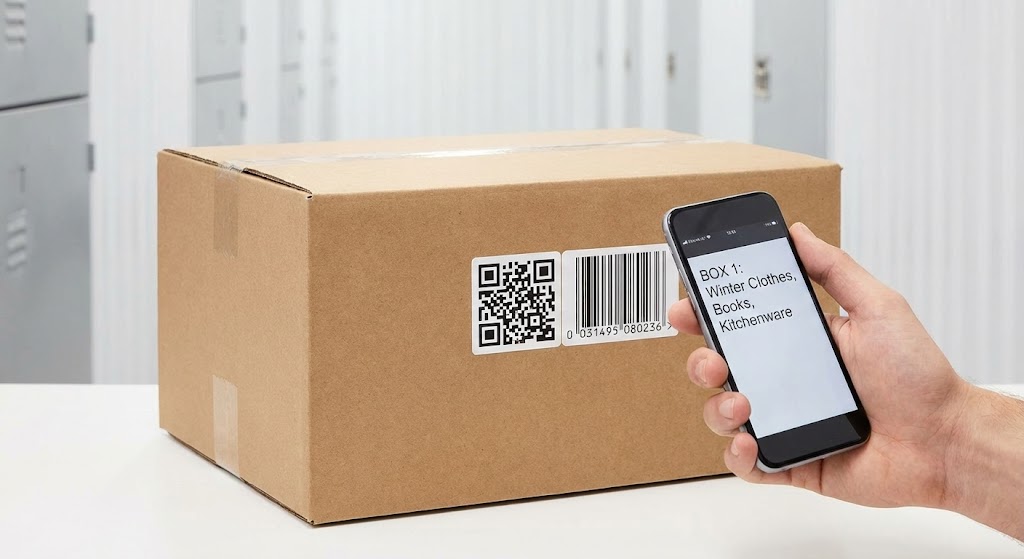
Right, let’s get down to brass tacks about labelling your belongings before they enter secure storage units. You’ve got items to store, and you certainly want to find them again without turning your unit upside down. Establishing an organised system from the start is essential for efficient storage labelling and retrieval. Choosing the right technology, be it QR codes or barcodes, can dramatically improve your experience. Smart labeling systems make all the difference when managing your stored items, and this comparison explores the pros and cons of each to help you decide which is the best fit for your specific self-storage needs in Newbury.
Understanding the Technology Behind Tracking
Before exploring the benefits of each, it’s helpful to clarify what separates these two common codes. Barcodes are the familiar series of vertical lines and spaces, storing information in one direction, horizontally. This allows for a simple string of numbers or letters to be read instantly by a scanner.
QR codes, or Quick Response codes, are the square, pixelated codes that hold information both horizontally and vertically. This dual-directionality means they can store significantly more data than a standard linear barcode. Think of a barcode as a simple address, while a QR code is a detailed map containing full descriptive notes.
Leveraging Capacity for Smart Organisation
The capacity for data storage is the key technical difference between the two systems. A typical retail barcode might only hold up to 20 digits, sufficient for an inventory ID number. Conversely, a standard QR code can store several thousand alphanumeric characters, making it a far more flexible tool.
This greater capacity allows you to embed entire box contents lists, high-resolution photographs, or even specific safety instructions directly into the code. By applying these codes, you create an efficient link between the physical item and a digital record, streamlining your inventory tracking. This is especially helpful if you plan on using personal storage for long periods, as it eliminates the guesswork when searching through dozens of similar-looking boxes.
QR Codes: The Flexible, Modern Storage Solution
QR codes have become incredibly popular in recent years, offering a level of flexibility and enhanced functionality that traditional barcodes simply can’t match. For anyone needing detailed notes, especially when using self-storage during a complex house move, QR codes are often the superior choice.
Enhanced Detail and Scanning Reliability
The vast storage capacity of QR codes is their greatest asset. You could link a QR code storage label to a secure cloud document detailing every item, including purchase dates and estimated values. This level of detail is invaluable for insurance purposes and for efficient stock management.
QR codes are also far more robust because they include built-in error correction. This feature means that even if a portion of the code is obscured or damaged, it can often still be scanned and read without issue. This added durability is especially useful in a working storage environment where labels might be handled frequently.
A recent client, Mr. Jones, was moving his small art gallery’s archives into a secure storage unit. He used QR code storage labels on every storage box, linking each code to a high-resolution photo of the contents. When he needed to pull one specific piece months later, he simply scanned the box with his phone, confirming its location instantly without disturbing any other items.
Smartphone Accessibility
One of the most appealing features of the QR code system is its low barrier to entry. Most people carry a powerful scanner in their pocket every day: their smartphone. QR codes are designed to be scanned instantly by standard camera apps without the need for specialised, expensive equipment. This accessibility allows you to easily create, print, and manage your QR code storage labels using free or affordable software, giving you complete control over your stored items.
Barcodes: The Proven, Cost-Effective Classic
Despite the rise of newer technologies, barcodes remain a tried-and-true system that still holds significant value, particularly for specific business storage and commercial applications. They’re a well-established standard that prioritises speed and simplicity above all else.
Speed and Low Implementation Costs
Barcodes excel in environments where speed and high volume are the priority because they store minimal information and can be read almost instantaneously. This makes them ideal for scenarios where you need to quickly track large quantities of identical items or check products in and out of a unit rapidly.
Generally speaking, barcodes are also the more economical choice, as scanners are readily available and inexpensive. If your needs are straightforward, tracking 50 numbered boxes, for example the low cost of setup makes barcodes a very practical option. You can acquire high-quality, durable moving boxes and supplies easily from the packaging shop.
Integration with Existing Systems
Barcodes have been the retail and logistics standard for decades, meaning they integrate seamlessly with nearly all existing commercial inventory tracking and Point of Sale (POS) software. If you’re a business owner already running established software, sticking with barcodes might be the easiest and most sensible option. This ensures a consistent system from your office to your secure storage units, creating smart labeling systems that work with your existing processes.
Choosing the Right System for Your Needs
So, which should you choose for your storage labelling: QR codes or barcodes? The answer isn’t a simple one; it truly depends on your specific needs, the nature of your items, and how often you’ll need to access them. Just as you wouldn’t use a tiny shed for a whole house of furniture, you shouldn’t choose a simple barcode system if you require deep levels of detail.
Your choice should align directly with your storage goals. QR codes are ideal for complex moves, archival documents, or high-value items where detailed descriptions are required. Barcodes are best suited for business stock, long-term storage of identical items, or high-volume, efficient stock management where speed is critical.
While barcodes have a lower initial setup cost, it’s important to weigh that against the long-term efficiency of QR codes. For those planning major storage projects, perhaps utilising a large container storage unit for a business move, it’s worth investing in a system that can grow with you. The team at Newbury Self Store can help talk through the volume of storage and complexity of items you have to guide you to the right solution.
Essential Preparation: Labelling Tips That Last
Whichever tracking technology you choose, effective labelling requires diligence and high-quality materials. A poorly applied label is useless if it peels off or becomes illegible. A smart system relies on smart preparation.
Start by ensuring your containers are suitable for long-term storage and that your labels will adhere properly. Always use durable, high-quality labels designed to withstand fluctuations in temperature and humidity. Also, ensure that you place your labels in a consistent location on every single box or item, such as the top-right corner. This creates a predictable system that your brain, or a handheld scanner, can process quickly.
Ready to Get Organised with Newbury Self Store
You’ve explored the difference between QR codes and barcodes, and you’re now equipped to choose the best storage labelling system for your needs. Whether you opt for the flexibility of QR codes or the speed of the classic barcode, the right choice will make your storage experience efficient and stress-free.
When you’re ready to secure a unit, Newbury Self Store provides reliable, flexible, and affordable options for both personal and business use. The facilities prioritise security, ensuring your labelled items are safe from the moment you lock the door. To learn more about storage options or to book your storage unit today, please get in touch with the friendly team via the contact us section.