
 01635 581 811
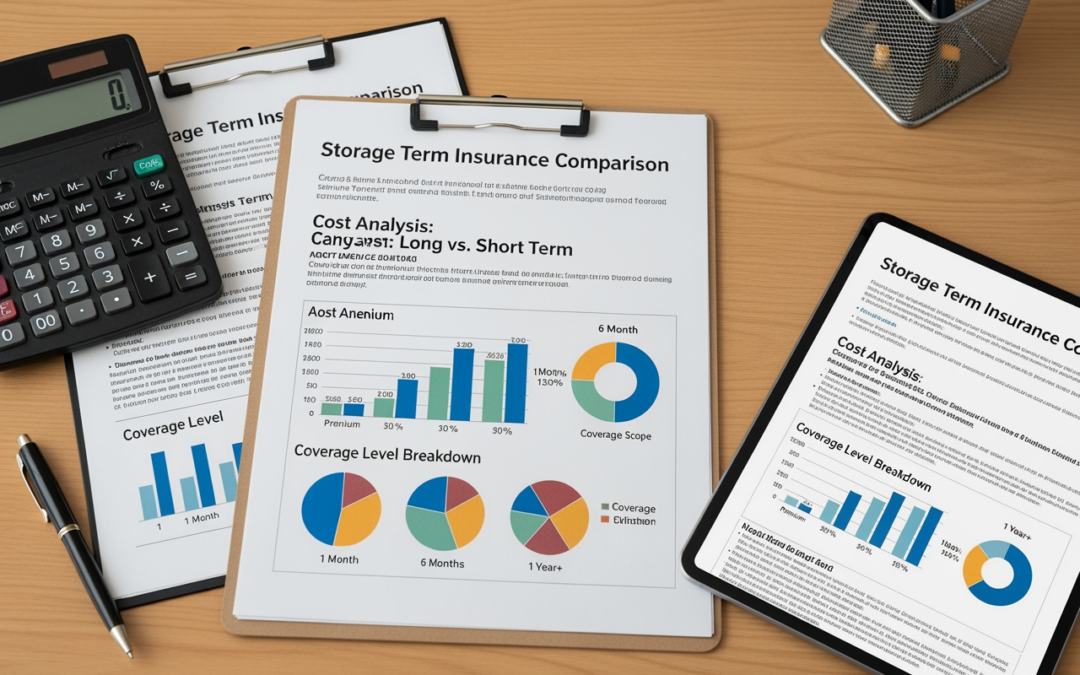
Running a business in the UK, whether you are a seasoned professional in Newbury or a fresh start-up finding your feet, involves managing a multitude of considerations. Beyond products, services, team, and marketing, there are the physical assets: stock, equipment, archives, and furniture that are essential for your business operations. When space becomes a premium, a trusted partner like Newbury Self Store offers valuable solutions. However, once your goods are securely stored, the crucial question of insurance arises. This topic can appear complex, particularly when you begin comparing insurance options for varying storage durations. Understanding the distinctions between insurance for short-term needs versus long-term commitments is key, and this article will help unravel these complexities.
Why Bother With business storage insurance? More Than Just a Box-Ticking Exercise
Insurance might feel like a reluctant purchase, with premiums paid in the hope they are never needed. However, when considering your business assets, neglecting Business Storage Insurance can be a significant oversight, akin to facing a downpour without an umbrella; you might escape unscathed, but the risk of a considerable drenching remains.
The “What If?” Factor: Peace of Mind in an Uncertain World
Consider a scenario: you have recently moved a substantial amount of seasonal stock into storage, anticipating the busy Christmas period. An unexpected storm leads to flooding, and your unit sustains water damage. Alternatively, imagine arriving to discover your unit has been burgled. These are distressing situations. Yet, with appropriate insurance, initial panic can be swiftly tempered by the reassurance of being covered. This peace of mind is invaluable, allowing you to concentrate on your business rather than dwelling on catastrophic possibilities.
Contractual Obligations: Sometimes, It’s Not Just a Good Idea, It’s a Must
Many reputable storage facilities, including Newbury Self Store, stipulate that clients must have insurance for their stored goods. This is a standard component of storage agreements, designed to protect all parties and clarify responsibilities. While an existing home contents policy might seem like it could cover items in storage, it is vital to verify the specifics; many policies do not, or offer only very limited protection. This is why we often recommend specialist options or can help arrange cover specifically designed for self-storage environments.
Protecting Your Assets, Protecting Your Livelihood
Your business assets – whether vital documents, expensive machinery, or valuable stock – represent the core of your company. Loss, damage, or theft of these items can lead to severe financial repercussions. This extends beyond mere replacement costs to include potential operational downtime, lost sales, and significant disruption. Proper Business Storage Insurance is an investment in your business’s continuity and overall resilience.
Short-Term vs. Long-Term Business Storage: What’s the Difference for Your Insurance?
The planned duration for storing your items significantly impacts the type and focus of your insurance. A policy suitable for a brief three-month period may not be adequate for items stored for three years.
Defining Short-Term Business Storage
Short-term storage provides a temporary sanctuary for your business goods. Businesses frequently utilise our Business Storage solutions at Newbury Self Store, which are ideal for a variety of temporary requirements such as:
- Seasonal Stock: Storing Christmas decorations in January or summer festival equipment in November.
- Office Moves or Renovations: Safeguarding furniture and equipment while primary premises are unavailable or undergoing refurbishment.
- Event Equipment: Securing exhibition stands, promotional materials, or AV gear between trade shows.
- Excess Inventory: A temporary holding space for over-ordered stock or items awaiting distribution.
For insurance purposes, the focus in these scenarios is often on immediate, comprehensive cover for a defined, relatively short period. The value of goods might remain fairly stable, and risks are frequently associated with transit to and from the unit, as well as acute events like theft or fire during the storage term.
Defining Long-Term Business Storage
Long-term storage is intended for items requiring safekeeping for extended durations, such as six months, a year, or even longer. Common applications include:
- Archiving Documents: Storing financial records, legal paperwork, and client files that must be retained for legal reasons but are not needed for daily operations.
- Surplus Furniture or Equipment: Housing items from a downsized office, or machinery not currently in use but too valuable to discard.
- Mothballed Machinery or Specialist Tools: Securing equipment awaiting future projects or that has been superseded but still retains value. For such robust, long-term protection needs, our Container Storage options present an excellent and durable solution, offering enhanced security for valuable assets over time.
Insurance for long-term storage demands a slightly different approach. Considerations include how the value of your goods might fluctuate over time due to inflation, whether the policy requires periodic reviews, and if there are specific exclusions for items stored for many years, such as gradual deterioration, which is not always covered.
A Quick Story: Sarah’s Seasonal Stock Saga
Sarah operates a successful online gift business. Each January, she needs to store unsold Christmas stock and her extensive collection of festive display materials. This is a short-term requirement, typically lasting three to four months. Initially, she assumed her standard business policy would provide adequate cover. However, after discussing this with her broker, she discovered that the “goods away from premises” clause was insufficient. Consequently, she opted for a specific, short-term Business Storage Insurance policy arranged through her storage provider. Two months later, a small fire in an adjacent industrial unit (not part of the storage facility) caused smoke damage to several units, including hers. Because she had secured the correct cover, the claims process for the damaged stock was straightforward, ensuring she did not incur financial loss when ordering for the subsequent Christmas season. This experience underscored the importance of dedicated cover.
The Core of the Matter: comparing insurance options for Your Stored Goods
Let us delve into the practicalities. When you are comparing insurance options, there are generally a few primary avenues to consider.
Option 1: Insurance Via Your Storage Provider (Like Us at Newbury Self Store!)
Many self-storage facilities provide insurance policies, often underwritten by specialist insurers who understand the specific environment of storage units.
- The Perks: This is frequently the most convenient choice. The policy is tailored to self-storage risks, and the process is usually integrated into your storage agreement. As the storage provider, we possess in-depth knowledge of our facilities, meaning the insurance offered is typically well-suited to the conditions in which your goods will be kept. At Newbury Self Store, we mandate that all customers insure their goods, and if an existing policy is unsuitable, we can provide specific insurance cover designed for self-storage. This ensures comprehensive protection.
- What to Check: Always request the policy summary or IPID (Insurance Product Information Document). It is important to understand the total sum insured, the single article limit (the maximum payout for any individual item), what is covered (e.g., fire, theft, flood), and, crucially, what is excluded.
Option 2: Extending Your Existing Business Insurance Policy
You might already possess a comprehensive business insurance package. It is tempting to assume this will automatically cover items in storage.
- The Allure: The prospect of one less policy and one less bill is appealing. You might also assume your current provider understands your business and its requirements.
- The Pitfalls: This is where many businesses encounter difficulties. Standard business policies often have strict limits or outright exclusions for goods stored off-site or at a third-party location for extended periods. “Goods in transit” cover is not synonymous with “goods in storage” cover. You may find the cover insufficient, or that there are specific conditions you cannot meet.
- A Word of Warning: Do not make assumptions. Contact your broker or insurer directly. Provide precise details of what you are storing, where you are storing it (e.g., a unit at Newbury Self Store), its value, and the duration of storage. Obtain written confirmation of cover. If they cannot provide adequate protection, you will need to explore alternative options.
Option 3: Specialist business storage insurance Policies
If your existing policy is inadequate, and perhaps you wish to compare it against the options your storage provider offers, you can seek a standalone, specialist Business Storage Insurance policy from an independent broker or insurer.
- The Deep Dive: These policies are specifically designed for insuring goods in storage units. They often offer various levels of cover and can sometimes be tailored if you have highly specific or high-value items.
- When This Makes Sense: If you are storing particularly valuable equipment, unique art, or extensive archives that necessitate a very high sum insured, a specialist policy might offer the required flexibility and high limits. It also provides an independent benchmark when comparing insurance options.
Key Considerations When Choosing ANY business storage insurance
Regardless of the chosen route, there are universal checkpoints. A thorough examination of the details is essential.
Valuation, Valuation, Valuation!
This is, unquestionably, one of the most critical aspects.
- Getting it right from the start: You must declare the full replacement value of ALL goods you are storing. This is not what you paid for them ten years ago, but what it would cost to replace them as new today (or their current market value for items like antiques or collectables where “new” is not applicable).
- Underinsurance: The hidden financial trap: If you declare your goods are worth £10,000 when their actual worth is £20,000, insurers may apply an “average clause.” This means that if you make a claim for £5,000 damage, they might only pay out £2,500 because you were only 50% insured. This can be a costly oversight.
- Over-insurance: Wasted pennies: Conversely, do not inflate the value merely for peace of mind. You will only pay higher premiums for cover you cannot claim against, as insurers will only pay the actual replacement cost up to the sum insured.
What Perils Are You Actually Covered For?
Do not assume “fully comprehensive” covers every eventuality. Look for specifically listed perils:
- Common coverage: Fire, lightning, explosion, earthquake, storm, flood, theft (usually requiring forcible and violent entry/exit), riot, civil commotion, malicious damage, impact by vehicles or aircraft.
- What about pests, mould, accidental damage? These are often excluded or require specific add-ons. Accidental damage caused by you while moving items within the unit is rarely covered. Proper packing is your primary defence in such instances; we can assist with advice and a comprehensive range of Packaging supplies at Newbury Self Store, which includes boxes, bubble wrap, and protective covers to help safeguard your items against various transit and storage risks.
Understanding Exclusions: What’s NOT Covered?
The exclusions section of a policy is often more informative than the “what’s covered” section. Common exclusions include:
- Certain types of goods (e.g., live animals, flammable liquids, explosives, perishable food – most storage facilities, including ours, prohibit these items).
- Loss or damage due to wear and tear, gradual deterioration, rust, dampness, or changes in atmospheric conditions (unless caused by an insured peril like a flood).
- Confiscation or detention by customs or other authorities.
- Losses if the unit is not securely locked.
The Dreaded Excess: How Much Will You Pay Out of Pocket?
Nearly all insurance policies include an excess (sometimes called a deductible). This is the amount you must contribute towards any claim. A higher excess might result in a lower premium, but ensure it is an amount you could comfortably afford if a claim became necessary.
The Claims Process: Smooth Sailing or Stormy Seas?
In the event of an incident, you need a claims process that is clear, fair, and efficient.
- Documentation is your best friend: Maintain inventories, photographs of your items in storage, receipts, and valuations. These will be invaluable if you need to make a claim. Check the insurer’s documentation requirements at the outset.
Insurer Reputation and Customer Service
Seek insurers with a solid reputation for settling claims fairly and providing good customer service. A cheap policy from an obscure insurer might prove to be a false economy if they are difficult to deal with when you most need their support.
Specific Insurance Nuances for Long-Term Business Storage
Storing business assets for years rather than months introduces additional considerations for your insurance checklist.
The March of Time: Inflation and Revaluation of Goods
If you are storing equipment or archives for an extended period, say five years, the £20,000 replacement value you initially declared might increase to £25,000 or more due to inflation.
- Review Regularly: Your policy must reflect the current replacement value. Some policies might offer an inflation-linked uplift, but it is prudent to schedule an annual review of your stored goods’ value and adjust your sum insured accordingly. This is particularly true for archived documents if the cost to retrieve or recreate that information would increase over time.
Deterioration, Obsolescence, and Wear & Tear
This is a significant factor for long-term storage. Most insurance policies cover damage from specific, sudden events, not gradual decline.
- Electronic equipment can become obsolete. Fabrics can degrade. Metal can slowly corrode if not stored in optimal conditions. While a secure, climate-controlled unit (if available and chosen) helps, insurance typically will not cover items simply “wearing out” or becoming outdated. Ensure you understand what is covered under “gradual deterioration,” if anything. Utilising robust solutions, such as our previously mentioned Container Storage at Newbury Self Store, offers excellent physical protection against the elements, which is a beneficial starting point.
Maintaining Access and Condition Checks
For very long-term storage, some insurers might have conditions regarding your access to the goods or periodic inspections. While your items are secure with us, it is your responsibility to ensure they are packed and stored in a manner that minimises deterioration. An insurer might argue neglect if items were not suitably prepared for long-term inactivity.
How Newbury Self Store Helps Secure Your Peace of Mind
While the insurance policy itself is an agreement between you and the insurer, selecting the right storage facility plays a substantial role in mitigating risks from the outset.
Our Secure Facilities: The First Line of Defence
At Newbury Self Store, security is not an afterthought; it is a priority. Our facilities are equipped with measures designed to deter threats and protect your belongings. This inherent security can be a positive factor when insurers assess risk.
Our Stance on Insurance: We Make It Clear
As previously stated, we require all customers to insure their goods. We believe this is a responsible practice. We can discuss the insurance options we facilitate, which are specifically designed for self-storage, ensuring you have a clear path to obtaining appropriate Business Storage Insurance. You can find details about our insurance requirements by exploring information on our website or by speaking with our team.
Advice and Support: We’re Here to Help You Navigate
We understand that determining your Business Storage needs and the associated insurance can seem complex. Our expert team is always available to discuss your storage requirements, explain how our facilities operate, and offer guidance on aspects such as the importance of insurance and suitable packaging.
Making the Smart Choice: Your Insurance Checklist for business storage
Feeling more informed? Here is a concise checklist to assist you when comparing insurance options:
- Questions to Ask Yourself:
- How long do I genuinely need to store these items? (Short-term vs. Long-term)
- What is the authentic current replacement value of everything? (Be thorough!)
- What type of goods am I storing? (Standard stock, sensitive documents, fragile equipment?)
- What are my primary risk concerns? (Theft, fire, water damage?)
- Questions to Ask Your Insurance Provider (or potential provider):
- What is the exact sum insured? Is there a single article limit?
- What specific perils are covered? What is explicitly excluded?
- What is the excess?
- Are goods covered while in transit to/from the storage unit?
- What is the claims process? What documentation will I need?
- For long-term storage: How is inflation handled? Does the policy need annual review?
- Does this policy cover goods stored at a third-party self-storage facility like Newbury Self Store? (Obtain this in writing!)
- Questions to Ask Your Storage Facility (that’s us!):
- What security measures are in place?
- Do you require insurance? What are the minimum requirements?
- Do you offer an insurance policy or facilitate one? May I review the details?
Still Puzzled About Your business storage insurance? Let’s Talk!
Selecting the right Business Storage Insurance is a critical step in protecting your valuable assets, whether stored for a few weeks or several years. It is about finding the optimal balance between adequate cover and affordable cost. Do not treat it as an afterthought; proactive planning can save considerable stress and expense later on.
The good news is that you do not have to navigate this process alone. While we cannot offer specific financial advice on which policy from an external broker is best, we can certainly help you understand your storage options at Newbury Self Store, explain our insurance requirements and the cover we can facilitate, and ensure your goods are stored in a secure and suitable environment.
Ready to find the perfect storage solution for your business and achieve clarity on your insurance path? You can learn more about the services we offer on our Newbury Self Store, or for a more direct conversation, please Contact Us. Our approachable team in Newbury is dedicated to helping your business thrive, securely and with complete peace of mind.