
 01635 581 811
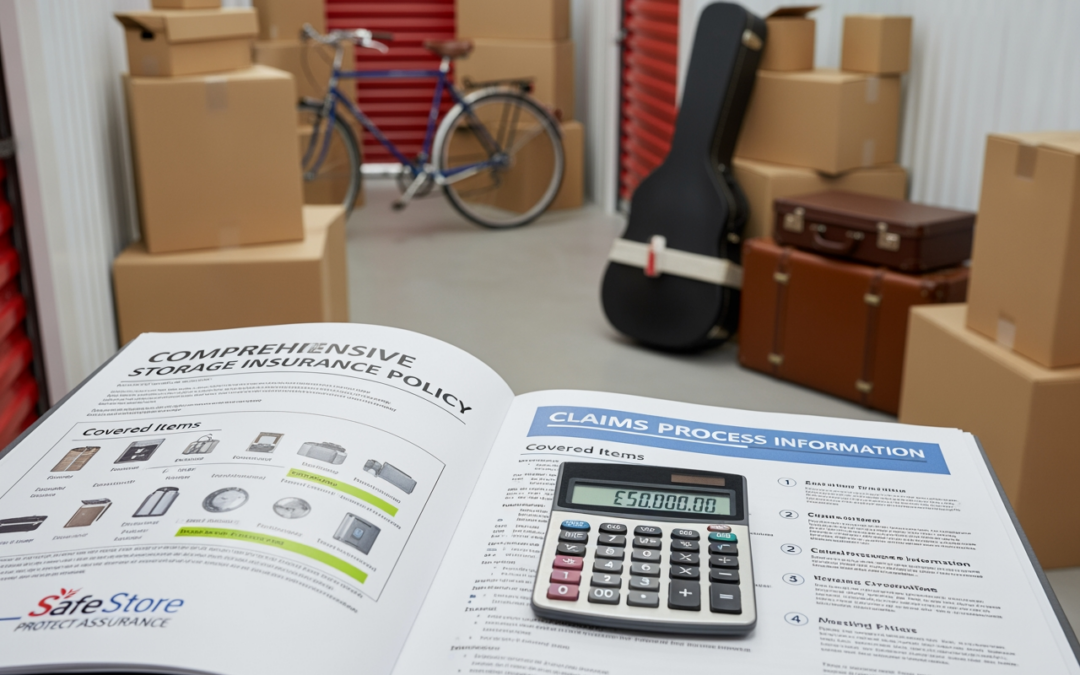
As a discerning business owner in the UK, you understand that utilising self-storage represents a strategic decision for managing inventory, archiving crucial documents, or creating essential space for your operations to flourish. After carefully packing your business assets and securing them within your chosen unit, a sense of accomplishment is natural. However, the prudent business mind also considers potential risks: the unforeseen circumstances like fire, flood, or the possibility of a break-in. It is precisely for these contingencies that the crucial role of insurance becomes paramount, particularly in the context of protecting stored items.
At Newbury Self Store, we are dedicated to offering secure, immaculate, and readily accessible storage solutions tailored for businesses of every scale. We value the confidence you invest in our services. While our commitment is to uphold a premier facility, the onus for insuring the contents of your unit against unexpected events generally lies with you, the storer. Consider our role as providing the robust structure and dependable security, while your insurance policy serves as the financial safeguard for the valuable items stored within.
So, You’ve Chosen Secure Storage , Is Insurance Really Necessary for protecting stored items?
It’s a logical query. You have selected a reputable facility, possibly one like Newbury Self Store, equipped with CCTV, secure access systems, and a diligently maintained environment. One might assume these measures offer complete protection. While such security features significantly mitigate risks, they cannot entirely nullify them. Unpredictable events are an inherent aspect of life and business operations.
It is vital to understand the distinction in responsibilities: a storage facility is typically accountable for the security and general upkeep of the premises. However, this does not automatically extend to liability for loss or damage to your specific goods resulting from incidents often beyond the facility’s immediate control. This is the gap that your own insurance policy is designed to bridge, reinforcing the essential role of insurance. Let us explore a few illustrative scenarios:
Beyond the Padlock: Unforeseen Events Like Fire or Flooding
Consider a situation where a severe weather event leads to unexpected local flooding, or an electrical malfunction in an adjacent property , entirely separate from the storage facility , results in a fire that extends to the storage premises. These are large-scale incidents where, despite the most stringent preventative measures within the facility, damage to stored goods can unfortunately occur.
The Unfortunate Reality of Theft: Even Fort Knox Isn’t Impenetrable
Contemporary storage facilities benefit from excellent security protocols. Nevertheless, determined criminals continually seek vulnerabilities. Although infrequent, especially in well-managed sites, theft through forcible and violent entry remains a possibility. Alternatively, imagine a scenario where, despite comprehensive external security, an unforeseen lapse occurs , not attributable to any failure in the facility’s standard operational procedures , yet still leads to a loss.
Oops! Accidental Damage Can Happen to Anyone
Occasionally, damage is not the consequence of a major catastrophe or deliberate harmful acts. Perhaps an internal water pipe within the building structure bursts unexpectedly, or during an exceptionally fierce storm, a section of the building’s roofing sustains damage, permitting water ingress. While a facility will act swiftly to address and repair such issues, some damage to contents might have already taken place.
In all these examples, possessing an appropriate insurance policy means you are not left to solely bear the financial impact of replacing or repairing your critical business assets. The insurance serves as your financial buffer, ensuring that an unfortunate incident does not critically disrupt your business continuity.
Unpacking the Essentials: Understanding the critical role of insurance for your business assets
Grasping the fundamental role of insurance is crucial for making well-informed decisions. Essentially, storage insurance is a specialised policy crafted to cover the goods you entrust to a self-storage unit. Its purpose is to provide financial compensation should those items be lost, stolen, or damaged due to a range of specified perils.
What Can You Typically Expect Your Insurance to Cover?
Most standard self-storage insurance policies offer protection against a catalogue of common risks. While it is always imperative to scrutinise the precise terms of your individual policy, typically covered events often encompass:
- Theft: Usually, this coverage is contingent upon evidence of forcible and violent entry into your specific unit.
- Fire, Lightning, and Explosions: These are standard insured perils capable of causing extensive destruction.
- Water Damage: This often includes issues such as burst pipes or water escaping from fixed installations within the building. Some policies may also extend to certain categories of flood damage, but verifying this specific point is essential.
- Storms and Other Natural Events: This can involve damage resulting from gales, and sometimes other natural occurrences like earthquakes (though the latter poses less of a risk in many UK regions).
- Impact Damage: For instance, if a vehicle were to accidentally collide with the building or your unit.
- Malicious Damage, Riot, and Civil Commotion: This covers intentional damage inflicted by third parties or damage arising from civil unrest.
Securing this type of coverage is a fundamental aspect of effectively protecting stored items from a financial standpoint. It means that if your inventory of bespoke products is destroyed in a fire, or your archived client documentation suffers water damage, you have an established mechanism for financial recovery.
Reading the Small Print: What’s Commonly Excluded from Standard Policies?
Equally as important as knowing what is covered is a clear understanding of what is not. Every insurance policy contains exclusions, and awareness of these can prevent unwelcome surprises later. Common exclusions frequently involve:
- Mould, Mildew, Rust, and Corrosion: Particularly if such damage is deemed to have occurred due to inadequate packing, prevailing atmospheric conditions, or inherent vice (a characteristic within the item itself that leads to its deterioration). This underscores the importance of using appropriate packing materials; for high-quality options, you can explore our Packaging supplies designed to offer superior protection for your stored goods.
- Damage by Pests, Vermin, or Insects: Once again, meticulous packing and thorough preparation of your items are your primary defence against such issues. Ensure all goods are clean and securely sealed.
- Mechanical or Electrical Derangement: If an electrical appliance or piece of equipment simply ceases to function without any identifiable external cause (such as a power surge or physical impact), it is generally not covered.
- Certain High-Value Items (Unless Specifically Declared and Agreed): Assets like jewellery, cash, fine art, precious metals, and irreplaceable documents often have specific limits or may be entirely excluded unless you have explicitly discussed them with your insurer and they are formally noted on your policy schedule.
- Confiscation or Seizure by Authorities: If your goods are confiscated or seized by customs, police, or other governmental bodies.
- Acts of War or Terrorism: These are typically standard exclusions found in the majority of insurance policies.
This list of exclusions should not be a deterrent but rather a prompt for diligence. Awareness facilitates preparedness. It highlights the necessity not only of having insurance but also of implementing practical measures to protect your goods, a topic we will delve into further.
Getting Down to Brass Tacks: How Do You Get Insurance for Your Stored Goods?
You are now persuaded: insurance is indispensable. But what is the process for obtaining it? It is usually more straightforward than many anticipate.
Does My Storage Provider Offer Insurance? The Newbury Self Store Approach.
A common enquiry is whether insurance is automatically included with the rental of a storage unit. At Newbury Self Store, we are committed to ensuring your goods receive appropriate protection. Consequently, it is a condition of our storage agreement that your goods are insured. We are pleased to inform you that we can assist you directly with this requirement. We can provide comprehensive insurance cover specifically designed for self storage. This simplifies the process, allowing you to arrange both your storage and insurance concurrently. We always encourage you to ask a member of our team for a quote by contacting us; they are well-equipped to explain the available cover options to best suit your specific business needs.
As an alternative, you might have the option to extend an existing business insurance policy to cover stored goods, or to procure a specialist policy from a third-party insurance provider. Should you opt for this path, you will be required to furnish us with documentary proof of such cover. However, it is worth noting that policies offered directly through storage facilities are often specifically tailored for the self-storage environment, which can offer a significant advantage in terms of relevance and ease of claim.
What’s It All Worth? Accurately Valuing Your Business Assets.
This is arguably one of the most pivotal stages in arranging your storage insurance. You must declare the total replacement value of all goods you intend to store.
- New-for-Old (Replacement Cost): This refers to the cost of replacing your stored items with new, equivalent items if they are destroyed or stolen. Most reputable storage insurance policies will operate on this basis for many categories of goods.
- Indemnity Value (Actual Cash Value): This valuation method takes into account depreciation due to age, wear, and tear, reflecting the item’s value at the precise time of loss. This may apply to certain items, such as older machinery or equipment.
The most significant risk here is underinsurance. If, for example, you have stock valued at £10,000 but declare only £5,000 to reduce your premium, and subsequently experience a total loss, the insurer might apply an ‘average clause’. This could mean they determine you were only 50% insured, and therefore they might only pay 50% of your insured sum (potentially £2,500 from your £5,000 cover, or £5,000 of the £10,000 actual loss, depending on policy wording), leaving your business substantially out of pocket. Conversely, over-insuring simply results in paying a higher premium than necessary, as an insurer will not pay out more than the actual cost of replacement.
Our practical advice: Before transferring any items into storage, compile a meticulous inventory. List every item and assign a realistic current replacement value to each. This practice not only assists in determining the correct sum for insurance but also proves invaluable should you ever need to make a claim.
Demystifying Policy Lingo: Excesses and Exclusions.
Two terms you will undoubtedly encounter are ‘excess’ (sometimes referred to as a ‘deductible’) and ‘exclusions’.
- Excess: This is the predetermined amount you agree to contribute towards any claim. For instance, if your policy has a £100 excess and you submit a claim for £1,000 worth of damage, the insurer would typically pay £900, with you covering the initial £100. Opting for a higher excess can often lead to a lower premium, but ensure it is an amount you could comfortably manage if a claim became necessary.
- Exclusions: As previously discussed, these are the specific circumstances, events, or types of items not covered by the policy. It is imperative to read these sections carefully. Do not make assumptions about coverage. If any aspect is unclear, seek clarification from your insurance provider.
Understanding these terms allows you to fully appreciate the scope and limitations of your policy, ensuring the role of insurance within your business’s risk management strategy is both clearly defined and effective.
Is Your Business Covered? Tailoring Insurance to Your Specific Needs for protecting stored items
The dynamism of modern commerce is reflected in its diversity, and this extends to storage and insurance requirements. A solution ideal for a solo artisan may not adequately serve a rapidly expanding e-commerce enterprise. Ensuring the role of insurance is correctly applied means matching cover to specific circumstances for truly protecting stored items.
For the Start-Up: Protecting Those Vital Early Assets.
For a start-up business, managing resources prudently is paramount. You are likely storing your initial product inventory, some foundational equipment, or perhaps the marketing collateral for your launch. Consider “EcoGlow Candles,” a new venture. The owner stores her first production run of 500 candles, her specialised pouring equipment, and her market stall setup in a compact unit. The loss of these items could paralyse her business before it gains momentum. For EcoGlow Candles, insurance is not an extravagance; it is an essential safeguard for protecting stored items that constitute her entire initial capital investment.
For the Growing E-Commerce Retailer: Shielding Your Stock.
E-commerce businesses are fundamentally reliant on their inventory. Whether your specialism is vintage apparel, consumer electronics, or artisanal pet food, your stock represents your primary revenue-generating asset. You might use self-storage for managing overflow, accommodating seasonal stock fluctuations (such as festive items or summer leisure goods), or even as your principal order fulfilment centre. As your business expands, so too does the cumulative value of goods held in storage. Imagine “GadgetSphere Ltd,” an online retailer that has just taken delivery of a substantial shipment of new wireless earbuds ahead of a significant promotional campaign. Storing these in a secure Business Storage unit, which offers various sizes suitable for commercial inventory, is a prudent operational step, but insuring them against potential theft or damage is an even more critical financial safeguard. For larger inventory volumes, businesses like GadgetSphere might explore our Container Storage solutions, which provide ample space for bulkier consignments, always ensuring that the insurance coverage accurately reflects the total value of the goods.
For Established Firms & Professionals: Archives, Equipment, and Peace of Mind.
Established businesses, ranging from legal practices and architectural firms to retailers undertaking refurbishments, also frequently rely on self-storage. You might be archiving extensive client files (where the physical documents themselves hold intrinsic value, even if digital backups exist), storing surplus office furniture during periods of downsizing or relocation, or safeguarding specialised equipment when it is not in active use. “Mortimer & Finch Solicitors,” for example, might store seven years of client case files, as mandated by regulatory requirements. While the information contained is of primary importance, the cost associated with restoring or reconstituting these physical files, should they be damaged, could be considerable. They opt for a unit with features suited to document preservation and ensure their insurance policy reflects the potential costs of restoration or replacement. Newbury Self Store provides a spectrum of unit sizes and types designed to meet these varied professional storage requirements.
Regardless of your specific business type or operational model, the fundamental role of insurance remains unwavering: to furnish a dependable financial safety net.
Beyond the Policy: Proactive Steps for Protecting Stored Items
While insurance provides your financial recourse, adopting proactive measures to care for your stored goods can significantly reduce the likelihood of needing to make a claim. This involves a comprehensive strategy for protecting stored items.
Pack it Right, Pack it Tight: Your First Defence.
The manner in which you pack your items can profoundly impact their safety and preservation.
- Employ Quality Materials: Utilise robust, double-walled boxes for heavier items. Employ bubble wrap, acid-free packing paper, or foam inserts to cushion delicate or fragile goods. Protective furniture covers can shield against dust accumulation and minor scuffs. To assist you in this crucial preparation, we offer a wide array of Packaging supplies at Newbury Self Store, specifically selected to enhance the protection of your items during storage.
- Avoid Overloading Boxes: Overfilled boxes are prone to breaking and become hazardous and difficult to handle safely.
- Seal Boxes Securely: Use high-quality, strong packing tape to thoroughly seal all box seams.
- Label Everything Clearly: Accurate labelling aids in inventory management and simplifies locating specific items when needed.
- Elevate Items (Where Practicable): Using pallets or placing a layer of plastic sheeting on the unit floor before loading can offer an additional buffer against ground-level moisture or accidental spills in a worst-case scenario.
- Ensure Air Circulation: Avoid packing items too densely against the unit walls or ceiling, as this can restrict airflow and potentially contribute to condensation issues under certain atmospheric conditions.
The Underrated Power of an Inventory List (and Photos!).
We touched upon this earlier in the context of valuation, but a detailed inventory also serves as an indispensable tool if you ever need to initiate an insurance claim.
- Document each item that you place into your storage unit.
- Record its condition prior to it being stored.
- Take photographs or even a short video of your items, particularly those of higher value, both before they are moved into storage and once they are properly arranged within your unit.
- Keep a copy of your inventory (along with any purchase receipts for valuable items) in a secure location separate from your storage unit , for example, stored digitally in the cloud or physically at your primary business premises.
Choosing a Facility That Takes Security Seriously (Like Newbury Self Store!).
Your selection of a storage facility plays a significant role in the overall safety of your goods. Key features to look for include:
- Comprehensive Security Measures: These should encompass CCTV surveillance covering key areas, controlled access systems (such as electronic keypad entry or individually alarmed units), ample lighting throughout the facility, and robust perimeter fencing.
- Cleanliness and Diligent Maintenance: A well-maintained facility is inherently less susceptible to problems with pests or adverse environmental conditions.
- Supportive and Knowledgeable Staff: Facility staff should be readily available to provide advice on appropriate unit sizes, packing best practices, and other storage-related queries.
- Range of Unit Options: Whether your requirement is for a compact locker to store a few archive boxes (some of our Personal Storage options can be ideal for smaller business needs like these), or a more substantial space from our dedicated Business Storage selection designed for larger commercial inventories, ensure the facility can comfortably accommodate your specific needs.
We strive continuously at Newbury Self Store to meet and exceed these standards, offering a secure and reliable environment you can depend upon.
Should You Pop By? The Benefit of Occasional Checks.
If your operational schedule permits and your storage agreement facilitates regular access, periodic visits to your unit can be beneficial. Such checks allow you to confirm that everything remains in good order, that your packing materials are holding up as expected, and that there are no early indications of potential issues like dampness or pest activity (though these are uncommon in high-quality, well-managed facilities). This practice offers an additional layer of reassurance.
When the Unexpected Happens: Navigating an Insurance Claim
Despite the most thorough preparations, unforeseen events can unfortunately occur. Should you find yourself needing to make an insurance claim for items held in storage, maintaining a calm and organised approach will significantly help the process unfold more smoothly.
First Steps: Secure, Document, and Notify.
- Prioritise Safety: In the event of a fire or significant structural damage, do not attempt to enter your unit until the facility management or relevant emergency services have declared it safe to do so.
- Document Everything Meticulously: As soon as it is safe and permissible, take clear, detailed photographs or videos of any damage to your unit and its contents. If the incident involves theft, you will need to report this to the police promptly to obtain a crime reference number.
- Prevent Further Loss (If Possible and Safe): Take reasonable and safe steps to mitigate further damage to your belongings (for example, covering exposed items if there is an active leak, assuming access is permitted and conditions are safe).
Who Do You Call? Your Storage Provider and Insurer.
- Notify the Storage Facility Management: Inform the team at Newbury Self Store by using the details on our contact section about the incident without delay. They can provide guidance on immediate actions and will need to officially log the event. If your insurance policy was arranged through us, our team can also assist you in understanding how to initiate the claim.
- Contact Your Insurer Promptly: Regardless of whether your policy is held with the storage provider or a third-party insurer, you must notify them as soon as reasonably possible, strictly adhering to the timescales specified within your policy documents for reporting claims.
The Claims Journey: Honesty and Cooperation are Key.
- Complete Claim Forms Accurately and Thoroughly: Fill out any required claim documentation with complete honesty and attention to detail.
- Provide All Necessary Supporting Documentation: This is where your meticulously prepared inventory, photographs, and any relevant purchase receipts will prove invaluable.
- Cooperate Fully with Assessors or Adjusters: An insurance assessor or loss adjuster may need to inspect the damage or discuss the circumstances of the loss with you in detail. Cooperate fully and provide them with any information or clarification they require.
The claims process can sometimes take time, but maintaining clear communication and providing comprehensive documentation will usually facilitate a fair and timely settlement, enabling you to focus on getting your business operations back to normal.
The Unquestionable Role of Insurance in Your Storage Strategy
Storing business goods, whether vital stock, essential operational equipment, or important archival records, is an eminently practical solution for a multitude of UK enterprises. However, complementing the convenience and physical security offered by a facility such as Newbury Self Store, your trusted local provider, the role of insurance is not merely an optional extra; it is an indispensable component of a prudent and responsible storage plan. It is fundamentally about safeguarding your valuable assets and, by extension, your business’s long-term financial stability and resilience.
While our core focus is on delivering a secure, clean, and well-maintained environment for your belongings, insurance provides that critical financial layer for protecting stored items against a spectrum of unpredictable events, encompassing everything from theft and fire to storm damage and accidental impacts. It effectively transforms what could be a significant financial setback into a more manageable operational challenge.
Do not leave the security of your valuable business assets to chance. Ensure you have appropriate and adequate insurance cover in place. This relatively small investment provides substantial peace of mind.
Are you ready to discuss your specific secure storage requirements and learn more about the straightforward process of obtaining comprehensive insurance cover for your stored business items? The approachable and experienced team at Newbury Self Store is here to provide guidance. Reach out to Newbury Self Store today via our contact information , we can assist you in identifying the ideal storage solution and ensuring your goods are thoroughly protected.