
 01635 581 811
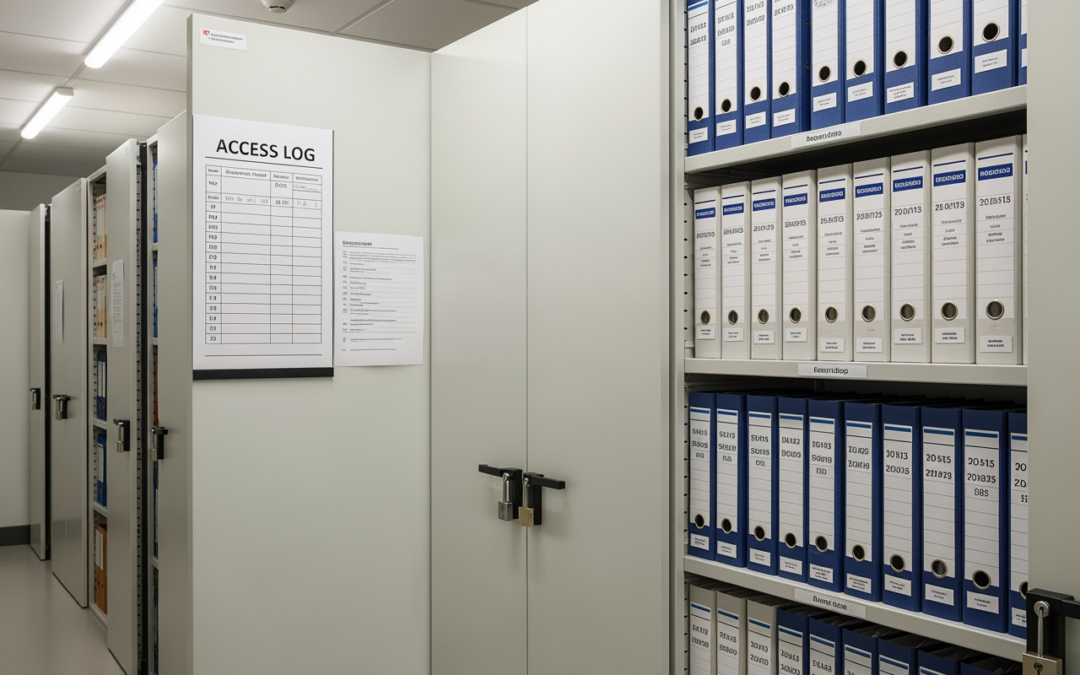
For any UK business owner, the sheer volume of paperwork generated, from invoices and contracts to employee records and compliance documentation, can feel like a veritable mountain. It’s not just about finding space for it all; it’s about managing these documents in a way that meets stringent legal and compliance obligations, whilst also safeguarding your business interests. Proper document management is fundamental to operational integrity and legal protection. This is where considering a dedicated off-site business storage unit to store legal documents can be a game-changing strategy, offering security, organisation, and peace of mind.
This article will serve as your comprehensive guide, navigating the essentials of how to effectively manage and securely store these critical business records, ensuring you are not only compliant but also efficient. At Newbury Self Store, we understand the unique pressures on businesses to maintain meticulous records, and we are here to help you find the best legal document storage solutions.
Why Your Office Might Be Undermining Your Document Security and Compliance
Whilst the convenience of having all your documents close at hand in the office seems appealing, it often comes with a host of hidden risks and inefficiencies that can compromise both your compliance and the documents themselves.
The Squeeze on Space: When Paperwork Overruns Your Workspace
Let’s be honest, office space is a premium commodity. Filing cabinets expand, archive boxes multiply, and soon enough, valuable square footage that could be used for productive work or business growth is sacrificed to the ever-growing paper pile. This clutter not only looks unprofessional but can also hinder productivity as staff struggle to navigate a cramped environment.
Hidden Dangers: Security Risks in a Typical Office Setting
A busy office, by its very nature, is not always the most secure environment for sensitive legal and compliance documents. Consider these common risks:
- Accidental Damage: Coffee spills, tears from mishandling, or items simply getting lost in the shuffle are all too common.
- Unauthorised Access: Even with the best intentions, documents left on desks or in unlocked cabinets can be seen by individuals who shouldn’t have access, potentially breaching confidentiality or GDPR regulations.
- Misplacement Woes: In a chaotic office, crucial documents can easily be misfiled or temporarily lost, leading to frantic searches and wasted time, especially when an urgent request comes in.
The Slow Creep of Decay: Environmental Threats to Your Documents
Paper is a surprisingly fragile medium. Standard office environments rarely offer the optimal conditions for long-term document preservation.
- Light Exposure: Sunlight and even harsh office lighting can cause ink to fade and paper to yellow and become brittle over time.
- Humidity and Temperature Fluctuations: Too much humidity encourages mould and mildew growth, whilst too little can make paper dry and fragile. Constant temperature changes cause paper to expand and contract, weakening its structure.
- Pests: Unwanted visitors like silverfish, rodents, or other pests can cause irreparable damage to stored paper records.
All Your Eggs in One Basket: The Perils of Single-Location Storage
Storing all your vital original documents in one location , your office , makes your business incredibly vulnerable. In the unfortunate event of a fire, flood, or even a significant burglary, you could lose irreplaceable records, leading to severe operational disruption, legal complications, and potentially devastating financial consequences. A robust strategy to store legal documents should mitigate this risk.
Know Your Paper Trail: Understanding Document Retention Obligations in the UK
Before you can effectively manage and store legal documents, you need a clear understanding of what you are legally required to keep and for how long. UK businesses face a web of regulations dictating document retention.
What to Keep: Identifying Your Critical Legal and Compliance Documents
Whilst specific requirements can vary by industry, some core documents are almost universally mandated for retention:
- Financial Records: This includes invoices (sales and purchase), bank statements, expense receipts, VAT records, and annual accounts. HMRC typically requires these to be kept for at least 6 years after the end of the last company financial year they relate to.
- Employee Information: Employment contracts, payroll records, PAYE records, sickness and holiday records, and documents relating to pensions and benefits. With the GDPR in force, particular care must be taken with personal data, ensuring it’s stored securely and only kept for as long as necessary and legally permitted.
- Core Business Documents: Contracts with suppliers and customers, deeds, leases, insurance policies, and documents related to business loans or investments.
- Company Records: For limited companies, this includes minutes of meetings, resolutions, and statutory books (like the register of members and directors).
- Industry-Specific Paperwork: Depending on your sector, you may have additional obligations, such as health and safety records, environmental compliance documents, import/export documentation, or client files if you are in a regulated profession like law or financial services.
The Ticking Clock: Adhering to UK Document Retention Schedules
Understanding how long to keep different types of documents is crucial. Keeping them for too short a period can lead to non-compliance, whilst keeping them indefinitely creates unnecessary storage burdens and potential GDPR risks.
- General Business Guidelines: As mentioned, 6 years is a common timeframe for many financial and tax-related documents. Company records often need to be kept for 10 years or even the lifetime of the company.
- The Importance of Establishing a Clear Document Retention Policy: Every business should develop, document, and implement a clear document retention policy. This policy should outline what documents are kept, where they are stored, for how long, and the procedure for their secure disposal. This not only ensures compliance but also provides clarity for your staff.
The Consequences of Neglect for your legal document storage and disposal strategy
Failing to properly manage and store legal documents, or disposing of them prematurely or insecurely, can lead to serious consequences. These can range from financial penalties imposed by regulatory bodies like HMRC or the Information Commissioner’s Office (ICO) to legal challenges, loss of reputation, and difficulties in defending your business in disputes.
From Chaos to Control: A Step-by-Step Guide to Preparing Documents for Storage
Once you know what you need to keep, the next stage is to prepare your documents meticulously for off-site legal document storage. This groundwork is essential for an organised, secure, and efficient archiving system.
The Great Purge: Decluttering and Organising Your Documents
This is often the most daunting but most rewarding step.
- Deciding what to keep, what to shred securely, and what could be digitised: Go through your existing files systematically. Apply your document retention policy. Documents that have passed their retention period and are not subject to any legal hold should be securely shredded (cross-cut shredding is recommended for confidential information). Consider if some less critical, older documents could be digitised to save physical space, though ensure you understand the legal admissibility of digital copies for your specific needs.
- Implementing a logical and consistent filing system: Before boxing, ensure your documents are organised. This might be chronological, alphabetical, by client, or by project. Whatever system you choose, make it consistent and easy for authorised personnel to understand.
Boxing Clever with Quality Packaging: Protecting Your Paper Assets
The right containers are vital for protecting your documents during transit and long-term storage.
- Why sturdy archive boxes are a must for long-term legal document storage: Do not be tempted to use flimsy, old office paper boxes. Invest in proper archive boxes. These are designed to be durable, stackable, and often have handholds for easier carrying. To ensure your documents are well-protected for the long haul, you can explore our range of durable archive boxes and other essential Packaging materials; these are specifically designed to withstand the rigours of storage and preserve your valuable paperwork.
- Considering acid-free materials for irreplaceable documents: For truly irreplaceable or historically significant documents, consider using acid-free folders and boxes. Standard paper and cardboard contain acids that can cause documents to yellow and degrade over many years.
Label Logic: Ensuring Future You Can Find Anything
Clear and accurate labelling is the cornerstone of an efficient document retrieval system.
- The art of clear, consistent, and comprehensive labelling: Each box should be clearly labelled on at least two sides (preferably the short end that will face outwards on a shelf). Information should include:
- A unique box number or identifier.
- A clear description of the contents (e.g., “Sales Invoices 2019-2020,” “Employee Contracts A-M”).
- The date range of the documents within.
- The scheduled destruction date (this makes future culling much easier).
- Department or client name, if applicable.
The Master Key: Creating a Comprehensive Inventory or Index
A detailed inventory or index is your map to your stored documents. It links your physical boxes to their contents.
- From simple spreadsheets to dedicated document management software: For smaller archives, a well-organised spreadsheet can suffice. Columns could include box number, contents description, date range, location in storage unit (if you use shelving with specific locations), and destruction date. Larger organisations might benefit from dedicated document management or records management software.
- This index is invaluable when you need to locate a specific file quickly, and it’s also essential for managing your retention schedule and identifying documents due for destruction.
Choosing Your Fortress: Selecting the Ideal Business Storage Unit to Store Legal Documents
With your documents organised and packed, the next crucial decision is selecting the right off-site business storage unit. Not all storage facilities are created equal, especially when it comes to safeguarding sensitive legal document storage.
Security First, Last, and Always for your legal document storage
This is non-negotiable. The facility must demonstrate a robust commitment to security. Look for:
- Robust CCTV: Comprehensive surveillance covering all access points, corridors, and ideally, the exterior of the facility, operating 24/7.
- Controlled Access: Secure perimeter fencing, electronically controlled gates requiring a PIN code or key fob, and well-lit premises.
- Individual Alarms: Some facilities offer individually alarmed units for an extra layer of security.
- On-Site Personnel: The presence of staff during business hours can act as a deterrent and provide assistance.
- Your Own High-Quality Lock: You should always use your own sturdy padlock for your unit, ensuring you are the sole keyholder.
Climate Control: The Guardian of Your Paper Legacy
For the long-term preservation of paper documents, climate control is highly recommended, if not essential.
- How stable temperature and humidity prevent degradation: Climate-controlled units maintain a consistent temperature and humidity level, typically between 13-18°C (55-65°F) and a relative humidity of 35-50%.
- Combating mould, mildew, ink fade, and paper embrittlement: These stable conditions prevent the growth of mould and mildew, stop ink from fading or running, and prevent paper from becoming brittle or absorbing excessive moisture which can cause pages to stick together. This is crucial when you need to store legal documents for many years.
Finding the Right Fit: Unit Size and Accessibility
You need a unit that is the right size for your current needs with a little room for growth, and that you can access conveniently.
- Accurately estimating your space needs: Count your archive boxes. A standard small unit (e.g., 25 sq ft) can often hold a surprising number of boxes if stacked correctly and shelving is used. Discuss your needs with the facility manager.
- The value of a convenient location and suitable access hours: Choose a facility that is reasonably easy to reach from your office. Check their access hours , many offer extended hours or even 24/7 access for business clients, which can be vital if you need to retrieve a document urgently outside standard office times.
Due Diligence: Checking Facility Policies and Reputation
Do a little homework on the facility itself.
- Enquiring about pest control, fire safety, and insurance options: Reputable facilities will have regular pest control measures in place and robust fire detection and suppression systems. Ask about their insurance policy and what it covers, though you will almost certainly need your own insurance for the contents.
- Read online reviews and perhaps even ask if they can provide references from other business customers.
Our Secure Business Storage Solutions for Your Peace of Mind
At Newbury Self Store, we understand the specific requirements for document archiving. Our Business Storage units offer a clean, dry, and secure environment, which is absolutely ideal for the sensitive nature of legal document storage. We provide a range of unit sizes, and our team can advise on the best options for your volume of paperwork.
Maintaining Order: Effective Long-Term Management of Your Stored Documents
Moving your documents into storage is not the end of the process. Effective long-term management is key to ensuring your system remains useful and compliant.
The Keeper of Records: Diligent Inventory and Access Log Management
Your master inventory is a living document.
- Tracking who accesses documents, when, and the purpose: Keep a log every time a box or file is retrieved from or returned to storage. This should record who took it, the date, and the reason. This is important for audit trails and maintaining confidentiality.
- Update your inventory immediately if a box is permanently removed (e.g., for destruction).
The Annual Check-Up: Regular Audits and Retention Schedule Reviews
Set aside time periodically (at least annually) to review your stored documents.
- Proactively identifying documents due for secure destruction: Compare the destruction dates on your box labels and inventory against your retention policy. This prevents you from keeping documents longer than necessary, which saves storage costs and reduces GDPR risks.
- A physical check of a sample of boxes can also ensure that storage conditions remain optimal and that your labelling system is being maintained.
Fortified Retrieval: Implementing Secure Document Access Protocols
Establish clear procedures for how documents can be retrieved.
- Ensuring only authorised personnel can retrieve sensitive files: Limit the number of staff who have keys/access codes to the storage unit and who are authorised to retrieve documents. This helps maintain confidentiality and accountability.
- Consider a system where requests for documents must be logged or approved.
The Final Act: Secure and Compliant Document Destruction
When documents reach the end of their retention period, they must be destroyed securely, especially if they contain personal or confidential information.
- Adhering to GDPR and other privacy laws when it’s time to dispose of records: Simply throwing them in a skip is not acceptable and could lead to severe penalties.
- Use a reputable shredding service that provides a certificate of destruction. For highly sensitive documents, you might even witness the shredding process.
Physical vs. Digital: Strategising Your Legal Document Storage Approach
In the digital world, many businesses wonder if they can dispense with physical document storage altogether. The answer is usually “not entirely.”
The Allure of Digital: Pros and Cons of Going Paperless
Digitising documents can offer significant benefits:
- Benefits like space saving and searchability: Digital files take up no physical space and can often be searched instantly.
- Versus costs, digital security, and legal acceptance: However, scanning large archives can be costly and time-consuming. Digital files also require robust cybersecurity measures, backup procedures, and consideration of long-term file format compatibility. Furthermore, whilst many digital copies are legally admissible in the UK, there can still be instances where an original physical document is preferred or required.
When Only Paper Will Do: The Enduring Need for Physical Copies
Certain documents typically need to be retained in their original physical form:
- Original signed contracts and deeds.
- Share certificates and other original financial instruments.
- Certain types of official certificates or licences.
- Any document where a “wet signature” has legal significance that might be questioned on a scan.
The Hybrid Harmony: Integrating Physical Storage with Digital Archives for a robust system to store legal documents
For many businesses, a hybrid approach is the most practical and secure solution. This involves:
- Digitising documents where appropriate for easy access and daily use (e.g., recent invoices, general correspondence).
- Securely storing original physical documents that must be retained, or those forming part of a long-term archive, in an off-site facility.
- Ensuring your physical document inventory is linked to your digital archive where counterparts exist.
This balanced approach allows you to benefit from the convenience of digital whilst ensuring the integrity and legal standing of your most critical paper records.
Newbury Self Store: Your Trusted Partner for Legal and Compliance Document Storage
Choosing the right partner to help you store legal documents is a decision that impacts your business’s security and compliance. At Newbury Self Store, we are committed to providing a service you can trust.
Our Dedication to Security and Preserving Document Integrity
We understand that when you entrust your business records to us, you are placing significant faith in our security and the quality of our storage environment. Our facilities are equipped with modern security systems, and we maintain high standards of cleanliness and upkeep to ensure your documents are well protected.
Adaptable Storage Solutions for Every Business Size and Need
Whether you have just a few archive boxes or a whole library of records, we offer a variety of unit sizes to suit your specific requirements. Our flexible terms mean you are not locked into long contracts, allowing you to adapt your storage as your needs evolve.
Expert Support for Your Document Archiving Needs: Get in touch via our Contact Section
Setting up an effective document storage system can seem complex. If you have questions about the best unit size, how to prepare your documents, or our security features, our friendly team is here to help. For personalised advice on establishing your legal document storage or to discuss your specific requirements, our team is ready to assist; you can reach us easily through the details on our Contact Section
Explore our secure facilities and unit options at Newbury Self Store
We invite you to learn more about what Newbury Self Store offers. A comprehensive overview of our facility features, the types of secure units available, and information on our locations can be found on Newbury Self Store.
Final Steps to Watertight Document Management and Peace of Mind
A well-thought-out strategy to store legal documents is a cornerstone of good corporate governance. Taking these final steps can further enhance your system and provide ultimate peace of mind.
An Extra Layer of Protection: Business Insurance for Stored Documents
Whilst a good storage facility will have its own insurance for the building, this typically does not cover the contents of your unit. Ensure you have adequate business insurance that specifically covers documents stored off-site. Check the policy details for any specific requirements or exclusions related to document archiving.
Preparing for the Unexpected: Your Document Disaster Recovery Plan
Your off-site document storage should be part of your broader business continuity and disaster recovery plan. This plan should outline:
- How critical documents would be retrieved or accessed in an emergency.
- Who is responsible for this process.
- Contact details for your storage facility and insurance provider.
Empowering Your Team: Staff Training on Document Management Protocols
Your document management system is only as strong as the people who use it. Ensure relevant staff are trained on:
- Your document retention policy.
- Procedures for filing, labelling, and inventorying documents.
- Protocols for accessing and retrieving stored documents.
- Secure document destruction procedures.
Beyond Business: Secure Personal Storage for Important Individual Paperwork
It is worth noting that the principles of secure document storage are not just for businesses. Many individuals also accumulate important personal paperwork, such as wills, deeds, passports, insurance policies, and sentimental records, that could benefit from secure off-site storage. Just as businesses need secure document archiving, individuals can also benefit from our Personal Storage options for safeguarding their important personal paperwork, offering the same level of security and peace of mind.
By implementing these best practices, you can transform your legal and compliance document management from a source of stress into a streamlined, secure, and efficient part of your business operations.