
 01635 581 811
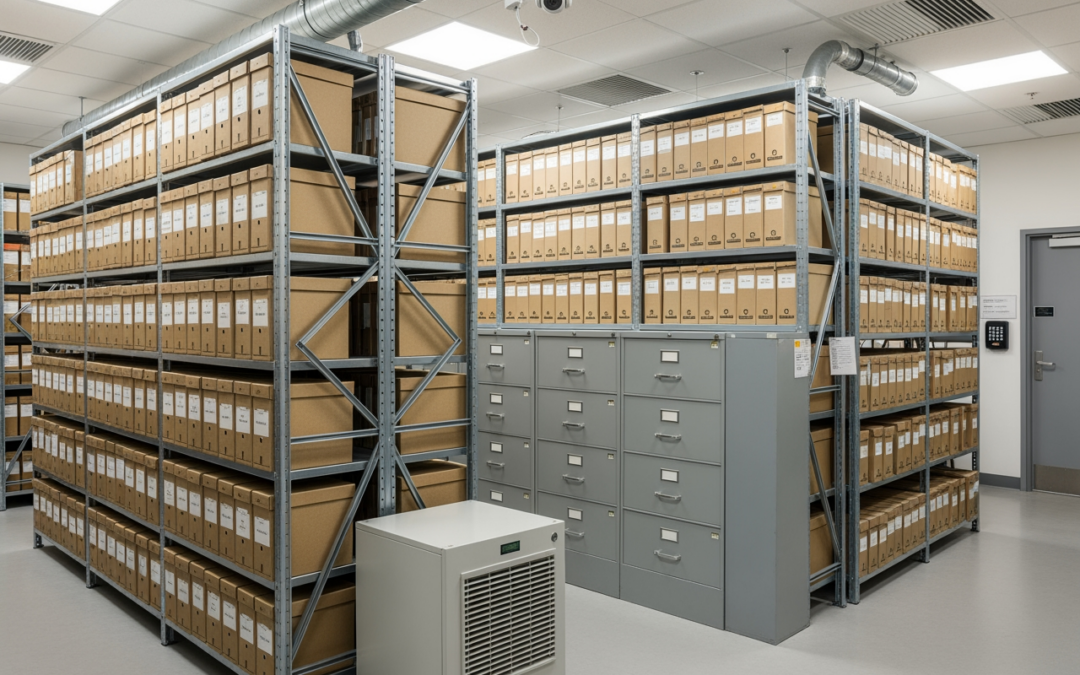
Many businesses eventually encounter that challenging moment when a crucial client contract, a vital financial record from a past year, or an important HR document seems to have disappeared. For numerous companies, the back office, a spare room, or even a dusty corner of the warehouse often becomes the default archive. While this might initially appear as a cost-saving measure, the practicalities of managing extensive paperwork in-house can swiftly evolve into a logistical challenge, a security concern, and a significant drain on valuable resources. This is precisely where understanding the considerable advantages of Specialty Storage for Business Archives becomes essential, offering a transformative approach to how your company manages its historical data, ensuring it remains both secure and readily accessible.
At Newbury Self Store, we have consistently observed the relief and enhanced efficiency businesses experience upon transitioning to a professional Business Archive Storage solution. This move is about more than just acquiring extra space; it involves safeguarding your company’s legacy, ensuring compliance with regulations, and optimising your operational workflows.
Beyond the Filing Cabinet: Understanding the True Need for Professional Archive Management
Businesses, particularly those established for several years, tend to accumulate a substantial volume of paperwork. These documents, ranging from financial statements and tax records to employee files, legal documents, and project histories, are not merely old papers; they represent the historical foundation of your company.
The Overflowing Office: A Common Business Bottleneck
Consider Sarah, an office manager for a flourishing marketing agency in Berkshire. She dedicates a notable part of her week to navigating through precariously stacked boxes filled with old campaign files and financial records. The small designated storage room is overfilled, making the retrieval of any specific item a difficult task. Consequently, new documents begin to accumulate on desks due to a sheer lack of alternative storage. This situation is not just untidy; it is fundamentally inefficient. Staff time is consumed unproductively, important documents are at risk of being misplaced or damaged, and the office environment itself feels cluttered and less conducive to productivity. This common scenario underscores the urgent requirement for an improved system.
What Constitutes a ‘Business Archive’ Anyway? Defining the Scope
When we discuss “business archives,” what exactly does this encompass? In essence, it refers to any collection of documents, whether in physical or digital form (though our primary focus here often leans towards the considerable physical paper records), that are no longer in active daily use but must be retained for legal, regulatory, operational, or historical purposes. Such archives can include:
- Financial Records: Invoices, receipts, bank statements, tax returns (often requiring retention for 6 years or more for HMRC purposes).
- Legal Documents: Contracts, agreements, leases, incorporation documents, litigation files.
- HR and Personnel Records: Employee contracts, payroll information, performance reviews, disciplinary records (subject to GDPR and other employment legislation).
- Client and Project Files: Historical project data, client communications, completed project documentation.
- Operational Records: Old meeting minutes, business plans, research and development notes.
Recognising the breadth of documentation that requires archiving is the initial step towards appreciating why a dedicated solution is so critically important.
The Hidden Risks of DIY Archiving: More Than Just Dust and Disorder
Storing these essential records in-house might appear to be a straightforward method, but it is accompanied by numerous hidden risks:
- Physical Damage: Incidents such as leaks, floods, pest infestations, or even the gradual degradation caused by suboptimal environmental conditions can render documents unusable. Imagine the scenario of a burst pipe in the basement where your archives are stored – a potential catastrophe.
- Security Breaches: Unsecured filing cabinets or storage rooms are vulnerable to unauthorised access, potentially resulting in data theft or breaches of confidentiality.
- Misplacement and Loss: In the absence of a proper indexing and management system, documents can easily be misfiled or permanently lost, leading to significant issues later on.
- Fire Hazard: Large accumulations of paper can constitute a serious fire risk if not stored with appropriate safety measures.
- Inefficient Use of Space: Prime office real estate is a significant expense. Utilising this space for storing inactive documents is rarely the most cost-effective strategy.
These risks are not merely theoretical; they represent tangible potential harm to your business’s continuity, reputation, and financial stability.
Unlocking Peace of Mind: The Security Advantages of specialty storage for business archives
When you entrust your company’s historical records to a dedicated Specialty Storage for Business Archives facility, you are investing in a level of security that is typically far more comprehensive than what most businesses can feasibly replicate on their own premises.
Fort Knox for Your Files: Physical Security Measures
Conceive of a professional archive storage facility as a fortress, specifically constructed to protect its valuable contents. We at Newbury Self Store understand that security is of paramount importance.
- Advanced CCTV and Alarm Systems: Modern facilities are equipped with 24/7 CCTV surveillance that covers all critical areas, both internally and externally. Sophisticated alarm systems are installed to detect any unauthorised entry attempts, immediately alerting security personnel or the relevant authorities. This constant vigilance serves as a powerful deterrent and provides a comprehensive record of all activity.
- Controlled Access and Monitoring: Access to storage areas is rigorously controlled. This may involve systems such as key fob entry, PIN codes, or even biometric scanners, ensuring that only authorised personnel can gain entry. Detailed logs are often maintained, tracking who accessed specific areas and at what times. This means your sensitive documents are not merely left in a room accessible to anyone.
- Fire Prevention and Suppression Systems: This is an aspect of critical importance. Professional archive facilities invest significantly in advanced fire detection and suppression systems. These are not your standard office smoke detectors; they can include highly sensitive early warning systems like VESDA (Very Early Smoke Detection Apparatus) and suppression systems that might employ inert gases or fine mists to extinguish a fire, thereby minimising potential water damage to paper documents.
Battling the Elements: Environmental Controls for Document Preservation
Paper is a surprisingly delicate material. It is susceptible to degradation from fluctuations in temperature, humidity, light exposure, and pests. A quality Business Archive Storage solution actively works to counteract these environmental threats.
- Climate Control (Temperature and Humidity): Maintaining a stable environment is fundamental to the long-term preservation of documents. Significant variations in temperature and humidity can cause paper to become brittle, develop mould, or otherwise deteriorate. Specialised facilities utilise HVAC (Heating, Ventilation, and Air Conditioning) systems specifically designed to maintain these environmental factors within the optimal ranges recommended for paper records.
- Pest and Rodent Control: While an unpleasant consideration, mice, insects, and other pests can cause extensive damage to paper archives. Reputable storage providers will have established regular, professional pest control measures to prevent infestations and protect your documents from this type of harm.
Confidentiality as a Cornerstone: Protecting Sensitive Information
Many business archives contain highly sensitive information, including financial data, employee records, and client details. Ensuring the confidentiality of this information is not merely good practice; it is frequently a legal obligation (consider GDPR, for example). Professional archive storage services understand this implicitly. The controlled access measures, comprehensive surveillance, and the professional ethos of the staff all contribute significantly to maintaining the confidentiality of your stored documents. You can have confidence that your sensitive files are not accessible to unauthorised individuals.
Streamlining Your Operations: The Accessibility Factor in business archive storage
Security is undeniably vital, but what is the value of a secure archive if you cannot locate what you need, precisely when you need it? This is where the accessibility features of Specialty Storage for Business Archives demonstrate their true worth, offering capabilities far exceeding those of a simple locked room.
“Where Did I Put That?” – Finding Files Swiftly and Efficiently
Most of us have experienced that moment of desperation when searching for an old file that you are certain exists but simply cannot locate. This kind of frantic hunt consumes valuable time and generates unnecessary stress. Professional archive storage services are meticulously designed to eliminate this common problem.
- Organised Indexing and Retrieval Systems: When you store your archives with a professional service, they are not just indiscriminately placed in a unit. Proper facilities will collaborate with you to implement or integrate with an effective indexing system. This ensures that each box is clearly labelled, its contents are logged, and its precise location is tracked. When you require a specific file or box, a straightforward request is often all that is needed. Many services also offer retrieval options, delivering the required documents directly to your office, sometimes within a matter of hours.
- Scan-on-Demand Services: Bridging Physical and Digital: Some advanced archive storage providers offer innovative scan-on-demand services. If you require a specific document urgently but do not need the physical copy immediately, they can locate the document, scan it, and securely transmit a digital copy to you. This is an incredibly useful feature for obtaining quick access without disrupting the integrity of the physical archive.
Making Space for Growth: Reclaiming Valuable Office Real Estate
Office space represents a premium commodity. Every square foot that is dedicated to storing old, inactive files is square footage that could otherwise be utilised for revenue-generating activities, accommodating additional staff, creating meeting rooms, or simply fostering a more spacious and pleasant working environment. Moving your archives off-site liberates this valuable space, enabling your business to grow and adapt without being constrained by clutter. Imagine the possibilities: that old storage room could be transformed into a new breakout area for your team, a small creative studio, or simply be absorbed to provide existing teams with more operational space.
Focusing Your Team: Allowing Employees to Concentrate on Core Tasks
Consider the amount of time your employees currently allocate to managing, searching for, or even worrying about archived documents. This is time that they could more productively spend on their primary responsibilities, such as serving clients, developing new products, or driving sales. Outsourcing your Business Archive Storage effectively means that your team is no longer encumbered with this administrative overhead. It allows them to be more productive and to focus on the tasks they perform best, which ultimately benefits the entire business operation.
Navigating the Maze: Compliance, Legal Obligations, and Document Retention
In regulated business landscape, proper document management is not merely a matter of good housekeeping; it is a legal imperative. Failure to retain certain documents for the legally stipulated period, or the inability to produce them when requested, can lead to substantial fines, complex legal complications, and significant reputational damage.
Meeting Regulatory Requirements with Confidence
Different industries and various types of data are subject to a wide range of regulations. A professional archive storage service can assist you in navigating these complexities effectively.
- GDPR, HMRC, and Industry-Specific Mandates: For instance, HMRC mandates that businesses retain financial records for a minimum of six years. The General Data Protection Regulation (GDPR) imposes strict rules regarding how personal data (which includes employee records) is stored, managed, and eventually disposed of. Many sectors, such as finance, healthcare, and legal services, have their own specific mandates concerning document retention and security. A provider of Specialty Storage for Business Archives should be conversant with these general requirements and offer an environment that actively supports your compliance efforts.
- Maintaining Clear Audit Trails: Should you be subject to an audit from HMRC, a regulatory body, or require documents for legal proceedings, having them professionally archived makes the entire process considerably smoother. Well-organised records, complete with clear retrieval histories, serve to demonstrate due diligence and can save you a significant amount of time and stress.
The Lifespan of a Document: Adhering to Retention Schedules
Not all documents need to be retained indefinitely. In fact, keeping documents for longer than is necessary can also introduce risks (for example, under GDPR, personal data should not be held for longer than is required for the purpose for which it was initially collected). A crucial element of archive management is the establishment and diligent adherence to a document retention schedule. This schedule dictates the specific duration for which different types of documents should be kept before they can be securely destroyed. While the storage facility itself might not determine your retention schedule (as that remains your responsibility), they do provide the secure environment necessary for holding them throughout their designated lifecycle and often offer certified secure destruction services when the appropriate time comes.
Mitigating Legal Risks with Proper Archive Management
Imagine finding yourself involved in a legal dispute and being unable to locate a crucial contract or a vital piece of correspondence. The consequences of such a situation could be severe. Professional Business Archive Storage helps to ensure that when you require a document for legal reasons, it is readily findable, remains intact, and its chain of custody is clearer, thereby substantially strengthening your legal position.
The Smart Investment: Cost-Effectiveness of Dedicated business archive storage Solutions
Initially, the idea of outsourcing your archive storage might appear to be an additional expense. However, upon conducting a thorough cost-benefit analysis, it often becomes evident that this approach is the more economical and strategically sound choice for many businesses.
Comparing Apples to Oranges: In-House vs. Off-Site Storage Costs
It is quite common to underestimate the true comprehensive cost associated with storing archives in-house.
- The Price of Office Space: Calculate the per-square-foot cost of your current office space. Then, consider how much of that valuable, and often expensive, space is being utilised for the storage of largely dormant files. That implicit “rent” you are effectively paying for archive space could be quite substantial.
- Staff Time and Administrative Overheads: Factor in the cumulative hours that your staff spend on activities such as filing, searching for, retrieving, and managing these archives. Additionally, include the cost of filing cabinets, boxes, and shelving. These associated costs can add up quickly over time.
- Potential Costs of Data Breaches or Loss: The financial and reputational cost of a data breach, or the irretrievable loss of essential documents due to incidents like fire, flood, or theft, can be astronomical. These potential costs could far exceed many years of professional storage fees.
When you compare these extensive in-house costs against the transparent and predictable fees of a Specialty Storage for Business Archives provider, the latter frequently emerges as the more financially astute option.
Scalability: Paying Only for the Space You Need
Businesses naturally evolve over time. Sometimes you may generate a larger volume of paperwork, while at other times, the amount may decrease. With professional archive storage, you typically only incur costs for the volume of storage that you actually use. This inherent scalability means that you are not locked into leasing or maintaining a fixed amount of space within your office that might prove to be too large or too small as your specific needs change. As your archive grows, you can easily scale up your storage capacity. Conversely, if you implement a robust document destruction schedule and successfully reduce your archive volume, you can often scale down your storage requirements accordingly.
Long-Term Savings Through Preservation and Efficiency
The enhanced security measures and controlled environmental conditions offered by professional storage actively protect your documents from degradation. This proactive preservation can potentially save you from incurring costly restoration efforts or from suffering the complete loss of vital information. Furthermore, the efficiency gains realised – such as staff spending less time on archive management and more time focusing on core business tasks – translate directly into tangible productivity improvements and, ultimately, significant cost savings for the business.
Why Newbury Self Store is Your Partner in Secure Document Archiving
Selecting the appropriate partner for your Business Archive Storage requirements is a decision of considerable importance. Here at Newbury Self Store, we take great pride in offering secure, flexible, and easily accessible solutions tailored for businesses of all sizes.
Our Commitment to Your Business Archives
We fully understand that your archives represent far more than just paper; they embody your company’s history, its legal obligations, and its valuable intellectual property. Our facilities are meticulously designed with the security and long-term preservation of these vital assets as a foremost priority. We provide a clean, dry, and highly secure environment, giving you complete peace of mind that your important documents are in trustworthy hands. Our Business Storage solutions are perfectly suited for a diverse range of archiving requirements. These business-focused units offer various sizes to comfortably accommodate your specific volume of documents, ensuring you have precisely the space you need for your important company records.
Tailored Solutions for Diverse Archiving Needs
Whether your archiving needs consist of a few dozen boxes or extend to several hundreds, we are equipped to provide a solution that precisely fits your requirements. Our experienced team is available to discuss your specific circumstances – including the volume of materials, anticipated access frequency, and particular security needs – to help you select the most appropriate and cost-effective storage option. Perhaps you require sturdy shelving for systematically organised box storage, or maybe you are looking for a unit size that perfectly matches your current archive volume while also allowing room for anticipated future growth. We are here to provide guidance and assistance.
More Than Just Space: Ancillary Services
To further streamline your archiving process and make it even more convenient, we also offer an extensive range of high-quality Packaging supplies. This selection includes durable archive boxes specifically designed for the secure long-term storage of documents, appropriate labelling supplies, and other essential items. Procuring the correct materials from the very beginning makes the task of organising and effectively protecting your documents significantly easier and more efficient. These supplies are ideal for preparing your documents for long-term storage, ensuring they remain protected and organised.
Getting Started: Making the Move to Professional Archive Storage
Transitioning your company’s archives to a professional storage facility might initially appear to be a substantial undertaking, but with careful planning and a methodical approach, it can be a remarkably smooth and highly beneficial process.
Assessing Your Current Archiving Situation
Commence by thoroughly evaluating your current inventory of archived materials.
- Approximately how many boxes of archives do you currently possess?
- What types of documents do these archives predominantly contain?
- Are they presently organised in a systematic manner, or do they require sorting and indexing prior to transfer?
- What are your specific legal retention requirements for these various documents? Answering these pertinent questions will provide you with a much clearer understanding of your precise needs and will enable you to communicate them effectively to a potential storage provider.
Planning the Transition: Tips for a Smooth Handover
- Declutter First: Before initiating any move, meticulously review your documents and securely dispose of any items that have surpassed their designated retention date and are consequently no longer required. There is little point in incurring costs to store documents that serve no ongoing purpose.
- Invest in Good Quality Archive Boxes: Utilise uniform, sturdy archive boxes. Such boxes stack more efficiently, offer superior protection for their contents, and are generally easier to handle during transit and storage. You can explore our range of Packaging options to find suitable boxes and other packing essentials.
- Label Clearly and Consistently: Develop and implement a clear, consistent labelling system. Each box should be distinctly marked with a unique identifier, a concise summary of its contents (e.g., “Financial Records 2015-2016”), and the relevant department, if applicable. Create a corresponding master index or spreadsheet for easy reference.
- Communicate with Your Chosen Storage Provider: Engage in detailed discussions regarding logistics, access procedures, and any specific or unique requirements you may have for your archives.
Let’s Talk Archives: Your Next Steps with Newbury Self Store
If the prospect of a more secure, readily accessible, and economically efficient method for managing your company’s paper legacy is appealing, then it is certainly time to explore the manifold benefits offered by Specialty Storage for Business Archives. Liberate your valuable office space, robustly protect your vital records, ensure ongoing compliance with all relevant regulations, and empower your team to concentrate on their core, value-adding activities.
The peace of mind that stems from knowing your business archives are being professionally managed is truly invaluable. We warmly invite you to discover more about how Newbury Self Store can effectively support your business objectives. We encourage you to make use of our Contact Us section to initiate a no-obligation conversation about your specific Business Archive Storage needs. Our friendly and knowledgeable team is on hand, ready to answer your questions and assist you in finding the perfect, tailored solution.