
 01635 581 811
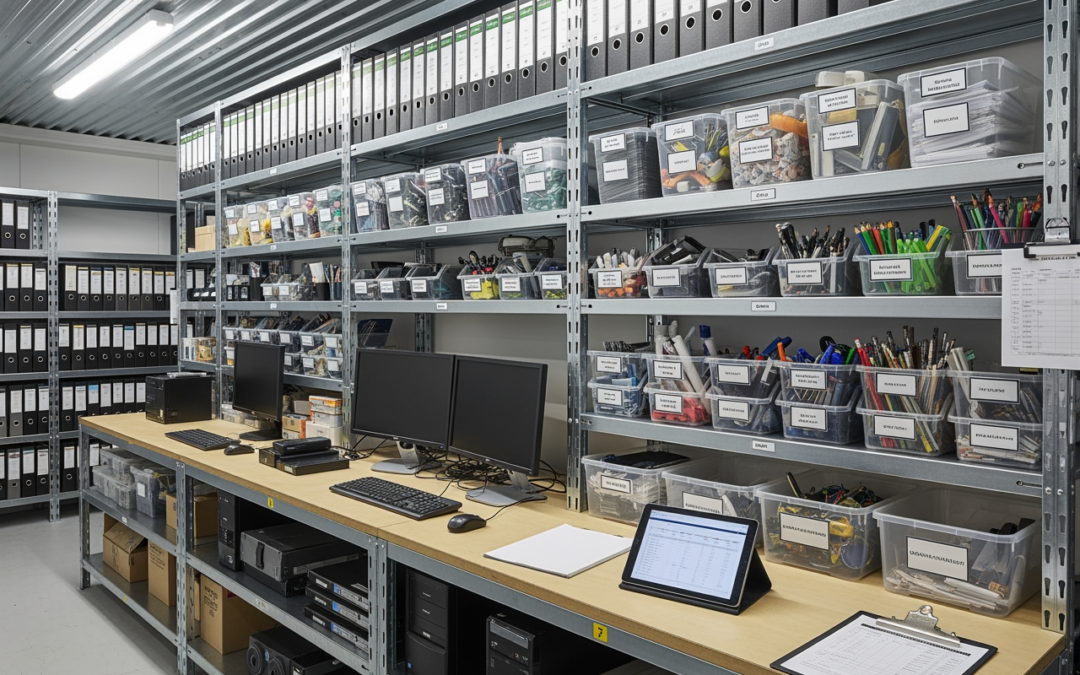
For any UK business, there comes a time when dealing with surplus office supplies becomes a pressing matter. It might be due to an upcoming office relocation, a much-needed refurbishment, a strategic downsizing, or simply that the stationery cupboards are groaning under the weight of “just in case” purchases that have accumulated over time. The task of preparing to Pack Office Supplies for storage can seem straightforward at first glance, but a haphazard approach often leads to future headaches.
Without a clear system for your Office Supply Packing, neatly organised shelves can quickly transform into a bewildering assortment of unmarked boxes. Pens might leak over important documents, stacks of paper can become creased and unusable, essential printer cartridges could vanish into the chaos, and when that critical moment arrives to retrieve a specific item, it feels like an impossible quest. This disorganisation translates directly into wasted staff hours, frustration, and unnecessary costs for replacing lost or damaged assets. Therefore, understanding how to pack office supplies efficiently is not merely a logistical exercise; it is a sound business practice that safeguards your investments and supports operational continuity.
I recall a burgeoning tech start-up I worked with a while back. They were experiencing rapid expansion and had to quickly move to a larger premises, deciding to store a significant amount of their existing stationery and promotional materials. Their packing efforts were enthusiastic but lacked a coherent strategy. Months later, when they urgently needed specific branded notebooks and a batch of marketing leaflets for a crucial trade show, it took two employees the best part of an afternoon rummaging through vaguely labelled containers. The stress was immense, and the time lost was considerable. Their immediate resolution was a firm “never again to disorganised office supply packing!”
This comprehensive guide is designed to equip your business with the knowledge to avoid such scenarios. We will detail a methodical approach to Pack Office Supplies, ensuring that every item, from the humble paperclip to spare keyboards, is well-protected, easily identifiable, and meticulously accounted for. This makes any future interaction with your chosen business storage solution, such as those we offer, a smooth and efficient experience.
More Than Just Boxes: The Strategic Value of Smart Office Supply Packing
Allocating time and resources to develop a meticulous system for your Office Supply Packing may initially appear to be an additional task on an already long list, especially during busy periods of transition. However, the long-term strategic advantages for any UK business are undeniable and far-reaching:
- Preservation of Assets: Thoughtful packing is your first line of defence against damage. It means no more discovering that a rogue leaky pen has ruined a batch of expensive letterheaded paper, or that vital company documents have been crumpled beyond use. This protection is particularly vital for items that are sensitive to mishandling, such as printer consumables or small electronic peripherals.
- Significant Time Savings: Picture this: you need a specific type of presentation binder or a spare mouse for a new employee. With a well-organised and inventoried storage system, locating that item becomes a quick, straightforward task, rather than a frustrating, time-consuming hunt through countless boxes.
- Enhanced Inventory Control: A clear understanding of precisely what office supplies your business has in storage, and their exact location, prevents wasteful re-ordering of items you already possess but cannot find. This clarity supports better budget management and resource allocation.
- Tangible Cost Efficiencies: By actively preventing damage to supplies and eliminating the loss of items through disorganisation, and by extension avoiding unnecessary duplicate purchases, a smart packing strategy directly contributes to reducing operational costs.
- Smoother Business Transitions: Whether your business is navigating an office move, undergoing a significant refurbishment, or simply undertaking a seasonal declutter, a methodical approach to packing supplies makes the entire process less disruptive and considerably less stressful for your team.
- Optimised Storage Space Utilisation: Correctly packed, uniformly sized (where possible), and clearly labelled boxes can be stacked more securely and efficiently. This not only improves safety within your storage unit but also ensures you are making the absolute most of the valuable space you are utilising.
Investing that little bit of extra effort into your Office Supply Packing methodology at the outset will undoubtedly yield substantial returns in terms of time, money, and operational calm.
Laying the Groundwork: Pre-Packing Essentials for office supply packing
Before a single paperclip is placed into a box, a phase of thorough preparation will significantly streamline your efforts and set the stage for a successful office supply packing project.
Declutter and Purge: The First Crucial Step to pack office supplies
This is an indispensable starting point for any packing endeavour, be it for a home or a business. A disciplined declutter is essential:
- Methodically go through every desk drawer, supply cupboard, shelf, and storage area.
- Responsibly dispose of any items that are broken, clearly obsolete (like ancient software manuals or long-dried-up correction fluid), or genuinely surplus to your business’s current or foreseeable needs.
- Ensure you recycle materials wherever possible. Any confidential documents that are no longer required should be securely shredded according to data protection best practices.
- This initial decluttering phase will noticeably reduce the overall volume of items you need to pack, transport, and store, translating into savings in effort, materials, and potentially the size of the storage unit required.
Gather Your Packing Arsenal: Tools for the Task
Having all the necessary high-quality materials readily available before you begin will make the entire process to pack office supplies more efficient and less frustrating. Your essential toolkit should include:
- Quality Boxes: A selection of different sizes is advisable. Smaller boxes are perfect for heavier items like reams of paper or books, preventing them from becoming too cumbersome to lift. Medium and larger boxes can accommodate lighter, bulkier supplies. It’s paramount that these boxes are sturdy and in good condition. Should you need robust solutions, we at Newbury Self Store offer a comprehensive range of packaging supplies, including various boxes, tape, and protective wrap, all designed to keep your assets safe.
- Strong Packing Tape: Do not underestimate the importance of good quality adhesive tape. It ensures your boxes remain securely sealed during transit and storage.
- Protective Materials: Bubble wrap is essential for fragile items. Plain packing paper (like unprinted newsprint) is excellent for wrapping items and filling voids within boxes to prevent shifting. Foam sheets can also offer good protection.
- Permanent Marker Pens: For clear, bold, and legible labelling of every box.
- Labels: Whether you use pre-printed labels or simple sticky labels, ensure they are large enough for all necessary information.
- Inventory System: This could be as simple as a dedicated notebook and pen, a well-structured spreadsheet on a laptop, or for larger operations, a specialised inventory management app. The key is choosing a system that suits your business scale and sticking to it.
- Small Sealable Bags or Containers: These are invaluable for containing tiny, loose items like paperclips, staples, drawing pins, USB drives, and other small sundries. Clear bags are particularly useful as they allow for easy visual identification of contents.
- Rubber Bands or String: Useful for bundling items like pens or keeping rolled documents secure.
Designate a Packing Powerhouse Zone
Set aside a specific, well-lit area in your office to function as your central packing station. A large, clear table or an uncluttered section of floor space, ideally away from high-traffic walkways, works best. This allows for a systematic workflow, minimising disruptions and reducing the risk of trips or accidents.
Implement an Inventory System from the Outset
This is the absolute cornerstone of not losing track of your assets during and after the office supply packing process. Before you seal your first box:
- Assign a Unique Number to Every Box: This number will be the primary identifier linking the physical box to its entry on your master inventory list.
- Maintain a Master Inventory List: A spreadsheet is often the most practical tool. Create columns for: Box Number, General Contents Category (e.g., “Stationery – Writing Instruments”), Detailed Contents (be as specific as reasonably possible, e.g., “Blue Ballpoint Pens x200, Red Markers x50, Staple Refills x10 boxes”), Department (if relevant to your business structure), Date Packed, and a crucial column for “Location in Storage Unit” (which you’ll fill in when placing the boxes into storage).
- Uphold Consistency: Whichever inventory system you opt for, apply it rigorously and uniformly to every single box without exception.
The Nitty-Gritty: How to Pack Office Supplies Like a Pro
With your preparation complete, it’s time to delve into the specifics of packing various categories of office supplies. A methodical, category-by-category approach is vital for efficient and safe Office Supply Packing.
Organising Pens, Pencils, Markers & Small Stationery Items
These numerous small items can easily become a disorganised mess or get lost if not managed correctly.
- Secure All Lids: Double-check that all pens, markers, highlighters, and glue sticks have their lids firmly in place. This prevents them from drying out and, more importantly, from leaking and damaging other items.
- Bundle Similar Items: Use rubber bands to group together pens of the same type, pencils, or markers. Small pencil cases, zip-lock bags, or even sturdy envelopes can also be effective for keeping these bundles tidy.
- Bag Loose Sundries: For very small, loose items like paperclips, staples, drawing pins, bulldog clips, and treasury tags, clear sealable plastic bags are your best friend. They keep these items contained and allow for quick visual identification. Label each bag clearly.
- Systematic Boxing: Place these secured bundles and bags into smaller internal boxes or compartment organiser trays first. These smaller containers can then be arranged neatly within larger, clearly labelled master boxes. This tiered approach prevents tiny, delicate items from being crushed or becoming lost at the bottom of a large, heavy box.
Managing Paper, Notepads, Files & Folders during office supply packing
Paper products are heavy in volume and can be easily damaged by creasing or moisture if not packed with due consideration.
- Keep It Flat and Protected: Stack A4 paper, letterheads, notepads, and printed marketing materials flat to avoid unsightly creases and bent corners. If these items are still in their original ream wrappers or protective boxes, it’s best to keep them in this packaging for added protection.
- Utilise Archive Boxes for Files: Sturdy cardboard archive boxes are specifically designed for storing hanging files, ring binders, lever arch files, and document folders. They are robust, stack well, and often have convenient handholds. Ensure all files and binders are clearly labelled on their spines before they are placed into the archive boxes.
- Monitor Box Weight: Remember, paper is deceptively heavy. Use smaller, manageable boxes for full reams of paper or densely packed binders. This not only makes the boxes easier and safer to lift but also prevents the bottoms of the boxes from giving way under excessive weight.
- Guard Against Moisture: For long-term storage, or if there’s any concern about environmental fluctuations (though our Newbury Self Store units are designed to be secure and dry), consider placing a desiccant sachet inside boxes containing large quantities of paper. Alternatively, wrapping stacks of important documents in a layer of acid-free tissue paper or plastic can offer an extra layer of protection.
Storing Books, Manuals & Reference Materials
Like paper, books can be heavy and require careful packing to prevent damage to spines and pages.
- Optimal Packing Positions: Pack books flat, distributing their weight evenly across the base of the box. Alternatively, they can be packed spine down, as they would sit on a bookshelf. Avoid packing them with the paper edges facing downwards, as this can lead to pages becoming bent or warped over time.
- Choose Small, Strong Boxes: This makes lifting safer and easier and reduces the risk of boxes tearing under the strain. Fill any voids or empty spaces within the boxes with crumpled packing paper or bubble wrap to prevent the books from shifting during transit or while in storage.
Dealing with Inks, Toners & Printer Cartridges
These items can cause significant mess if damaged, and some are sensitive to handling and environment.
- Thorough Leak Check: Ensure all ink bottles are tightly sealed. Examine toner and ink cartridges for any existing signs of damage or leakage.
- Individual Bagging as a Precaution: It is highly recommended to place individual ink cartridges or toner cartridges inside their own sealable plastic bags. This provides an excellent secondary containment measure should any leaks occur.
- Upright and Handled with Care: Pack these items upright in a sturdy, well-padded box. Clearly and prominently mark the box: “INK/TONER – HANDLE WITH CARE – THIS WAY UP.”
- Leverage Original Packaging: If you have retained the original boxes for toner or ink cartridges, use them. They are specifically designed to protect these sensitive items.
- Consider Temperature: Note if any specific cartridges have manufacturer recommendations regarding storage temperatures, especially if they are to be stored for an extended period.
Packing Small Office Electronics & Peripherals with care
This category includes a variety of items such as calculators, desk telephones, electric staplers, label makers, computer keyboards and mice, webcams, and docking stations.
- Remove Batteries: For electronic items that will not be used for some time, it is generally good practice to remove any batteries. This helps prevent potential damage from battery leakage and corrosion over time.
- Tidy Cable Management: Disconnect all cables from their respective devices. Coil each cable neatly and secure it with a cable tie, a Velcro strap, or even a simple rubber band. It’s very helpful to label each cable so you know which device it belongs to, and then pack it alongside its corresponding item.
- Wrap for Protection: Use bubble wrap or plain packing paper to cushion more delicate electronic items, providing a protective layer against knocks and bumps.
- Original Boxes are Ideal: If you have kept the original packaging for these electronics, now is the perfect opportunity to use it. These boxes are custom-designed to offer the best possible protection. If original boxes are not available, use small, sturdy boxes with plenty of internal padding.
Handling Larger Office Equipment (If Storing Spares)
While the main focus is on supplies, businesses sometimes store spare or older equipment like printers, scanners, or monitors.
- Secure Moving Components: Tape down scanner lids, printer input/output trays, and any other parts that could move or open during transit.
- Consult Manufacturer Guidelines: Check the original manuals or the manufacturer’s website for any specific instructions regarding the moving and storage of particular pieces of equipment.
- Provide Ample Padding: Always use the original boxes if you still have them. If not, select very sturdy boxes and use a generous amount of protective materials such as bubble wrap, foam inserts, or even old towels and blankets to cushion the equipment on all sides.
Managing Kitchen & Breakroom Supplies
If your Office Supply Packing project extends to items from the staff kitchen or breakroom:
- Wrap Fragile Items Individually: Mugs, glasses, plates, and any other breakable crockery should be wrapped carefully one by one in packing paper or bubble wrap.
- Seal Foodstuffs Securely: Ensure any non-perishable food items (like tea bags, coffee granules, sugar sachets, or biscuits) are in airtight containers or well-sealed packaging to prevent spills, maintain freshness, and deter pests. Pack these items separately from non-food supplies.
Don’t Lose Your Mind (Or Your Stapler!): Labelling & Tracking Your Assets
The detailed labelling and inventory management system you decided upon during the preparation phase now becomes absolutely pivotal. This systematic approach is the key to ensuring you never lose track of your valuable business assets while they are in storage.
The Importance of Detailed and Consistent Labelling
Every single box that you pack must be labelled clearly, accurately, and with a consistent format. Your labels should, at a minimum, include the following information:
- A Unique Box Number: This number will serve as the primary identifier for each box and will directly correspond to an entry on your master inventory list. A simple sequential numbering system (001, 002, 003, etc.) usually works best.
- A General Contents Category: Provide a clear, concise description of what the box generally contains. For example: “Stationery – Pens & Pencils,” “Marketing Materials – Brochures Q3/Q4,” “Archived Invoices 2024,” “Spare IT Peripherals – Keyboards & Mice.”
- Department or Team (If Applicable): If your business is organised by departments, adding this information can be very helpful for retrieval (e.g., “Sales Department Supplies,” “HR Department – Training Manuals”).
- Essential Handling Instructions: Use bold markers to indicate “FRAGILE,” “THIS WAY UP,” or “HEAVY” where necessary. This guides anyone handling the boxes.
- Strategic Label Placement: To ensure easy identification no matter how the boxes are stacked or arranged in your storage unit, aim to label at least two sides of each box. Labelling the top is also good practice if space permits.
Creating and Maintaining Your Master Inventory List: Your Storage Bible
This document is your indispensable guide to finding anything and everything you have placed in storage.
- Spreadsheet Software for Efficiency: Using a simple spreadsheet program (like Microsoft Excel or Google Sheets) is often the most effective and flexible way to create your master list. Set up clear columns that correspond to your labelling system:
- Box Number
- Detailed Contents Description (be as specific as is practical; for example, instead of just “Pens,” list “Blue Ballpoint Pens – Parker Style Refills x 500, Black Fine-Tip Markers x 100, Assorted Highlighters x 20 packs”).
- Date Packed
- A Column for “Location in Storage Unit” (you will fill this in once the boxes are physically placed in your unit).
- The Power of Visuals: For boxes containing a mix of various items, taking a quick digital photograph of the contents before sealing the box can be an extremely useful visual aid. Name the image file using the corresponding box number for easy cross-referencing with your inventory list.
- Consider Inventory Apps for Larger Needs: For larger businesses with more complex inventories or those requiring more sophisticated tracking features (like barcode scanning or multi-user access), dedicated inventory management applications or software can offer enhanced capabilities and reporting.
- Safeguard Your Inventory List – It’s Vital! This list is too important to risk losing. Ensure you have multiple copies. Store a digital version securely in a cloud-based storage service (such as OneDrive, Google Drive, or Dropbox). Keep at least one printed copy in a safe and accessible location at your office, and consider keeping another printed copy off-site as an additional backup.
Safe & Sound: Selecting Suitable Storage for your packed office supplies
Once you have meticulously completed your task to Pack Office Supplies, choosing the right storage environment is paramount to ensuring they remain safe, secure, and in good condition.
- Cleanliness, Dryness, and Security: Opt for a storage facility that is demonstrably clean, well-maintained, and dry. Key security features to look for include good quality CCTV surveillance, adequate lighting throughout the facility, and robust, controlled access systems.
- Climate Considerations (If Needed): For particularly sensitive items such as certain types of electronics, large archives of important paper documents that will be stored for a very long time, or items susceptible to damage from extreme temperature or humidity fluctuations, a climate-controlled storage unit might be worth considering. However, for most standard office supplies, a well-maintained, dry, and secure standard unit, like those offered at Newbury Self Store, provides perfectly adequate protection.
- Convenient Accessibility: Consider when you might need to access your stored supplies. Ensure the facility’s opening hours align with your business needs and that reaching your specific unit within the facility is straightforward.
- Choosing the Right Unit Size: Selecting an appropriately sized unit is important. You want enough space to store your items comfortably without them being overly cramped (which can risk damage and make access difficult), but equally, you don’t want to pay for a lot of empty, unused space. Our experienced team at Newbury Self Store is always happy to help you estimate the correct unit size for your specific business storage requirements. For larger needs, such as bulk stock or equipment, our versatile container storage options offer another excellent and secure solution.
Strategic Stacking: Making the Most of Your Storage Space
The way you load and organise your carefully packed boxes into your chosen storage unit is just as critical as the packing process itself for ensuring safety and easy future access.
- Heavies Go Low, Lighters Go High: Always place your heaviest and sturdiest boxes at the bottom of any stacks. Lighter, more fragile boxes should be placed on top to prevent crushing.
- Create Access Aisles: If your storage unit is large enough, try to leave a small aisle or walkway between stacks of boxes. This allows you to reach items stored further back without having to dismantle the entire contents of the unit.
- Inventory-Led Placement & Mapping: As you place each numbered box into the storage unit, make a note of its general location (e.g., “Back Left Stack, 3rd box from top,” or “Front Right, against wall”) on your master inventory list. A simple hand-drawn map of the unit layout with box numbers indicated can also be incredibly useful.
- Prioritise Frequent Access Items: Any supplies or assets that you anticipate needing to retrieve more regularly should be positioned towards the front of the unit, where they can be accessed with minimal effort.
- Don’t Over-Cram – Allow Air Circulation: Avoid packing boxes so tightly against the unit walls or against each other that air cannot circulate freely. Leaving small gaps can help prevent any potential issues with condensation or mustiness, particularly in environments with natural temperature fluctuations.
Finding What You Need, When You Need It: The Pay-Off
The culmination of all this careful planning, meticulous Office Supply Packing, detailed labelling, and strategic loading is the simple, yet profoundly satisfying, ability to find exactly what you need, precisely when you need it.
- When a specific item is required, simply consult your master inventory list.
- Use the list to identify the unique box number(s) that contain the item(s) you’re looking for.
- Check the noted location of that particular box (or boxes) within your storage unit.
- Head to your unit, go directly to the correct stack or area, retrieve the specific box, find your item efficiently, and get straight back to your business priorities.
This organised approach eliminates hours of wasted searching, significantly reduces frustration among your team, and ensures your business operations can continue seamlessly without unnecessary delays caused by misplaced assets.
Newbury Self Store: Your Partner in Business Organisation
Successfully organising and securely storing your office supplies can dramatically free up valuable workspace within your premises, protect your essential assets from damage or loss, and contribute significantly to streamlining your overall business operations. Once you have expertly navigated the Office Supply Packing process, securing the right storage space is the next logical and crucial step.
At Newbury Self Store, we have a deep understanding of the diverse storage needs of UK businesses, from start-ups to established enterprises. We offer an extensive range of clean, dry, and highly secure business storage units, available in various sizes to perfectly accommodate your meticulously packed office supplies, archived documents, spare equipment, or excess stock. If your requirements involve storing larger items, bulk goods, or perhaps even equipment that needs robust protection, our container storage solutions present another flexible, secure, and cost-effective option.
To ensure your packing process gets off to the best possible start, we can also assist you with a comprehensive selection of essential packaging materials. From durable boxes of all sizes to protective bubble wrap and strong packing tape, we can help you source what you need. Furthermore, if your decluttering efforts extend from your business premises to your home life, or if you operate as a sole trader managing both business and personal effects, our personal storage units offer the same high standards of security, cleanliness, and convenient access.
You can discover more about all our versatile storage solutions by exploring our Newbury Self Store. We also share useful tips and insights on smart storage and organisation in our news section. Should you have any specific questions, require advice on selecting the ideal storage unit size, or wish to discuss your unique business storage needs, our friendly and knowledgeable team is always on hand to provide expert assistance – simply reach out via our contact section. For those interested in joining a dynamic and customer-focused team, we occasionally have opportunities listed on our careers section.
Pack Smart, Store Secure, Succeed Seamlessly
Undertaking a methodical and considered approach to how you Pack Office Supplies is far more than just a mundane administrative task; it is a prudent and strategic investment in the ongoing efficiency, organisation, and financial health of your business. By taking the time to thoroughly declutter, utilise appropriate packing materials, systematically pack items by category, and implement a robust, detailed labelling and inventory system, you effectively transform potential chaos into well-ordered control.
This diligent preparation ensures that whether your office supplies are placed into storage for a short-term transitional period during an office move or for a longer-term solution to manage overflow, they will remain well-protected, fully accounted for, and readily accessible precisely when your business requires them. It is fundamentally about working smarter, not harder, to maintain the smooth and seamless operation of your enterprise.
Ready to get your office supplies meticulously organised and securely stored, freeing up valuable space and peace of mind? Contact Newbury Self Store today to discuss your requirements and allow us to help you find the perfect storage solution tailored to your business needs. We are here to help you make space for continued success.