 01635 581 811
Bubble wrap has become so synonymous with protection that most people associate it more with the satisfying pop than its actual purpose. Yet this deceptively simple material represents decades of engineering designed to solve one fundamental problem: how do you protect fragile items from the unpredictable forces they encounter during moves and storage? Understanding the full range of bubble wrap uses transforms it from generic packing material into a strategic tool for safeguarding everything from glassware to antique silverware.
The answer lies in thousands of tiny air cushions working together to absorb impact, distribute pressure, and create a protective barrier between your belongings and potential damage throughout any move or storage period.
The Engineering of Bubble Wrap
Bubble wrap consists of two layers of polyethylene film sealed together to trap air in regularly spaced hemispheres. This is not accidental design. The dual-layer construction creates individual air pockets that function independently, meaning if one bubble bursts, the surrounding cushions continue providing protection without any chain reaction of failure.
The air trapped inside each bubble acts as a shock absorber. When an item wrapped in bubble wrap experiences impact, the force distributes across multiple bubbles rather than concentrating on a single point. This distribution principle is similar to how a mattress spreads your body weight across thousands of springs rather than a few pressure points.
Different bubble sizes serve distinct purposes within the range of bubble wrap uses. Small bubbles at 6mm diameter provide surface protection ideal for lightweight items, jewellery, or anything requiring a smooth protective layer. Larger bubbles ranging from 12mm to 25mm offer superior cushioning for heavier objects like ceramics, picture frames, or small appliances where greater impact forces need absorption.
Protection During Transportation
Transportation subjects your belongings to constant vibration, sudden stops, sharp turns, and occasional impacts throughout any move. I have watched removal lorries navigate everything from smooth motorways to bumpy country lanes, and the items inside experience every jolt transmitted through the vehicle. Bubble wrap uses during transport address these challenges through continuous cushioning that moves with each item.
The air cushions compress and expand with each vibration, preventing items from rattling against container walls or other objects packed alongside them. This micro-movement absorption proves particularly valuable for items with protruding parts like lamp finials, vase handles, or electronic components. Without proper cushioning, these vulnerable elements often sustain damage during otherwise careful moves.
Surface protection represents another crucial element of bubble wrap uses. Even non-fragile items can suffer scratches, scuffs, or finish damage during moves. Wrapping furniture components, picture frames, or decorative items prevents surface-to-surface contact that causes cosmetic damage. The smooth outer layer slides against other surfaces rather than catching or abrading through repeated handling.
Long-Term Storage Protection
Storage introduces different challenges than transportation. Items remain stationary for months or years, but they still need protection from environmental factors, settling, and the cumulative effects of time. Bubble wrap uses extend beyond impact protection when items enter storage facilities.
Dust accumulation poses a genuine concern for stored items. Opening boxes months later often reveals a fine layer covering everything inside. Bubble wrap creates a sealed barrier that keeps dust particles away from surfaces, particularly valuable for electronics with ventilation ports, textiles, or items with intricate details that trap and hold dust.
One client stored antique silverware wrapped in bubble wrap for eighteen months, retrieving it in the same condition as when she originally stored it. The polyethylene film had maintained a clean barrier throughout the entire storage period, preventing the tarnishing that unprotected silverware develops in any storage environment. This is one of the most practical bubble wrap uses for long-term storage of precious items.
Proper Wrapping Techniques
Effective protection requires proper application. Simply tossing bubble wrap around an item provides minimal benefit compared to systematic wrapping that maximises the material’s protective properties across all the bubble wrap uses it is intended for.
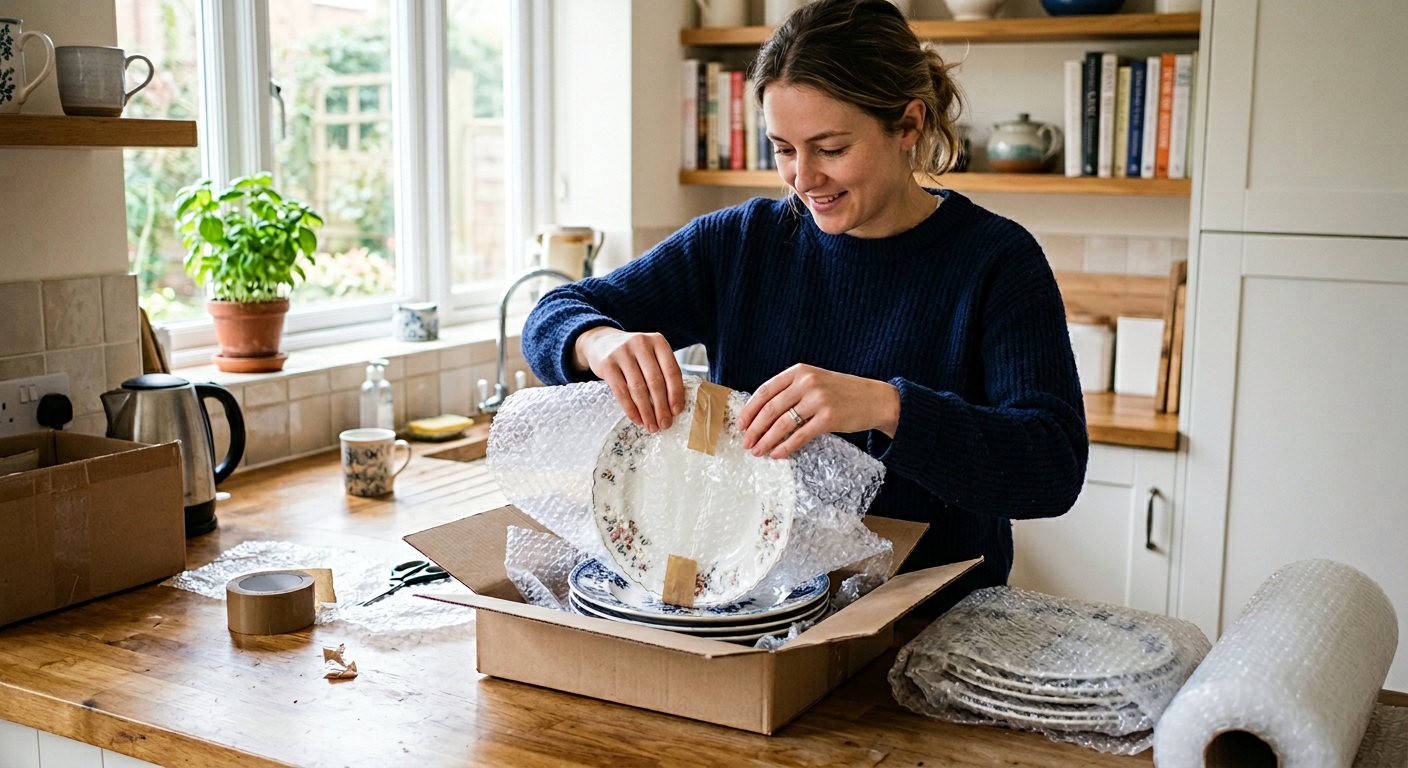
Start by placing the item on a flat bubble wrap sheet with bubbles facing inward, toward the item. This orientation ensures the air cushions contact the object’s surface directly, providing the cushioning where it is needed most. Wrap the material around the item at least twice, creating multiple protective layers. Secure each layer with packing tape, ensuring the wrap stays firmly in place during handling.
Avoid wrapping bubble wrap too tightly around delicate items. The goal is cushioning, not compression. Leave slight slack that allows the air bubbles to function properly. Overly tight wrapping pre-compresses bubbles and reduces their shock-absorption capacity, defeating the entire purpose of one of the most important bubble wrap uses.
What to Wrap and What Not to Wrap
Bubble wrap excels at protecting rigid fragile items: glassware, ceramics, mirrors, picture frames, electronics, small appliances, decorative objects, and collectibles. These items benefit from both the cushioning and surface protection that represent the primary bubble wrap uses for any household move or storage project.
However, certain items require different approaches. Antique furniture with delicate finishes may react poorly to prolonged bubble wrap contact, as the plastic can trap moisture against wood surfaces. Use acid-free paper as a barrier layer before applying bubble wrap, or consider furniture blankets instead of relying solely on bubble wrap uses in these situations.
Oil paintings should never have bubble wrap contacting the painted surface. The texture can transfer or damage paint, particularly with older works. Wrap these with glassine paper before adding protective layers. Understanding which items benefit from bubble wrap uses and which require alternatives prevents the protective material itself from becoming a source of damage.
Newbury Self Store and Protecting Items in Storage
Think of protective packing like a defensive football formation. Bubble wrap serves as your first line of defence, absorbing initial impacts before they reach valuable items. Behind that, proper boxes provide structural integrity, and secure storage conditions maintain environmental stability throughout the rental period. Remove any layer and the entire protection system weakens.
Newbury Self Store combines protective materials expertise with comprehensive storage solutions that safeguard belongings throughout their storage duration. The facility has observed that clients who invest time in thorough bubble wrap protection retrieve items in pristine condition, whilst rushed packing consistently results in preventable damage that proper wrapping would have prevented.
High-quality bubble wrap and protective materials available on-site ensure that whatever you store is properly protected from the moment it leaves your hands. Climate-controlled personal storage units maintain consistent conditions whilst proper wrapping handles physical protection, creating comprehensive safeguarding that neither element alone provides.
Combining Bubble Wrap With Other Materials
Bubble wrap uses work most effectively when combined with other protective materials in a layered system. Use bubble wrap for individual item cushioning, then add packing paper for void filling, and sturdy boxes for structural protection. This layered approach addresses multiple protection needs simultaneously and prevents the gaps that single-material approaches leave.
For businesses storing secure business inventory or archives, the same layered protection principle applies. Wrapped items within quality boxes, stored in appropriate units, create the comprehensive protection that valuable commercial assets require. Each layer of protection addresses a different category of risk that the others cannot prevent independently.
For larger moves requiring substantial packing materials, container storage with drive-up access reduces the handling steps that increase damage risk, particularly when moving properly protected but awkward items that require careful loading rather than corridor navigation.
Making Protection Decisions for Your Items
Deciding what deserves bubble wrap involves assessing replacement cost, sentimental value, and fragility. Items meeting any two of these criteria warrant thorough protection using proper bubble wrap uses. An inexpensive but irreplaceable family photo album deserves the same careful wrapping as expensive crystal glassware that can be replaced with money but not with the memory it represents.
Consider storage duration when planning protection. Short-term storage of a few weeks requires less extensive wrapping than year-long storage. However, even brief storage periods expose items to handling risks during loading and retrieval. The modest time investment in proper wrapping provides insurance against those handling moments when accidents most commonly occur.
Document your wrapping process, particularly for complex items with multiple components. Photograph items before wrapping, and label wrapped packages clearly with contents and any special handling requirements. This documentation proves invaluable months later when retrieving specific items without unwrapping everything to identify what is inside.
The difference between damaged and pristine items often comes down to those minutes spent wrapping each item properly. Combining quality protective materials with appropriate storage creates comprehensive safeguarding that preserves belongings through moves, renovations, downsizing, or any situation requiring temporary storage.
Ready to protect your belongings with professional storage solutions and quality protective materials? Call 01635 581 811 or contact our team to discuss your storage needs and protective material requirements in detail.