
 01635 581 811
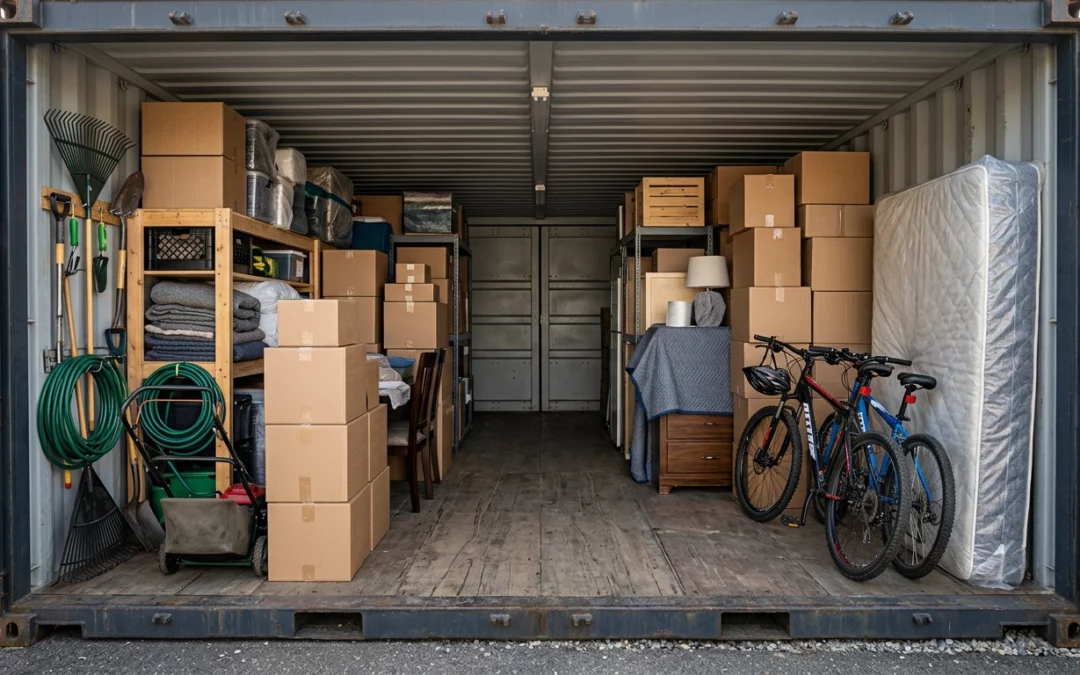
Twenty-foot shipping containers have transformed how people approach storage, offering a practical solution that bridges the gap between cramped sheds and expensive warehouse space. These steel units provide roughly 1,165 cubic feet of usable space, yet most people struggle to visualise what that actually means for their specific belongings when planning a move or business storage arrangement.
The confusion is understandable. Unlike a room in your home where you can walk around and gauge the space instinctively, a 20ft container size presents a blank canvas that requires strategic thinking. Getting this right matters because proper planning prevents the frustration of hiring a unit that is either too small to fit everything or unnecessarily large and wasting money on empty space every month.
Understanding 20ft Container Dimensions
A standard 20ft container size measures approximately 20 feet long, 8 feet wide, and 8.6 feet tall on the outside. These external measurements tell only part of the story. The internal dimensions, where your belongings actually fit, measure roughly 19 feet 4 inches in length, 7 feet 8 inches in width, and 7 feet 10 inches in height.
Think of it like buying a car. The exterior dimensions include bumpers and mirrors, but the boot space is what matters when you are loading suitcases for a family holiday. The same principle applies to the 20ft container size: the internal usable space determines practical capacity, not the impressive-sounding external length.
The floor area alone provides about 150 square feet of ground space, equivalent to a decent-sized bedroom. The crucial advantage is the nearly 8-foot ceilings that allow vertical storage strategies most bedrooms cannot accommodate, effectively multiplying the usable capacity well beyond what the floor area alone suggests.
What Fits: Home Contents and Personal Items
A 20ft container size comfortably holds the complete contents of a standard three-bedroom house when belongings are packed strategically. This includes all furniture, appliances, boxes of personal items, and even larger pieces like wardrobes and dining tables that people often assume will require additional space.
I worked with a family last year who were relocating overseas for two years. They had convinced themselves they needed two containers until we walked through their home together and assessed what they actually owned. One 20ft unit held everything: a three-piece suite, king-size bed, two single beds, a dining table with six chairs, two wardrobes, a washing machine, a fridge-freezer, and approximately 80 boxes of household items. They still had room for bicycles and garden furniture when packed correctly.
The key lies in understanding how furniture stacks and nests together. Dining chairs tuck under tables. Mattresses stand on their sides. Hollow furniture pieces like wardrobes become storage units themselves when you pack boxes inside them. This approach to the 20ft container size transforms what initially seems insufficient into genuinely comfortable capacity.
Business and Commercial Applications
Small businesses find 20ft container sizes particularly valuable for managing inventory without committing to long-term commercial leases. A container of this size holds approximately 10 standard pallets arranged in a single layer, or up to 20 pallets when double-stacked with appropriate handling equipment available on site.
Retail operations use this capacity for seasonal stock rotation throughout the year. A garden centre client stores their Christmas inventory in a 20ft unit from January through October, freeing up valuable shop floor space during the months when festive stock would simply gather dust. The same container holds roughly 300 to 400 archive boxes, making it ideal for businesses managing documents before digital conversion or during office relocations.
Trade professionals appreciate the equipment storage capacity that the 20ft container size provides between jobs. A typical 20ft container accommodates a full set of scaffolding, multiple toolboxes, power tools, ladders, and safety equipment with room remaining for project materials. One contractor told me it is like having a workshop you can lock and leave without worrying about weather damage or overnight theft from an insecure site.
Strategic Packing for Maximum Space
Maximising a 20ft container size requires thinking in three dimensions rather than just floor space coverage. The nearly 8-foot height gives you vertical storage potential that transforms practical capacity beyond what the square footage figure suggests when people first encounter it.
Start with your heaviest, largest items as the foundation layer. Appliances, furniture bases, and sturdy boxes form the bottom layer that everything else builds upon. Place wardrobes and tall furniture against the walls, then fill the hollow spaces inside them with soft goods, linens, or carefully packed boxes that would otherwise occupy floor space independently.
Reserve the upper sections for lightweight, bulky items. Duvets, pillows, cushions, and seasonal clothing compress well and will not damage anything below them. Think of it like packing a suitcase: shoes and toiletries at the bottom, clothes in the middle, and a jumper on top that you might need during the journey. Your 20ft container size works on exactly the same strategic packing logic scaled up significantly.
Practical Capacity Examples
A three-bedroom semi-detached house typically includes one three-piece suite, one dining table with four to six chairs, three beds with mattresses, one to three wardrobes, chest of drawers, TV stand, coffee table, kitchen appliances, and 60 to 100 boxes of personal items. All of this fits comfortably in a 20ft container with strategic packing that makes proper use of vertical space.
Small business inventory presents different but equally manageable challenges with the 20ft container size. An e-commerce operation selling homeware can store approximately 2,000 to 3,000 individual items, depending on size and packaging. A clothing retailer manages roughly 150 to 200 boxes of stock, equivalent to a small shop’s worth of inventory kept accessible without occupying expensive retail floor space.
Mixed-use scenarios combine household and business needs effectively within a single 20ft container. A home-based business owner might store household furniture from a downsizing move alongside business inventory and archives, with the container providing enough physical segregation to keep personal and commercial items organised within the same unit throughout the storage period.
Container Access and Loading Logistics
The practical side of using a 20ft container extends beyond raw capacity to the logistics of getting items in and out efficiently. Drive-up container access eliminates the hassle of trolleys, lifts, and narrow corridors that complicate traditional storage facilities and multiply the time and effort involved in every visit.
Loading occurs at ground level without steps, ramps, or awkward door angles. You reverse your vehicle to the container doors, open them fully, and walk straight in with your belongings. Container doors open to reveal the full width of the unit, unlike storage rooms with standard doorways that force you to turn furniture sideways or remove legs to squeeze through. A sofa that fits inside the 20ft container size will fit through the doors without the manoeuvring problems that building access creates.
Security features on modern storage containers include lockbox protectors that prevent bolt cutters from accessing padlocks. The steel construction withstands weather and attempted break-ins far better than wooden sheds or garage storage. Your belongings remain dry, secure, and accessible whenever you need them, regardless of British weather conditions outside.
How Newbury Self Store Supports Container Storage
Newbury Self Store offers container storage that combines this practical 20ft container size capacity with ground-level access and robust site security. The facility’s layout allows you to drive directly to your unit, load or unload at your own pace, and secure everything behind steel doors engineered to withstand conditions far harsher than Berkshire weather.
Proper packing materials available on-site ensure that items stored within your container are protected throughout their time in storage. Quality boxes, protective wrapping, and appropriate packaging materials prevent shifting and damage for items stored in the upper reaches of the container where they are harder to check regularly during the storage period.
For personal storage needs ranging from house moves to extended renovations, the 20ft container size provides room for complete households in a secure, accessible format that does not require navigating a facility building to access your belongings when you need them.
Making the Right Storage Size Decision
Most people overestimate how much space they need because they imagine items scattered as they appear in daily home use rather than packed strategically. Packed properly, with furniture stacked and boxes utilised efficiently using the full height of the container, a 20ft container size holds far more than initial impressions suggest when you first walk in and assess the empty space.
Understanding what fits in a 20ft container helps you plan moves, declutter homes, or manage business inventory storage without guesswork that leads to either expensive oversizing or frustrating insufficient capacity. The approximately 1,165 cubic feet of space translates to real-world capacity for three-bedroom households, substantial commercial inventory, or a combination of both in mixed-use scenarios.
Storage decisions affect both your budget and your peace of mind throughout the rental period. Choosing a unit too small means making multiple trips or leaving items vulnerable elsewhere. Selecting one too large wastes money on empty space every month. The 20ft container size hits the balance for most residential moves and small business needs, providing room for complete households or substantial commercial inventory in one secure, accessible, and competitively priced format.
Ready to discuss your specific storage requirements? Call 01635 581 811 or get in touch with our team to find the right container solution for your needs.