
 01635 581 811
Choosing storage should not feel like decoding a puzzle of hidden fees and confusing pricing structures. Yet many people discover too late that the advertised rate represents just a fraction of what they actually pay each month. The cheapest storage option is not always the one with the lowest headline figure; it is the solution that minimises total costs whilst meeting your specific needs.
The difference becomes clear when you examine total costs rather than headline rates. Traditional indoor units often advertise attractive entry prices, but the final bill includes access fees, insurance markups, administrative charges, and sometimes even lift usage costs. Container storage strips away these layers of complexity, offering what-you-see-is-what-you-pay transparency that makes genuine budgeting possible.
The Real Cost Comparison: Breaking Down Storage Expenses
Most storage customers focus exclusively on the monthly rental rate when comparing options. This narrow view misses significant expenses that accumulate over time and fundamentally change the container storage cost calculation. A unit advertised at £80 per month might actually cost £120 once mandatory insurance, facility access fees, and administrative charges appear on your monthly statement.
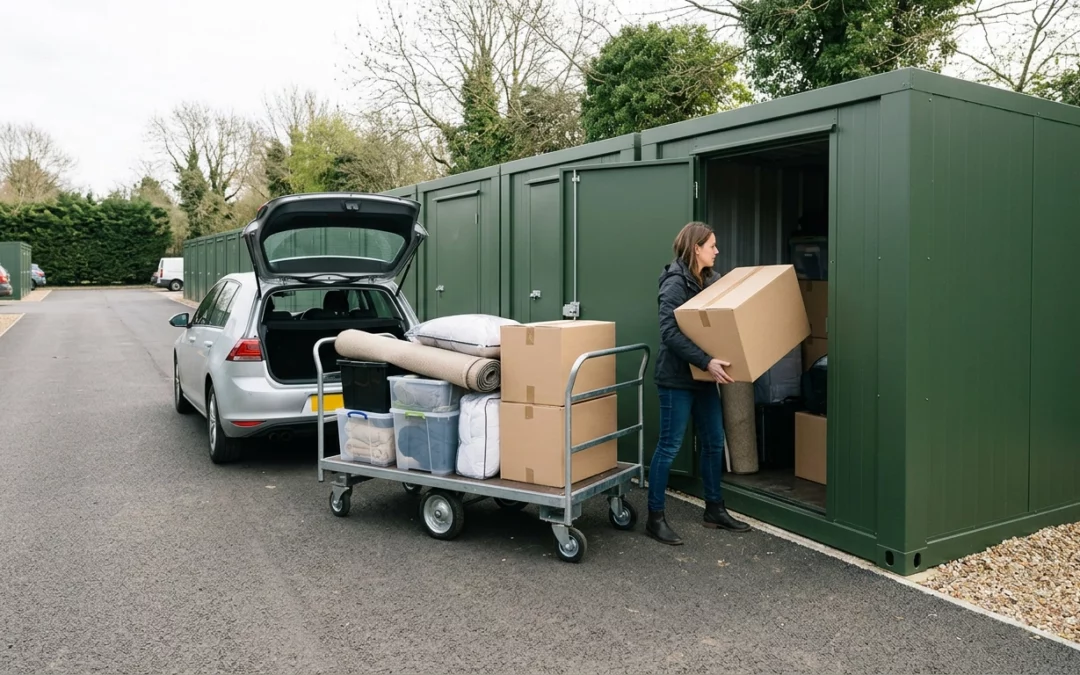
Container storage eliminates many of these add-ons by design. The physical structure requires no shared corridors, lifts, or climate-controlled buildings to maintain. You are not subsidising expensive shared infrastructure through your monthly payment. The unit sits on the ground, accessible directly from your vehicle, which means no premium charges for building access or equipment use throughout your rental period.
Consider the analogy of buying a house versus renting a flat in a luxury building. The flat might have a lower base rent, but service charges, parking fees, and amenity costs quickly close the gap. Container storage resembles the straightforward house: you pay for the space itself, not layers of shared facilities that other tenants also use.
Why Container Storage Cuts Costs at Every Level
Ground-level access represents one of the most significant elements of container storage cost advantage. When you can drive directly to your unit and load belongings from your vehicle, you eliminate the time and labour costs associated with navigating multi-storey facilities. A house move that might require multiple trips through corridors and lifts becomes a simple reversing job and direct transfer that takes a fraction of the time.
This convenience translates directly into financial savings that extend beyond the monthly rental comparison. Removal companies charge by the hour, and shaving two hours off a loading job saves £100 or more in a single session. Even self-movers benefit: less time spent hauling boxes means lower vehicle hire costs and reduced physical strain throughout the process.
The flexible sizing of containers prevents another common waste: paying for space you do not use. Traditional facilities often force customers into standardised room sizes that rarely match actual needs. You might need 120 square feet but find yourself renting a 150-square-foot unit because that is the next available size. Container storage at Newbury Self Store offers more granular sizing options, ensuring you pay only for capacity you will actually fill.
The Economics of Container Construction
Steel construction delivers durability that reduces long-term container storage costs for both facility operators and customers. Unlike traditional buildings requiring regular maintenance, painting, and climate system repairs, containers withstand weather with minimal intervention. These lower operational costs translate into competitive pricing that remains stable over time rather than escalating annually.
Weather resistance provides another financial advantage that directly reduces the cheapest storage option calculation. Whilst premium climate-controlled units charge 30 to 50 percent more than standard options, properly sealed containers protect belongings from moisture and temperature fluctuations without expensive environmental systems. Your winter clothing, furniture, and business archives remain safe without the premium price tag.
I have watched customers save £15 to £25 monthly on insurance simply by choosing container storage over traditional alternatives. Individual steel units with robust locking mechanisms present lower risk profiles than shared corridor facilities where multiple people access the same building, and insurers price this advantage into their premiums accordingly.
When Container Storage Delivers Maximum Value
Whole-house moves represent the sweet spot for container storage economics. When a family relocates and needs temporary storage between properties, the ability to load an entire household’s belongings in one session creates enormous savings on the total container storage cost. One client recently stored a four-bedroom house’s contents for three months whilst their new property completed renovations. By using container storage, they avoided the £400 removal company quote for navigating a traditional facility’s corridors and lifts.
Business applications multiply these advantages considerably. Retailers managing seasonal stock can drive delivery vehicles directly to their seasonal storage containers, unload inventory in minutes, and return to operations without the time drain of traditional facilities. The cheapest storage option is never the lowest advertised rate but rather the solution that minimises total operational disruption across every visit.
Small businesses storing equipment, archives, or overflow stock particularly benefit from drive-up access. A construction firm storing tools and materials can send a van driver to collect items as needed without coordinating building access or navigating security procedures. Time saved represents money earned, making container storage the most cost-effective choice for commercial applications that involve frequent access.
How Newbury Self Store Maximises Container Affordability
Transparent pricing forms the foundation of genuine value at Newbury Self Store. When every cost appears upfront, customers make informed decisions rather than discovering surprise charges later that undermine the container storage cost comparison they made before signing. Facilities that build trust through honest pricing often maintain lower overall costs because they do not need to recoup losses from customers who leave after discovering hidden fees.
Flexible contract terms provide another layer of affordability that the cheapest storage option should always include. Traditional facilities often require minimum rental periods or charge premium rates for short-term storage. Container storage at Newbury Self Store typically offers more adaptable arrangements, allowing you to scale up or down as circumstances change without penalty fees that erode the financial benefit.
Location strategy plays an underappreciated role in total container storage cost. A facility positioned near major transport routes reduces your fuel costs and travel time for each visit. What appears to be a slightly higher monthly rate might actually cost less overall when you factor in reduced driving distance and easier access during peak periods.
The Hidden Savings: Time and Convenience
Loading efficiency creates substantial indirect savings that rarely appear in container storage cost comparisons but accumulate significantly over time. Traditional storage facilities require customers to park in designated areas, then transport items through corridors, possibly using lifts or trolleys. This process adds 30 to 60 minutes to each visit compared to driving directly to a container.
For business storage users making frequent visits, this time difference compounds dramatically. A retailer accessing inventory twice weekly saves four hours monthly, equivalent to half a working day of recovered productive time. The labour cost savings alone often exceed any price difference between storage options when calculated honestly across a full year.
Reduced handling minimises damage risk, preventing replacement costs that can dwarf storage fees. Every time you transfer boxes from a trolley to a lift to a corridor, you increase the chance of drops, scrapes, or crushing. Direct vehicle-to-container loading eliminates these intermediate steps, protecting your belongings and your budget simultaneously throughout the entire storage period.
Packing Strategy and Container Storage Cost
Understanding your actual storage needs prevents overspending on unnecessary features. Climate control adds significant cost but benefits only specific items like antiques, electronics, or sensitive documents. Most household goods and business archives thrive in weather-resistant containers without expensive environmental systems that inflate monthly fees by 30 to 50 percent.
Investing in quality packing materials protects belongings in any environment whilst maximising space efficiency throughout your container. A well-packed container holds 20 to 30 percent more than haphazardly loaded units, potentially allowing you to choose a smaller, cheaper size that still accommodates everything you need to store.
Access frequency should guide your choice of storage type as much as monthly rate. If you need daily visits, proximity and convenience justify premium pricing. For long-term storage with occasional access, the cheapest storage option prioritises security and weather protection over location convenience or facility amenities that you will rarely use.
The Long-Term Value Proposition
Container storage costs accumulate over time, making small monthly differences significant across extended rental periods. A £20 monthly saving seems modest until you multiply it by 12 months (£240) or 24 months (£480). Container storage’s transparent pricing and lower operational costs create these sustained savings without compromising security or accessibility in any meaningful way.
Rent personal storage for household belongings with the same confidence that the container storage cost you see is the cost you pay month after month without escalation. Inflation resistance represents another long-term advantage: facilities with lower operational costs can maintain stable pricing even when expenses rise, rather than passing energy or maintenance increases directly to customers.
The flexibility to adjust storage size as needs change prevents locked-in overspending that accumulates invisibly. Life circumstances evolve, businesses grow or contract, and storage requirements shift accordingly. Container facilities typically accommodate these changes more readily than traditional operations with fixed room configurations, making the cheapest storage option genuinely adaptable rather than just initially inexpensive.
Whether you are storing household belongings during a move, managing business inventory, or decluttering to reclaim living space, understanding the true economics of storage helps you make informed decisions that protect both your possessions and your budget. For advice tailored to your specific requirements, call 01635 581 811 or consult our storage team to discuss the most cost-effective solution for your situation.