
 01635 581 811
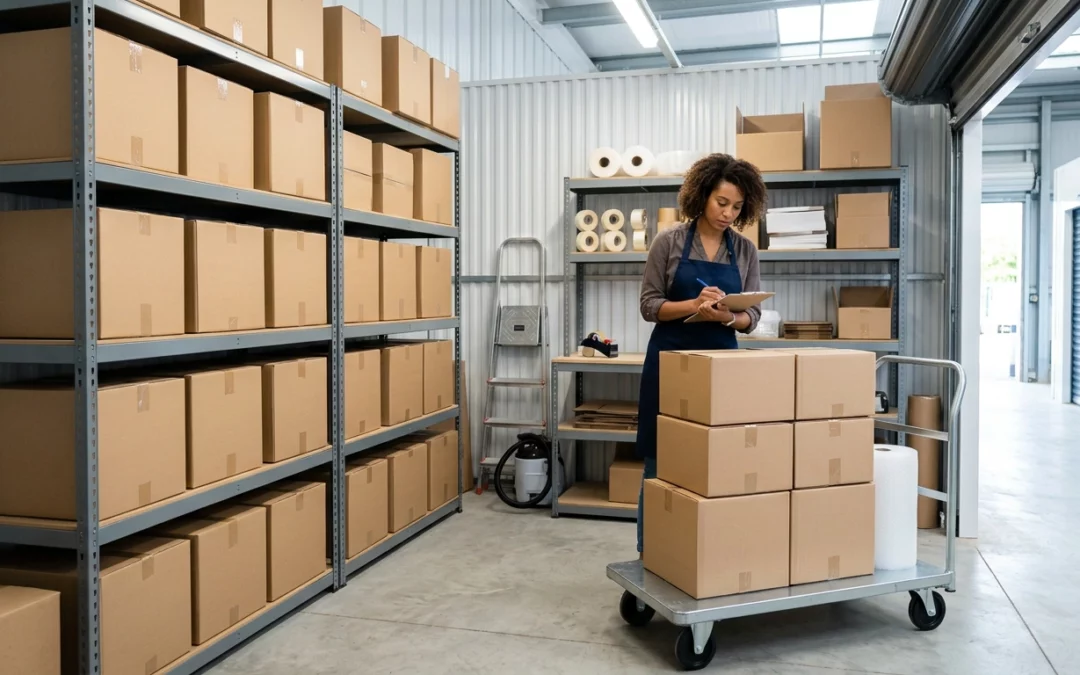
Small businesses across West Berkshire face a predictable pattern: initial success fills available space, forcing difficult choices about expansion, relocation, or limiting growth. The decision often feels binary, but there is a third option that successful businesses have used for decades. Scaling business storage creates the breathing room needed to grow operations without the financial burden of larger premises.
Most business owners underestimate how much their current space costs them. Not just in rent, but in lost productivity, compromised customer experience, and missed opportunities. When your workshop doubles as a stockroom, your office becomes an archive, and your reception area stores promotional materials, you are paying premium rates for what amounts to expensive cupboard space that generates no return.
The Hidden Costs of Keeping Everything On-Site
Physical clutter creates mental clutter. Staff waste time navigating around boxes, searching for misplaced items, and working in cramped conditions. A joinery business I worked with calculated they lost approximately 45 minutes per employee daily to space-related inefficiencies. With five staff members, that represented nearly four hours of productive time vanishing each day, week after week.
Beyond productivity, there is the impression you create. Clients who visit premises filled with stacked boxes and overflowing shelves draw conclusions about your organisation and professionalism. Fair or not, visual chaos suggests operational chaos. The businesses that project calm efficiency often have scaling business storage systems in place that keep working spaces clear and purposeful.
Then there is the opportunity cost. Every square metre dedicated to storage is space you cannot use for revenue generation. That corner filled with last year’s marketing materials could be a product display. The back room crammed with archived invoices could be a training area or additional workspace that accommodates a new hire.
Strategic Storage: The Foundation of Scalable Operations
Scaling business storage starts with a fundamental principle: separate what you use daily from what you need occasionally. This sounds obvious, but most businesses operate with everything jumbled together because they have never had the luxury of space to think differently or implement a deliberate system.
Active materials belong on-site. These are items you access weekly or more frequently. Everything else becomes a candidate for external storage. This includes archived documents you must retain for legal compliance, seasonal inventory, backup equipment, and promotional materials for specific events or campaigns that happen periodically.
The transformation happens when you reclaim that space. A marketing agency moved their archive of past campaign materials and freed up an entire room. Within two months, they had hired another designer and taken on projects they previously would have declined. The monthly business storage solution cost them £120 monthly, whilst the additional revenue from the new hire exceeded £3,000. That calculation makes the decision straightforward for any growing business.
What Growing Businesses Actually Need to Store
Document retention requirements vary by industry, but most businesses must keep financial records for at least six years. These files accumulate quickly. A modest business generating 50 invoices monthly creates 600 documents annually, plus correspondence, contracts, compliance certificates, and employee records. Within three years, you are managing several thousand pieces of paper even if you have digitised recent materials.
Inventory presents different challenges for scaling business storage decisions. Retail businesses face seasonal fluctuations, requiring space for Christmas stock in November that sits empty in March. Trade businesses accumulate materials for specific projects or bulk-buy when suppliers offer discounts. Service businesses stockpile promotional materials for events, exhibitions, or seasonal campaigns that happen across the year.
Packaging supplies onsite for shipping or customer orders also fall into this category, particularly if you buy in bulk to reduce per-unit costs. Banners, display stands, promotional stock, and event supplies occupy substantial space for items that serve no purpose cluttering your daily workspace between infrequent uses.
How to Calculate Your True Storage Requirements
Start with an honest audit. Walk through your premises and categorise everything you are storing. Create three lists: access weekly or more (keep on-site), access monthly (potential storage candidates), and access rarely but must retain (definite storage candidates).
Measure the space these categories currently occupy. Most people significantly underestimate volume. A standard filing cabinet holds about 10 cubic feet. Stacked boxes quickly consume 20 to 30 cubic feet. That corner you think is “just a few boxes” often represents 50 to 100 cubic feet when properly measured and assessed.
Seasonal fluctuations matter enormously for accurate scaling business storage calculations. A business that is steady-state for nine months but triples inventory for three months needs a storage solution that accommodates peak requirements without paying for excess space year-round. This is where flexible storage arrangements prove invaluable compared to fixed commercial property commitments.
The Financial Case for External Storage
Compare like with like. Calculate your current cost per square foot for premises, then determine how much space you are using for storage. Most businesses discover they are paying £15 to £25 per square foot for space that functions purely as storage with no revenue generation potential whatsoever.
Newbury Self Store provides external storage that typically costs significantly less per square foot than equivalent commercial premises. The difference seems modest until you multiply it across 200 or 300 square feet. Suddenly you are saving £1,500 to £3,000 annually whilst simultaneously freeing premium workspace for productive use that directly supports revenue.
The break-even analysis becomes compelling when you factor in what you can do with reclaimed space. Businesses implementing proper scaling business storage strategies typically delay expensive office moves by 18 to 36 months. Given that relocation costs average £5,000 to £15,000 for small businesses when you include downtime, fitting out, and disruption, deferring that expense represents substantial and tangible value.
Implementing a Storage Strategy That Supports Growth
Organisation separates effective storage from simply moving clutter elsewhere. Implement a categorisation system before you move anything. Group items by access frequency, type, and retention requirements. Label everything clearly with contents and date stored, consistently across every item that enters the storage unit.
Think like a librarian. Items you will need to retrieve should be easily identifiable and accessible. Use consistent labelling conventions: “Marketing Materials 2024 Q1” is more useful than “Miscellaneous Box 7”. Create an inventory list that maps what is stored and where. A simple spreadsheet prevents the frustration of knowing you have something but not knowing which box contains it when you need it urgently.
Access frequency determines placement within any scaling business storage arrangement. Items you will retrieve monthly belong near the front and at convenient heights. Annual retrieval items can occupy less accessible locations further back. This principle seems obvious, but businesses consistently store their most frequently accessed materials at the back of units behind items they have not touched in years.
Integration With Daily Operations
Integration with daily operations requires planning before implementation. Who has access? How do they retrieve items when needed? What is the process for adding new materials? These questions need clear answers before you implement any external storage solution, or the system will degrade rapidly under real-world operational pressure.
Staff training matters more than most businesses recognise. Everyone should understand the categorisation system, know how to locate items, and follow protocols for maintaining organisation. One analogy I use frequently: think of external storage like your kitchen pantry. You do not keep every ingredient on your counter, but you know exactly where to find the paprika when you need it. Your scaling business storage should function the same way.
Rotation schedules prevent storage from becoming a black hole where items disappear forever. Set calendar reminders to review stored materials quarterly or biannually. Dispose of items that have exceeded retention requirements. Return items to active use if circumstances have changed. Storage should be dynamic, not a permanent and growing overhead that you stop actively managing.
Different Storage Types for Different Business Needs
Store personal effects and non-business items separately from commercial inventory to keep business storage focused and efficient. Mixing personal and business items in the same unit creates confusion about what belongs where and undermines the organisational systems that make scaling business storage genuinely effective.
For businesses with substantial inventory or equipment benefiting from convenient loading, short-term container hire provides drive-up access that makes stock rotation significantly faster. Instead of navigating corridors with heavy items, you can back a vehicle directly to the unit and load or collect efficiently. Matching storage type to your specific operational requirements prevents the frustration and wasted money of choosing the wrong solution and then adapting around its limitations.
West Berkshire businesses that remove internal space constraints before they become critical problems capitalise on growth opportunities faster than competitors still working around inadequate space. Your premises should serve your business, not constrain it. When storage becomes the limiting factor in taking on new projects, hiring additional staff, or improving customer experience, you have identified a solvable problem with a clear and cost-effective solution.
For expert guidance on implementing scaling business storage solutions that support your specific growth plans, call 01635 581 811 or speak with our team to discuss your requirements in detail.